John Rawls (b. 1921, d. 2002) was an American political philosopher inthe liberal tradition. His theory of justice as fairnessdescribes a society of free citizens holding equal basic rights andcooperating within an egalitarian economic system. His theory ofpolitical liberalism explores the legitimate use of politicalpower in a democracy, and envisions how civic unity might enduredespite the diversity of worldviews that free institutions allow. Hiswritings on the law of peoples set out a liberal foreignpolicy that aims to create a permanently peaceful and tolerantinternational order.
Robert Nozick’s Political Philosophy
Robert Nozick (1938–2002) was a renowned American philosopher who first came to be widely known through his 1974 book, Anarchy, State, and Utopia (1974),[1] which won the National Book Award for Philosophy and Religion in 1975. Pressing further the anti-consequentialist aspects of John Rawls’ A Theory of Justice, Nozick argued that respect for individual rights is the key standard for assessing state action and, hence, that the only legitimate state is a minimal state that restricts its activities to the protection of the rights of life, liberty, property, and contract. Despite his highly acclaimed work in many other fields of philosophy, Nozick remained best known for the libertarian doctrine advanced in Anarchy, State, and Utopia.
Liberalism in Dark Times: The Liberal Ethos in the Twen…
A timely defense of liberalism that draws vital lessons…

Norms of Liberty: A Perfectionist Basis for Non-Perfect…
How can we establish a political/legal order that in pr…

Political philosophy
Political philosophy studies the theoretical and conceptual foundations of politics. It examines the nature, scope, and legitimacy of political institutions, such as states. The field investigates different forms of government, ranging from democracy to authoritarianism, and the values guiding political action, like justice, equality, and liberty. As a normative field, political philosophy focuses on desirable norms and values, in contrast to political science, which emphasizes empirical description.
The Theory of Moral Sentiments
The foundation for a general system of morals, this 174…

Curtis Yarvin: An Extremist Walks into a Sauna
Curtis Yarvin is the court philosopher for the reactionary right in the US. He recently met with leading intellectuals at a luxury hotel in the Alps. How did he fare?

Radical Interoperability is a Political Agenda
Model the world you want to live in.
Defending the Free Market: The Moral Case for a Free Ec…
Thirty years ago, the economic system of the Soviet emp…

Transforming Social Media Governance With Applied Theories of Justice – lindsay blackwell
This dissertation explores ways in which social media governance can be improved through the practical application of theories and principles of justice. Three empirical research studies demonstrate that current platform governance practices exacerbate the very harms they seek to mitigate, due in large part to the influence of punitive criminal justice models that are structurally incapable of producing equitable governance outcomes. Informed by transformative justice, social media governance can be reframed from a method for control to a practice of collective care, requiring a fundamental restructuring of the systems and logics that currently govern online spaces.
OpenSanctions: Supreme Data on Supreme Leaders
The open-source database of sanctions, watchlists, and politically exposed persons — aggregating hundreds of sources and relied on by compliance teams, investigators, and journalists.
When is Political Violence Justified
What the Liberal Tradition Says on the Subject


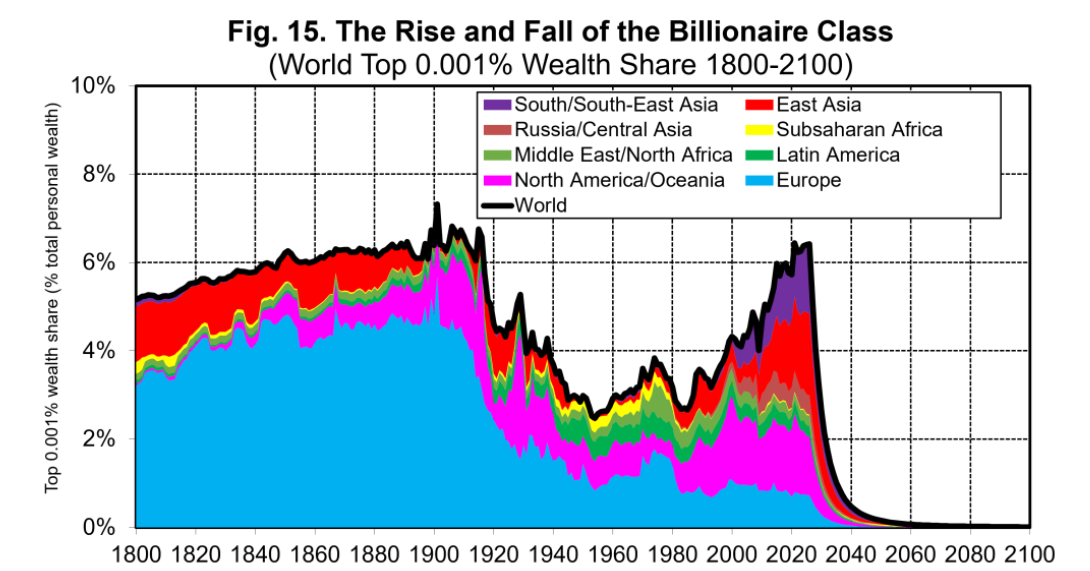
Rapport du World Inequality Lab : 50 ans après, le nouveau rapport Meadows ?
le World Inequality Lab (WIL) a lancé le « Global Justice Project », un programme destiné à « stimuler la recherche, l'élaboration des
Personal Knowledge : Towards a Post-Critical Philosophy
This study, first published in 1958, offers Michael Pol…

Leo Strauss
Leo Strauss was a twentieth-century German Jewish émigréto the United States whose intellectual corpus spans ancient, medievaland modern political philosophy and includes, among others, studies ofPlato, Maimonides, Machiavelli, Hobbes, Spinoza, and Nietzsche.Strauss wrote mainly as a historian of philosophy and most of hiswritings take the form of commentaries on important thinkers and theirwritings. Yet as he put it: “There is no inquiry into thehistory of philosophy that is not at the same time aphilosophical inquiry” (PL, p. 41). While much of hisphilosophical project involved an attempt to rethink pre-modernphilosophy, the impetus for this reconsideration and the philosophicalproblems that vexed Strauss most were decidedly modern. Straussespecially worried about the modern philosophical grounds forpolitical and moral normativity as well as about the philosophical,theological, and political consequences of what he took to be modernphilosophy’s overinflated claims for the self-sufficiency ofreason.
The politics of decentralization and the libertarian allure of Mastodon – Structural Integrity
I am currently reading the fabulous “Hayek’s Bastards” by Quinn Slobodian. It made me think about decentralisation in Mastodon (yes, the federated social network). And it made me think about the lack of a coherent progressive vision for the digital age. I will explain what that book has to do with both. But let’s go back to the political meaning of “decentralisation” in digital discourse first.