Leo Strauss was a twentieth-century German Jewish émigréto the United States whose intellectual corpus spans ancient, medievaland modern political philosophy and includes, among others, studies ofPlato, Maimonides, Machiavelli, Hobbes, Spinoza, and Nietzsche.Strauss wrote mainly as a historian of philosophy and most of hiswritings take the form of commentaries on important thinkers and theirwritings. Yet as he put it: “There is no inquiry into thehistory of philosophy that is not at the same time aphilosophical inquiry” (PL, p. 41). While much of hisphilosophical project involved an attempt to rethink pre-modernphilosophy, the impetus for this reconsideration and the philosophicalproblems that vexed Strauss most were decidedly modern. Straussespecially worried about the modern philosophical grounds forpolitical and moral normativity as well as about the philosophical,theological, and political consequences of what he took to be modernphilosophy’s overinflated claims for the self-sufficiency ofreason.
Robert Nozick’s Political Philosophy
Robert Nozick (1938–2002) was a renowned American philosopher who first came to be widely known through his 1974 book, Anarchy, State, and Utopia (1974),[1] which won the National Book Award for Philosophy and Religion in 1975. Pressing further the anti-consequentialist aspects of John Rawls’ A Theory of Justice, Nozick argued that respect for individual rights is the key standard for assessing state action and, hence, that the only legitimate state is a minimal state that restricts its activities to the protection of the rights of life, liberty, property, and contract. Despite his highly acclaimed work in many other fields of philosophy, Nozick remained best known for the libertarian doctrine advanced in Anarchy, State, and Utopia.
- 1000-Word Philosophy: An Introductory Anthology
Welcome to 1000-Word Philosophy: An Introductory Anthology, an ever-growing set of essays on philosophical questions, theories, figures, and arguments.

Personal Knowledge : Towards a Post-Critical Philosophy
This study, first published in 1958, offers Michael Pol…

History of philosophy
The history of philosophy is the systematic study of the development of philosophical thought. It focuses on philosophy as rational inquiry based on argumentation, but some theorists also include myth, religious traditions, and proverbial lore.
Kommentar zum AfD-Sieg: Der Ernstfall ist jetzt
Zum ersten Mal in der Geschichte der Bundesrepublik greift die radikale Rechte nach der Macht. Und im Moment ihres größten Erfolgs lässt sie die Maske fallen.
The Theory of Moral Sentiments
The foundation for a general system of morals, this 174…

Rotating the Space: On LLMs as a Medium for Thought
An essay on LLMs as a cognitive medium
Novus Ordo Seclorum: The Intellectual Origins of the Co…
This is the first major interpretation of the framing o…

Féminisme en ligne : recherche, activisme et néolibéralisme. Entret...
Présentation Christina Scharff est professeure d’études culturelles (Culture and Subjectivity) et vice-doyenne des études doctorales en Arts & Humanités du King’s College London. Soutenue en 2009, ...

Alfred Korzybski
Alfred Habdank Skarbek Korzybski was a Polish-American philosopher and independent scholar who developed a field called general semantics, which he viewed as both distinct from, and more encompassing than, the field of semantics. He argued that human knowledge of the world is limited both by the human nervous system and the languages humans have developed, and thus no one can have direct access to reality, given that the most we can know is that which is filtered through the brain's responses to reality. His best known dictum is "The map is not the territory". Many of his ideas were presented in his book Science and Sanity (1933).
Liberalism in Dark Times: The Liberal Ethos in the Twen…
A timely defense of liberalism that draws vital lessons…

Aporia
The use of "aporia" in the context of Cynefin is influenced by Derrida's “possible-impossible aporias” – aporia is a Greek word meaning impasse, so indirectly puzzle or unanswerable uncertainty, but it has come to refer to a paradox. Derrida described paradoxes that affect issues like giving, hospitality, forgiving and mourning. He argues that according to their internal logic, notions like these are only made possible through their impossibility. - Jacques Derrida (1930—2004)

Molecular Biology in the Work of Deleuze and Guattari
This article looks at Deleuze and Guattari's understanding of molecular biology, focusing particularly on their reading of two highly influential works by the eminent French molecular biologists François Jacob and Jacques Monod, La logique du vivant (The Logic of Living Systems) and Le hasard et la nécessité (Chance and Necessity). In these two works, Jacob and Monod present the significance of molecular biology in broadly reductionist terms. What is more, the lac operon model of gene regulation that they propose serves to reinforce the so-called Central Dogma of molecular biology, according to which information passes from DNA to RNA to proteins, with no reverse route. However, Deleuze and Guattari discover intensive potentials within the descriptions of molecular biology offered by both writers. It is argued that Jacob's work in particular, as it has developed in the years since the publication of La logique du vivant in 1970, has itself developed these intensive potentials.
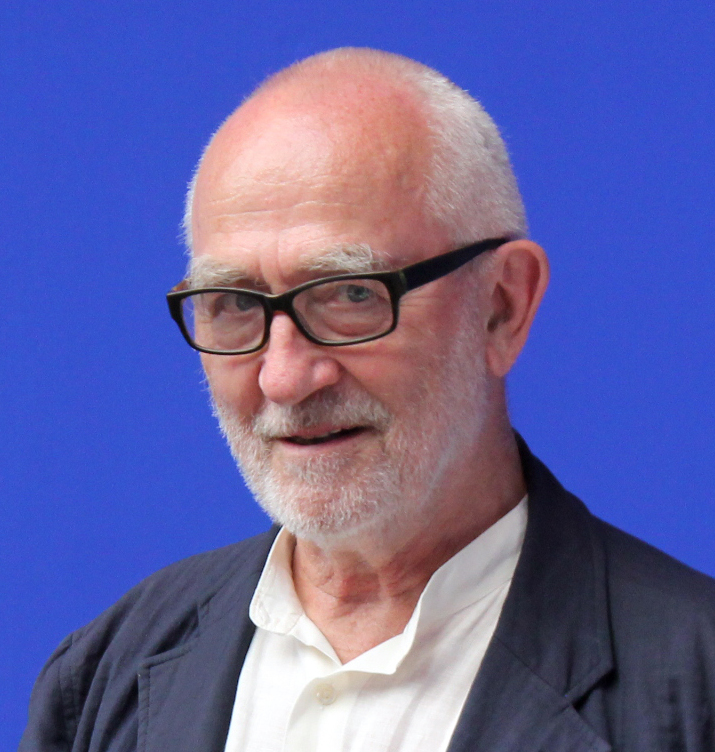
Peter Zumthor
Peter Zumthor is a Swiss architect whose work is frequently described as uncompromising and minimalist. Though managing a relatively small firm and not being a prolific architect, he won the 2009 Pritzker Prize and 2013 RIBA Royal Gold Medal.
🟢 La canicule m’a radicalisée
IA, politique(s), même combat : on veut des actes pour préserver l'habitabilité de la planète.