

Understand how elected officials vote on legislation.
BallotReady: Where you go before you vote
Your go-to source for nonpartisan election information. Register to vote, explore the entire ballot, find your polling place, and more, all in one place.
Project 2025 Tracker
A comprehensive, community-driven initiative to track the implementation of Project 2025's policy proposals
US Domestic Policy Dashboard - Impact Counter | Impact Counter
Explore US domestic policies and their impact on public health across all branches of government.

Tracking regulatory changes in the second Trump administration | Brookings
How much regulation is happening under the Trump administration? This tracker helps you monitor a selection of delayed, repealed, and new rules, notable guidance and policy implementations, and important court battles covering energy, health, labor, and more.

Democracy Tracker | The Global State of Democracy
Each report describes an event that affects the state of democracy in a given country, with assessments made relative to that country's context, not as comparisons or rankings between countries.
FiftyPlusOne - Latest Political Polls and Averages
A comprehensive list of polls and polling averages for elections and politician approval.

Machine-readable attitudes - Computational Semantics++
User intent declarations can be viewed as propositional attitudes (permission, prohibition, desire, intention, belief, etc.) over structured descriptions of data use. Treating them that way gives you composable building blocks from existing theory and lens-based translations between community vocabularies that make explicit what each translation cannot carry through.
A Grammar of Institutions
The institutional grammar introduced here is based on a view that institutions are enduring regularities of human action in situations structured by rules, norms, and shared strategies, as well as by the physical world. The rules, norms, and shared strategies are constituted and reconstituted by human interaction in frequently occurring or repetitive situations. The syntax of the grammar identifies components of institutions and sorts them into three types of institutional statements: rules, norms, and shared strategies. We introduce the grammar, outline methods for operationalizing the syntax, apply the syntax to an analysis of cooperation in collective dilemma situations, and discuss the pragmatics of the grammar for analyses of behavior within complex institutional settings.
Political science
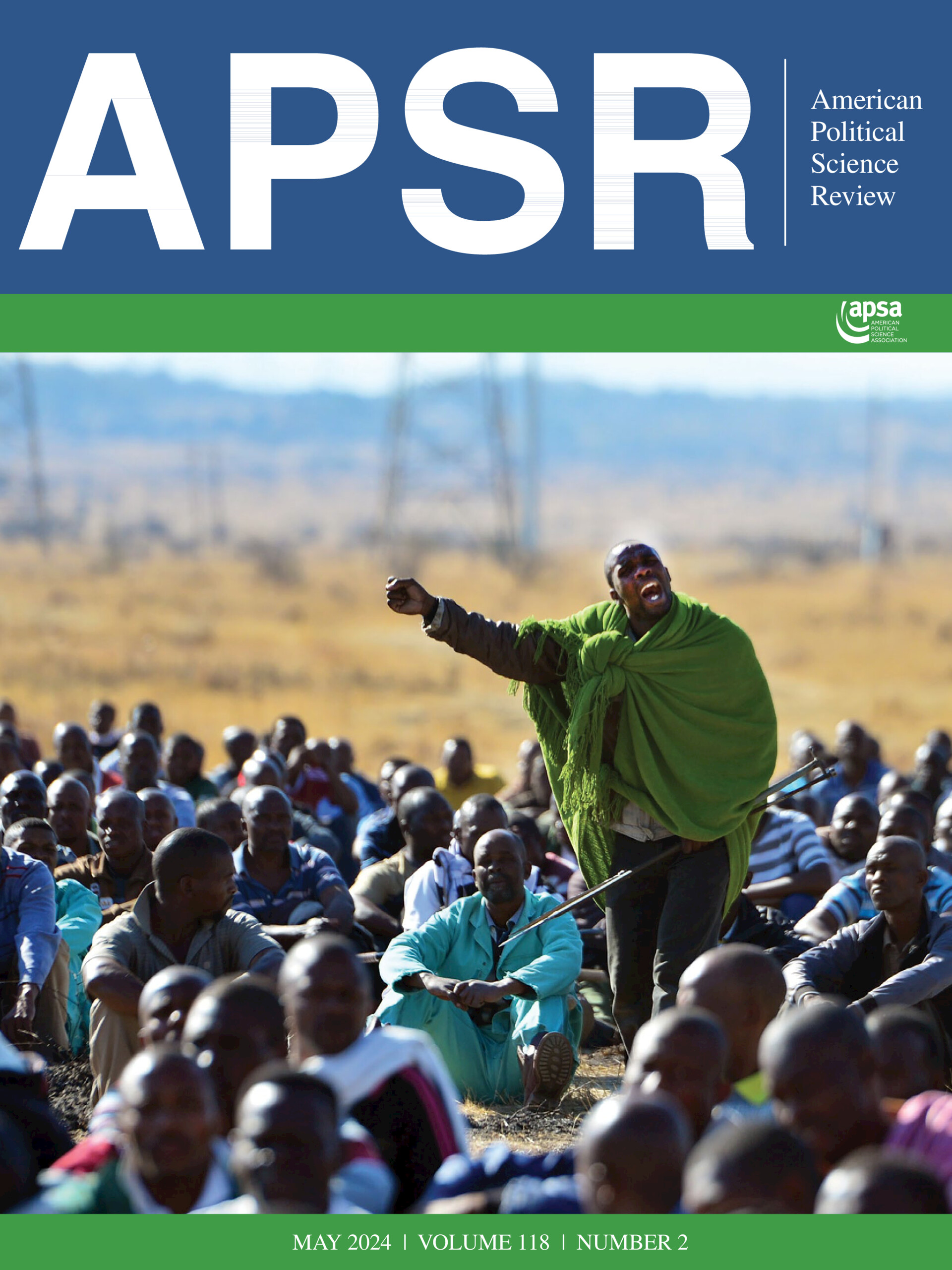
Political science[a] is the social scientific study of politics. It deals with systems of governance and power, and the analysis of political activities, political thought, political behavior, and associated constitutions and laws. Specialists in the field are political scientists.
Governing Online Speech: From 'Posts-As-Trumps' to Proportionality and Probability
Online speech governance stands at an inflexion point. Platforms are emerging from the state of emergency invoked during the pandemic and lawmakers are poised t


The marketplace of rationalizations
Recent work in economics has rediscovered the importance of belief-based utility for understanding human behaviour. Belief ‘choice’ is subject to an important constraint, however: people can only bring themselves to believe things for which they can find rationalizations. When preferences for similar beliefs are widespread, this constraint generates rationalization markets, social structures in which agents compete to produce rationalizations in exchange for money and social rewards. I explore the nature of such markets, I draw on political media to illustrate their characteristics and behaviour, and I highlight their implications for understanding motivated cognition and misinformation.

The Anti-Corruption Tracker: Mapping the Erosion of Oversight and Accountability
This Anti-Corruption Tracker focuses on the erosion or dismantling of oversight and accountability systems within the United States Executive Branch

Official language
An official language is defined by the Cambridge English Dictionary as, "the language or one of the languages that is accepted by a country's government, is taught in schools, used in the courts of law, etc."[1] Depending on the decree, establishment of an official language might also place restrictions on the use of other languages.[2][3] Designated rights of an official language can be created in written form or by historic usage.[4][5]
AI Index | Stanford HAI
The mission of the AI Index is to provide unbiased, rigorously vetted, and globally sourced data for policymakers, researchers, journalists, executives, and the general public to develop a deeper understanding of the complex field of AI. To achieve this, we track, collate, distill, and visualize dat
