


It’s often assumed people lose their minds in a crowd. Research on riots, festivals and sports tells a more uplifting story
Building for Organizers - The People Layer
The most enduring social networks aren’t the prettiest or the most addictive – it’s the ones that empower organizers.
Building for Organizers - The People Layer
The most enduring social networks aren’t the prettiest or the most addictive – it’s the ones that empower organizers.
Assumed Audiences
Naming your invisible audiences to free yourself from unspoken obligations
The thinking style that makes people vulnerable to extremism | Psyche Ideas
The people most drawn to ideological thinking and authoritarianism aren’t aware of what makes them so susceptible
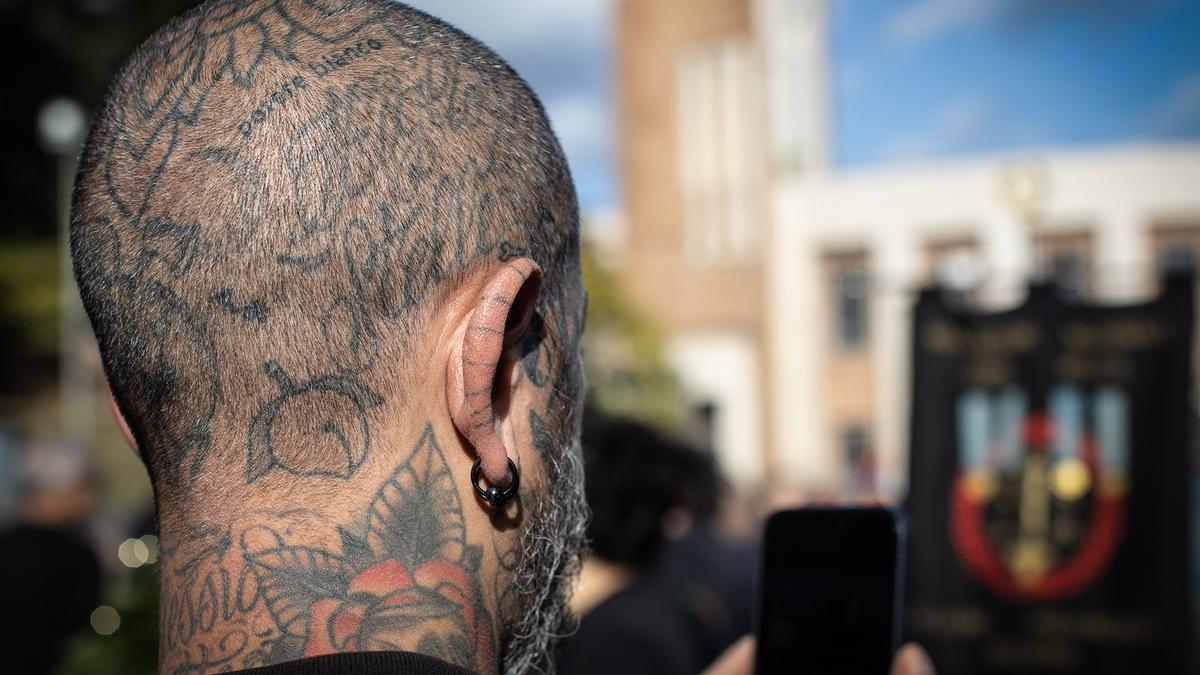
Edinburgh festival: how the city’s residents could benefit after the crowds leave
Every year the festival attracts thousands of people to Scotland’s capital, but is the city able to harness this and improve it as a place to live?

Anti-democratic attitudes are highly contagious, new psychology study finds
The rise of anti-democratic sentiments might be driven by social contagion. Researchers have discovered that citizens often adapt their personal support for authoritarian rule to align with the political views of those around them.
THRONG — a crowd made of bluesky
Walk around in first person while the Bluesky firehose spawns people who follow you, read their post out loud, and wander off.
Vibe Coding: The Final Form of Hyper-Individualism
A few days ago, I had to deal with the first "vibe coded" PR to my software. In this article, I reflect on this encounter, and analyze the social …

Tiny Publics: Small Groups and Civil Society
It has been conventional to conceptualize civic life through one of two core images: the citizen as lone individualist or the citizen as joiner. Drawing on analyses of the historical development of the public sphere, we propose an alternative analytical framework for civic engagement based on small-group interaction. By embracing this micro-level approach, we contribute to the debate on civil society in three ways. By emphasizing local interaction contexts-the microfoundations of civil society-we treat small groups as a cause, context, and consequence of civic engagement. First, through framing and motivating, groups encourage individuals to participate in public discourse and civic projects. Second, they provide the place and support for that involvement. Third, civic engagement feeds back into the creation of additional groups. A small-groups perspective suggests how civil society can thrive even if formal and institutional associations decline. Instead of indicating a decline in civil society, a proliferation of small groups represents a healthy development in democratic societies, creating cross-cutting networks of affiliation.
Media Ownership Monitor
Mass media influences how facts are viewed and debated in a society, contributing to crafting its public opinion. Independence and pluralism...

It’s time for movements to rethink social media
Movements can still find people on social media. But the real organizing has to happen somewhere else — and that's the part we keep skipping.

How to fight hate: New Humanist’s Autumn 2026 issue is out now
With race riots on the rise and the populist right gaining traction, we ask how the UK can push back

The Pac-Man Rule at Conferences
I firmly believe that conferences can provide a lot of value for people in an industry. Conferences allow people to create a network, which helps them feel integrated in a community and profession....

Volunteering and Civic Action: Boundaries Blurring, Boundaries Redrawn
The aim of this introduction to the special issue is to call into question the presumed conceptual divide between volunteering and civic action and suggest an analytical tool and four perspectives that bring to light the varying meanings of popular engagement. Volunteering and civic action are laden with different moral meanings, are associated with different theoretical approaches and, just as important, have been assigned different roles in society. This conceptual divide is reflected in the academic debate. Only rarely, however, has the academic debate explored and discussed how the meaning of volunteering and civic action has changed historically. Therefore, we argue for a contextual and relational interpretation of the different forms of popular engagement instead of the application of essentialist definitions of volunteering and civic action. In order to examine the variety of popular engagement without being caught up in pre-made or taken-for-granted conceptualisations of volunteering and civic action as two separate forms of popular engagement, we propose approaching variations of popular engagement with respect to two criteria: first, to what degree popular engagement is enacted in institutionalised spheres of politics or in social public spheres and, second, to what degree actions of popular engagement are controversial or operating in line with what is widely agreed upon and dominant in public opinion. Moreover, we argue that history, discourses, politics and a relational approach are four crucial perspectives in order to reveal the varying meanings of popular engagement.
Social Capital - Hitchhiker's Guide to the Atmosphere
The problem Atproto is solving
Out of Sight; Out of Mind - Ewan’s Blog
Disability did not become fashionable. Disabled people became harder to ignore.