
The people most drawn to ideological thinking and authoritarianism aren’t aware of what makes them so susceptible
Guide to Responsible, Strategic Reporting on Hate and Extremism
Recommendations for researchers, journalists and others on how to avoid unintentionally bolstering extremists and causing additional harm.

Anti-democratic attitudes are highly contagious, new psychology study finds
The rise of anti-democratic sentiments might be driven by social contagion. Researchers have discovered that citizens often adapt their personal support for authoritarian rule to align with the political views of those around them.
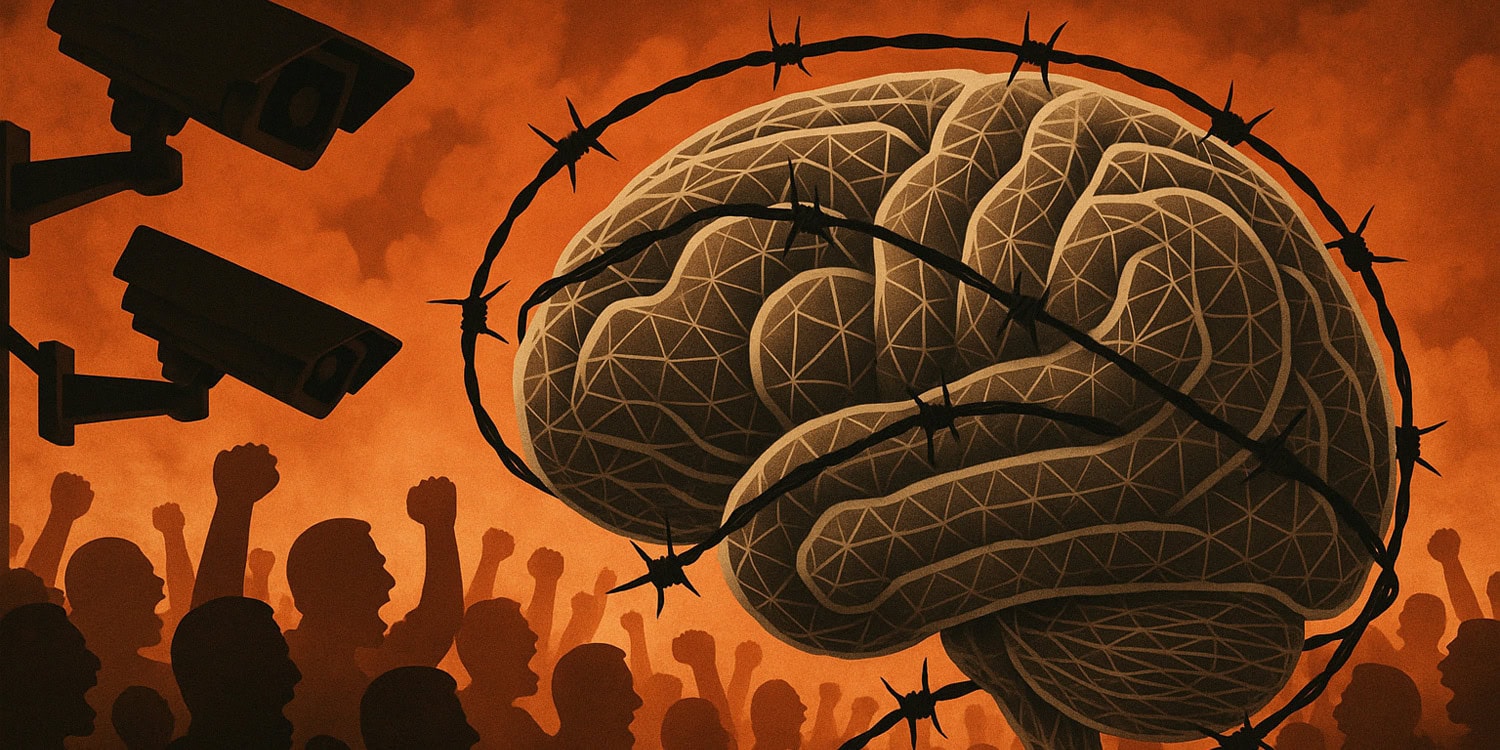
How to Think About Politics Without Wanting to Kill Yourself
There are Enemies, and then there are Cowards.

Being in a crowd doesn’t make you part of a mindless mob | Psyche Ideas
It’s often assumed people lose their minds in a crowd. Research on riots, festivals and sports tells a more uplifting story

When is Political Violence Justified
What the Liberal Tradition Says on the Subject

The marketplace of rationalizations
Recent work in economics has rediscovered the importance of belief-based utility for understanding human behaviour. Belief ‘choice’ is subject to an important constraint, however: people can only bring themselves to believe things for which they can find rationalizations. When preferences for similar beliefs are widespread, this constraint generates rationalization markets, social structures in which agents compete to produce rationalizations in exchange for money and social rewards. I explore the nature of such markets, I draw on political media to illustrate their characteristics and behaviour, and I highlight their implications for understanding motivated cognition and misinformation.
People Who Can't Visualize Anything Are Challenging a 300-Year-Old Theory of Thought
Mental imagery might not be as central to complex human thought as we believed, philosophers say.

How to fight hate: New Humanist’s Autumn 2026 issue is out now
With race riots on the rise and the populist right gaining traction, we ask how the UK can push back

What does it really mean to have a moment of insight? | Psyche Notes to Self
From art to science to love, the moment of insight happens when we see a likeness between different things

Vibe Coding: The Final Form of Hyper-Individualism
A few days ago, I had to deal with the first "vibe coded" PR to my software. In this article, I reflect on this encounter, and analyze the social …
Effective Altruism’s Problems Go Beyond Sam Bankman-Fried - Bloomberg
archived 12 Mar 2026 21:01:45 UTC

Liberalism in Dark Times: The Liberal Ethos in the Twen…
A timely defense of liberalism that draws vital lessons…

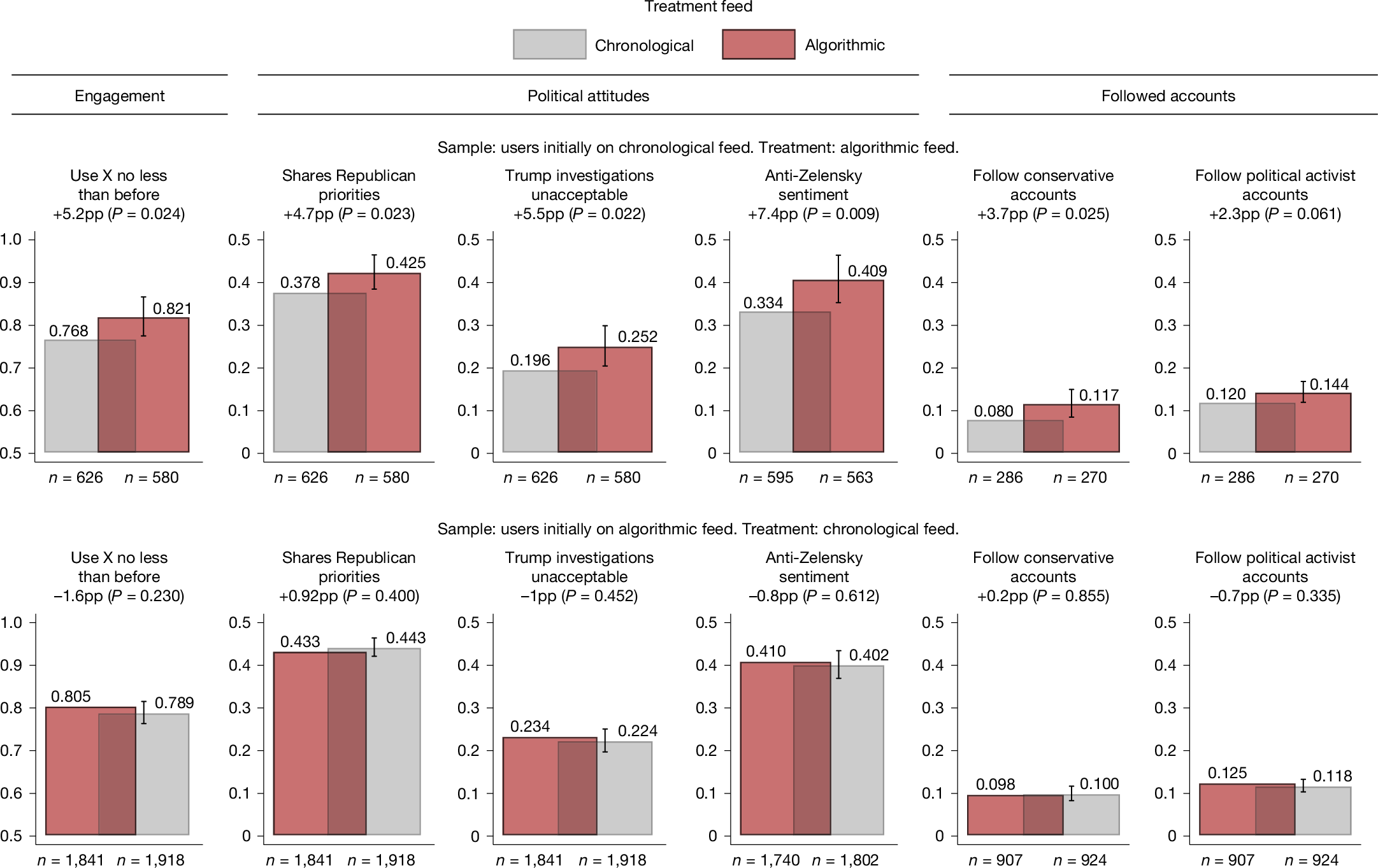
The political effects of X’s feed algorithm
Feed algorithms are widely suspected to influence political attitudes. However, previous evidence from switching off the algorithm on Meta platforms found no political effects1. Here we present results from a 2023 field experiment on Elon Musk’s platform X shedding light on this puzzle. We assigned active US-based users randomly to either an algorithmic or a chronological feed for 7 weeks, measuring political attitudes and online behaviour. Switching from a chronological to an algorithmic feed increased engagement and shifted political opinion towards more conservative positions, particularly regarding policy priorities, perceptions of criminal investigations into Donald Trump and views on the war in Ukraine. In contrast, switching from the algorithmic to the chronological feed had no comparable effects. Neither switching the algorithm on nor switching it off significantly affected affective polarization or self-reported partisanship. To investigate the mechanism, we analysed users’ feed content and behaviour. We found that the algorithm promotes conservative content and demotes posts by traditional media. Exposure to algorithmic content leads users to follow conservative political activist accounts, which they continue to follow even after switching off the algorithm, helping explain the asymmetry in effects. These results suggest that initial exposure to X’s algorithm has persistent effects on users’ current political attitudes and account-following behaviour, even in the absence of a detectable effect on partisanship.
This Is Your Brain on Metaphors
Our brains are wired to confuse the real and the symbolic. And the implications can be as serious as war and peace.


Media Media
The authoritarians are winning, we can all see that. It wouldn't be the worst thing if the pro-democracy camp stopped being naive about social media.