


While its creator tells us that Pluribus is not about advent of generative AI, it's difficult not to spot the many places where the fledgling tech and extraterrestrial hivemind overlap.
The Future of Software Engineering Isn’t What You Think
Over the past two decades, I’ve watched software eat the world, then hardware catch up, then Generative AI reshape both at the same time…
Why so many game developers don't want to use generative AI
With credits ranging from Dispatch and Marvel Rivals to Uncharted and Dragon Age, over 30 devs share their thoughts on gen AI

A Real Political Economy of Technology - The Ideas Letter
Two technological futures are competing for political and material priority: generative AI and the green transition. Benanav argues that while AI is marketed as a world-reordering breakthrough, its productivity gains…
identifAI - Discover Origin. Reveal Insight
identifAI pioneers discerning human-AI creations, bolstering authenticity with advanced models. Determine if an image come from AI or from human!

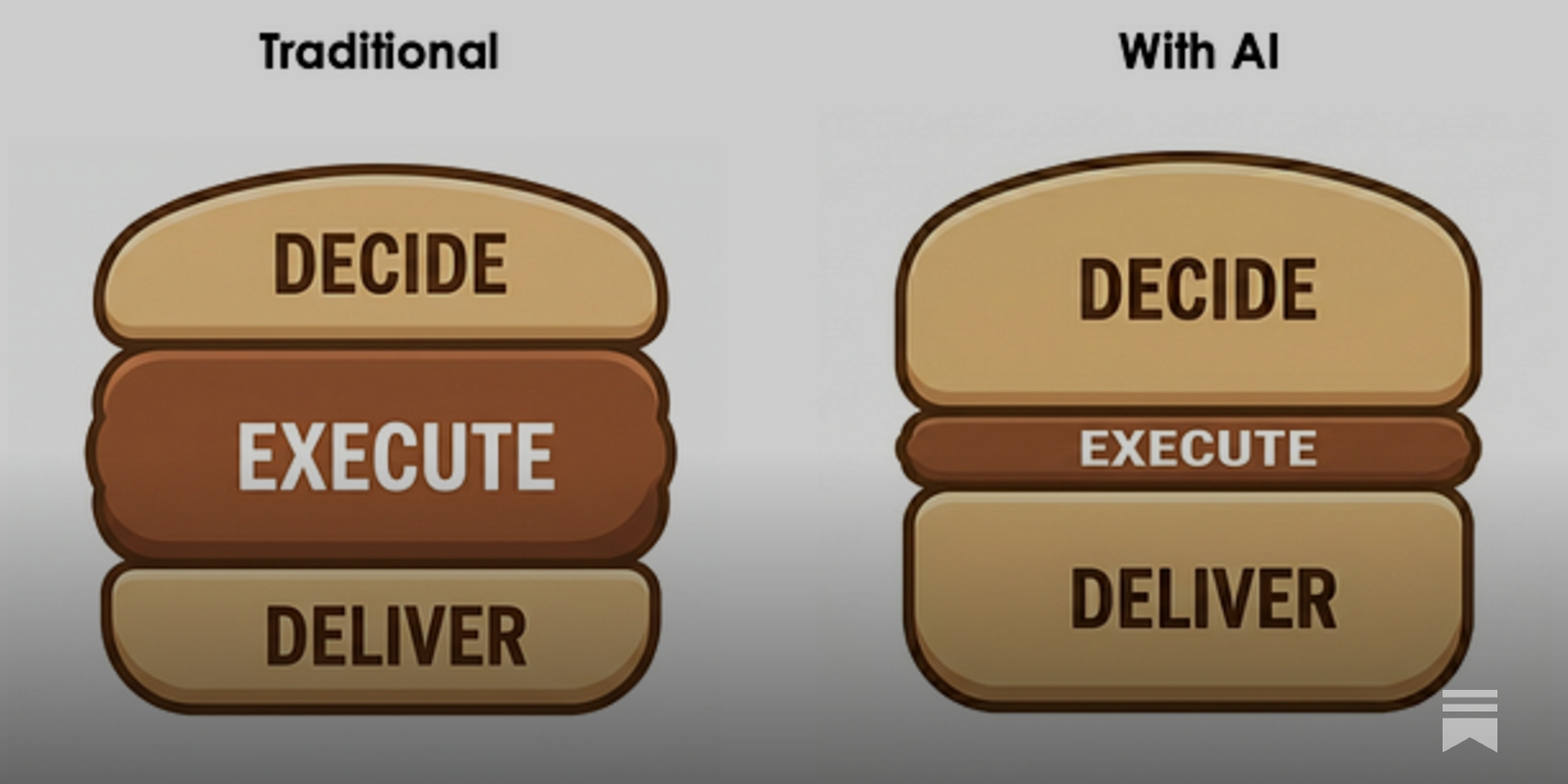
AI demands more engineering discipline. Not less
If you lived through the shift from handcrafted server pets to immutable infrastructure, you should sense something oddly familiar about what's happening now.
DeepMind Institute
Bold, well-evidenced thinking on AGI from the lab that pioneered the field. Read the latest essays from the DeepMind Institute.

Artificial Intelligence Glossary | Stanford HAI
Artificial Intelligence (AI) is rapidly growing, with new terms and concepts being introduced at a breakneck speed. You may have seen terms such as AGI, machine learning, or foundation models in media headlines, emerging legislation, or in your everyday life.
Breaking My Own Rule (Again): AI and the Job Hunt - Jacky Alciné
I said I wasn't going to lean on generative AI but I also said I was going to leave the tech industry. Here's what I actually used to keep applying and what it did (and didn't) do for me.

On AI and building your own GIS software
Of the thousands of essays over the past two years surrounding AI and its implications are some very thought provoking ones with enormous implications for GIS. Some of the essays are around the the…

AI Agent Lands PRs in Major OSS Projects, Targets Maintainer...
An AI agent is merging PRs into major OSS projects and cold-emailing maintainers to drum up more work.

AI Is a Product of Humanity. Humanity Should Own AI.
Big Tech has looted humanity’s creative output to create artificial intelligence. We don’t just deserve a share of AI’s profits — we deserve control over it.
An Elegant Solution to AI Slop: Tax It, and Use the Resulting Billions of Dollars to Fund Cultural Institutions, Artists, and Researchers
A technologist proposes slapping a "slop tax" on companies that use or create generative AI content.

Anatomy of a Frontier Lab Agent Intrusion: A Technical Timeline of the July 2026 Incident
We’re on a journey to advance and democratize artificial intelligence through open source and open science.

Why AI hasn’t replaced software engineers, and won’t
Coding agents as normal technology
AI Wrappers: It's Just Trucks All The Way Down
Check out this programming meme on ProgrammerHumor.io

Many Minds: Seven metaphors for AI
If you wanted a petri dish for understanding metaphors—how they emerge and evolve and jostle with each other—it would be hard to do better than the world of AI. We talk about AI systems variously as coaches or co-pilots, little genies or alien intelligences. Some researchers claim that AIs "grow," that they're entering their phase of "adolescence." Critics deride AI products as slop and dismiss LLMs as a kind of autocomplete on steroids. What's behind these different characterizations? Which ones are accurate and which are unfair? And are our metaphors mostly colorful rhetoric or do they matter? Are they shaping how we understand, adopt, and ultimately regulate these new technologies? My guest today is . Melanie is a computer scientist and Professor at the Santa Fe Institute. She is the author of the book, and she writes a by the same name. This episode is a bit of companion to with Steve Flusberg. In that episode, Steve and I attempted a kind of crash course on metaphor and the human mind. Here, Melanie and I sit down for more of an extended case study: how metaphors are guiding, galvanizing, and maybe deceiving us in the contested realm of AI discourse. We unpack seven of the most widely used metaphors in this space. We consider how these metaphors are shaping not only our everyday understandings of AI, but also law and policy. We also talk about the metaphor and analogy capabilities of AI itself. Can these system reason abstractly in the way that humans can? Along the way, Melanie and I touch on: AI-generated poetry, anthropomorphism, the original sin of AI research, the myth of Narcissus, psychometric testing and its pitfalls, metaphors for AI that are a bit hard to spot, and the question of whether an AI has ever come up with a decent analogy for itself. Longtime fans of the show will know that we've had Melanie on the show . We invited her back, not only because she's thought about metaphor and analogy in AI discourse for decades, but because she's a voice of calm insight in an area that’s increasingly awash in hype and polemic. Longtime fans of the show may also note that we are now celebrating our 6th birthday at Many Minds. That's right, the show launched in February 2020. If you'd like to support us as we recognize this milestone, you can leave us a rating or a review, recommend us to a friend, or give us a shout out on social media. Your support is always appreciated. Without further ado, on to my conversation with Dr. Melanie Mitchell. Enjoy! Notes 3:30 – For an overview of Douglas Hofstadter’s work on analogy, see . 8:00 – Much of our discussion in this interview draws on Dr. Mitchell’s piece on the in Science magazine. 13:30 – For earlier discussions of anthropomorphism on the show, see our earlier episodes and . 16:00 – See for the original discussion of LLMs as “stochastic parrots.” 17:00 – See for the original discussion of ChatGPT as a “blurry jpeg.” 18:30 – See for the original discussion of LLMs as role players. 22:00 – See for one use of the “LLMs as crowds” metaphor. See also a discussion of this metaphor (and other metaphors for AI) . 25:00 – For one discussion of AI as a “cultural technology” by Alison Gopnik and colleagues, see . For a more recent discussion of the same metaphor by Henry Farrell, Alison Gopnik and others, see . 27:00 – For the podcast series on intelligence that Dr. Mitchell co-hosted for the Santa Fe Institute, see . 28:00 – See for an influential formulations of the idea that AI is an “alien intelligence.” 29:00 – For philosopher Shannon Vallor’s book about AI as “mirror,” see . 31:00 – For the recent study on users’ metaphors for AI systems, see . 33:00 – For more on the rise of social AI, see our earlier episode . 38:00 – For more on what AI researchers might learn from developmental and comparative psychologists, see Dr. Mitchell’s (summarizing here keynote at NeurIPs). 42:00 – For more on the ARC (Abstraction and Reasoning Corpus) and the research that Dr. Mitchell and colleagues have been doing with it, see and . 48:30 – For the study on humans' preference for AI-generated poetry, see . 50:30 – For Brigitte Nerlich’s documentation and discussion of various metaphors for AI (including AI’s metaphors for itself), see . Recommendations , by Shannon Vallor ‘,’ by Murray Shanahan (!) et al. ‘,’ by Henry Farrell et al. Many Minds is a project of the , which is made possible by a generous grant from the John Templeton Foundation to Indiana University. The show is hosted and produced by , with help from Assistant Producer and with creative support from DISI Directors Erica Cartmill and Jacob Foster. Our artwork is by . Subscribe to Many Minds on Apple, Stitcher, Spotify, Pocket Casts, Google Play, or wherever you listen to podcasts. You can also now subscribe to the Many Minds newsletter ! We welcome your comments, questions, and suggestions. Feel free to email us at: manymindspodcast@gmail.com. For updates about the show, visit or follow us on Bluesky ().
