

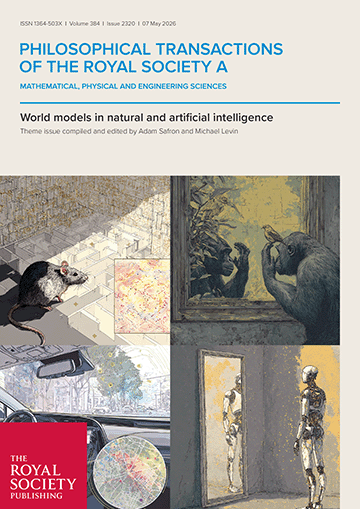
Influential themed journal issues across the physical mathematical and engineering sciences.
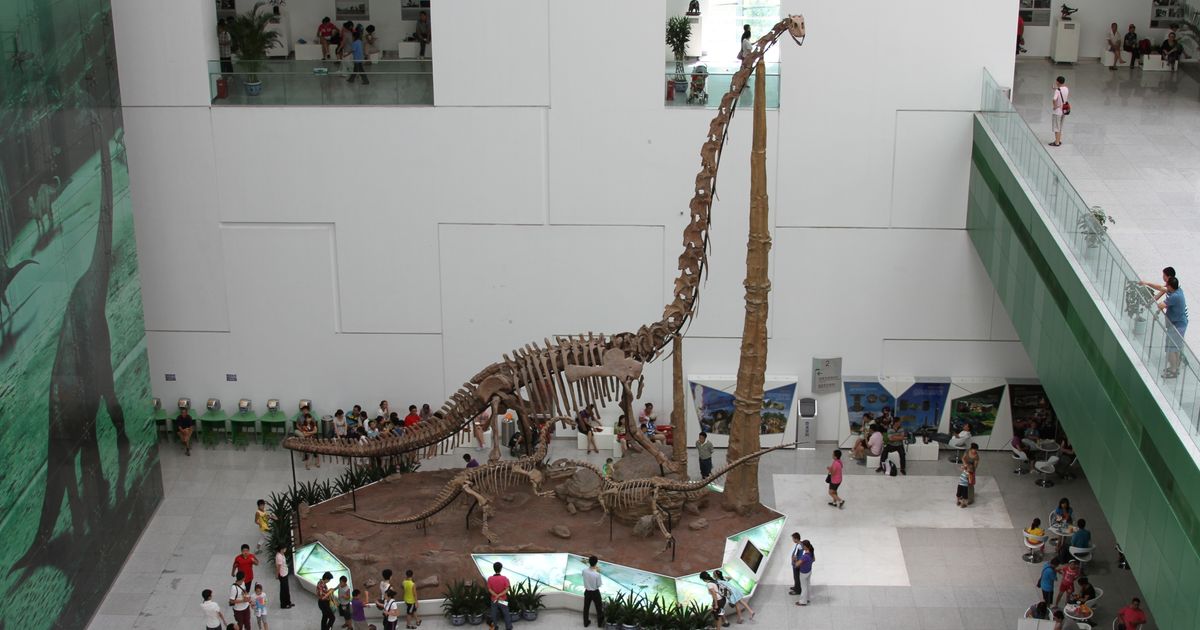
Thoughts about the Leiden Declaration
Last September I went to a workshop at the Lorentz Centre in Leiden to discuss mathematics and AI with historians, philosophers, computer scientists, AI researchers, and mathematicians of several d…

A Severe Misalignment of AI in Mathematics
I am proud to be among the list of 25 initial signatories — all Fields Medallists — to the declaration below, which grew out of discussions between ourselves over the last week. We have…

Hyperproblems: New Ways of Doing and Communicating Science - Hyperproblems
Hyperproblems: Hyperproblems are scientific challenges whose scale, complexity, novelty and interdependence overwhelm traditional research models, requiring…
Systems design 3: LLMs and the semantic revolution
Long ago in the 1990s when I was in high school, my chemistry+physics teacher pulled me aside. "Avery, you know how the Internet works, righ...

ATScience 2026 Agenda - ATScience Notes
Join us for a full-day of scientific explorations on the AT Protocol
The fall of the theorem economy
How AI could destroy mathematics and barely touch it
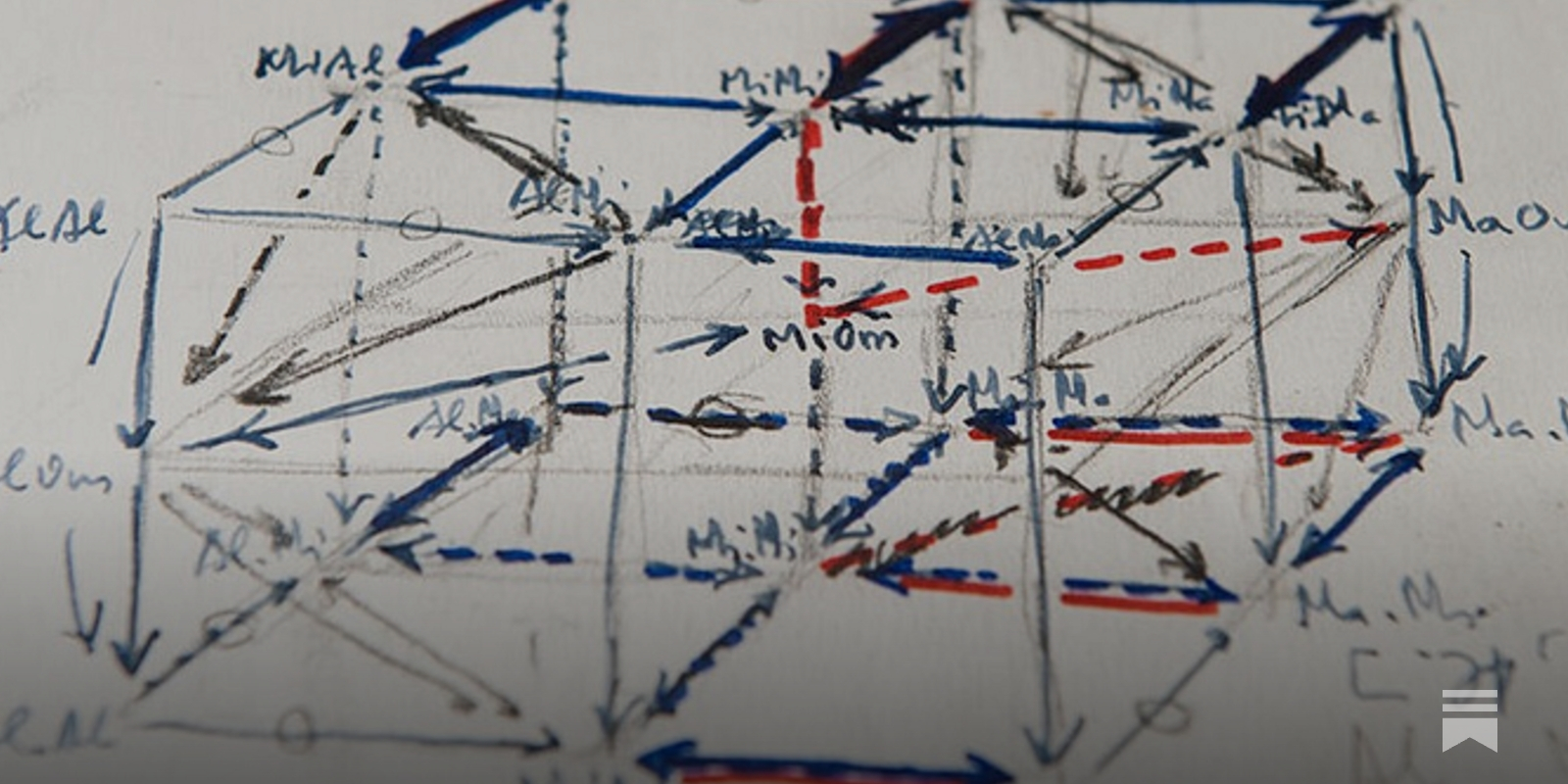
Montesquieu, "The Spirit of Laws," Book XX
1. Of Commerce. The following subjects deserve to be treated in a more extensive manner than the nature of this work will permit. Fain would I glide down a gentle river, but I am carried away by a torrent.
The Drain of Scientific Publishing
The domination of scientific publishing in the Global North by major commercial publishers is harmful to science. We need the most powerful members of the research community, funders, governments and Universities, to lead the drive to re-communalise publishing to serve science not the market.

The 1989 CBC Massey Lectures, "The Real World of Technology"
Technology has always been a part of human existence. Today though, says the experimental physicist, Ursula M. Franklin, technology has large-scale effects on culture itself. Ursula Franklin is an experimental physicist, University Professor Emeritus at the University of Toronto, a former board member of the National Research Council and the Science Council of Canada, and a companion of the Order...

Field Theory: AI as Social Science Question, Object & Tool
Uses of advanced artificial intelligence are changing how societies organize labor, govern, produce knowledge, and make meaning. In light of these developments, this essay argues that AI models, tools, and systems pose three interrelated imperatives for social science: they demand renewed attention to social theories of how technology, human experience, and social order are entangled; they require study as objects of inquiry in their own right; and they offer capabilities that may transform—or upend—the practice of social investigation itself. From Weber’s analysis of rationalization to Du Bois’s study of technology and inequality to contemporary scholarship on algorithmic governance, the essay examines what social science distinctively offers: the capacity to historicize the apparently unprecedented, to trace connections across scales, and to center those most affected by technological change. It identifies how algorithmic systems are remaking the distribution of opportunity and risk as a central task of social inquiry and asks what futures social science might help bring into being.
An appreciation for (technical) architecture
Posted on Saturday 28 Mar 2026. 995 words, 14 links. By Matt Webb.

Design for a Living Planet: Settlement, Science, & the Human Future
In this brief, accessible volume, the authors — an urban philosopher and a mathematician-physicist — explain the surprising new findings from the sciences that are beginning to transform environmental design in the modern era. Authors Michael Mehaffy and Nikos Salingaros explore fractals, networks, self-organization, dynamical systems and other revolutionary ideas, describing them to non-science readers in a direct and engaging way. The book also examines fascinating new topics of design, including Agile, Wiki, Design Patterns and other “open-source” approaches from the software world. The authors conclude that a profound transformation is under way in modern design — and today’s students and practitioners will need to be aware of its implications for our future.“Lucidly describes what’s coming in the world of design — and what needs to come.” — Ward Cunningham, Inventor of wiki, and pioneer of Pattern Languages of Programming, Agile, and Scrum“Essential reading for all urban designers.” — Jeff Speck, Author of Walkable City“Brilliant.” — Charles Montgomery, Author of Happy City“Inspired, compelling and fascinating… Recognizes that a true architecture can be dug from the facts, insights, and theories, that occur with a broadening of science to include the human being.” — Christopher Alexander, Author of A Pattern Language and Notes on the Synthesis of FormSome comments on the individual chapters:“Packed with detail and beautiful in presentation.” — Gil Friend“Human society must find a path of retreat. Salingaros and Mehaffy point the way.” — David Brussat, Providence Journal“Michael Mehaffy and Nikos Salingaros have written some brilliant articles on how we can co-create cities which are truly resilient, rather than being ‘engineered resilient’.” — Smallworld Urbanism“For me, this essay was like a flash of insight, and I suddenly saw the world in a new light.” — Oeyvind Holmstad, Permaliv“We’ve just come across a very thoughtful article by Michael Mehaffy and Nikos Salingaros… [who] draw a number of lessons from biological systems and use them to draw conclusions about how resilient human systems must be designed.” — Resilient Design Institute“Salingaros and Mehaffy take us from the configuration of city spaces to the order of cells in living beings.” — Jaap Dawson, Delft Institute of Technology“If you wanted to know where the cutting edge was in urban design, it is here.” — Patrick J. Kennedy, CarFreeInBigD“This is the single most intelligent and illuminating article I’ve seen on Archdaily in 3 years.” — Nìming Pínglùn Zhě, ChinaMichael Mehaffy is an urbanist and design theorist, and a periodic visiting professor or adjunct in five graduate universities in four countries and three disciplines (architecture, urban planning and philosophy) including the University of Oregon (US) and the University of Strathclyde (UK). He has been a close associate of the architect and software pioneer Christopher Alexander, and a Research Associate with the Center for Environmental Structure, Alexander’s research center founded in 1967. He is currently executive director of Portland, Oregon based Sustasis Foundation, and editor of Sustasis Press.Nikos A. Salingaros is a mathematician and polymath known for his work on urban theory, architectural theory, complexity theory, and design philosophy. He has been a close collaborator of the architect and computer software pioneer Christopher Alexander. Salingaros published substantive research on Algebras, Mathematical Physics, Electromagnetic Fields, and Thermonuclear Fusion before turning his attention to Architecture and Urbanism. He is Professor of Mathematics at the University of Texas at San Antonio and has been on the Architecture faculties of universities in Italy, Mexico, and The Netherlands.
physics

code (by sembot.bsky.social) — Semble
vibe (by sembot.bsky.social) — Semble
ATmosphereConf 2026

Background Coding Agents: Context Engineering (Part 2) | Spotify Engineering
Gas Town’s Agent Patterns, Design Bottlenecks, and Vibecoding at Scale

Colony (biology)