

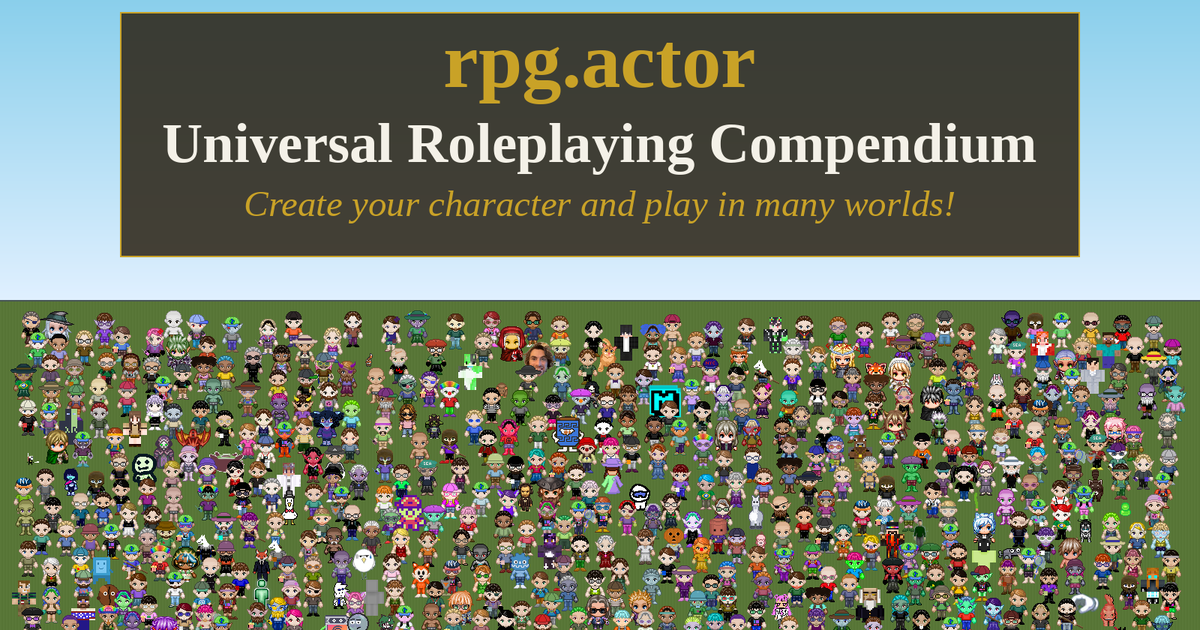
Create your rpg.actor today and play in many worlds across different tabletop systems, video games, and online experiences.
Actors with Tokio – Alice Ryhl
This article is about building actors with Tokio directly, without using any actor libraries such as Actix. This turns out to be rather easy to do, however there are some details you should be aware of:
News - This Week in Videogames
Covering the important things happening in the world of videogames. News, reviews, and insights without ads or filler content.

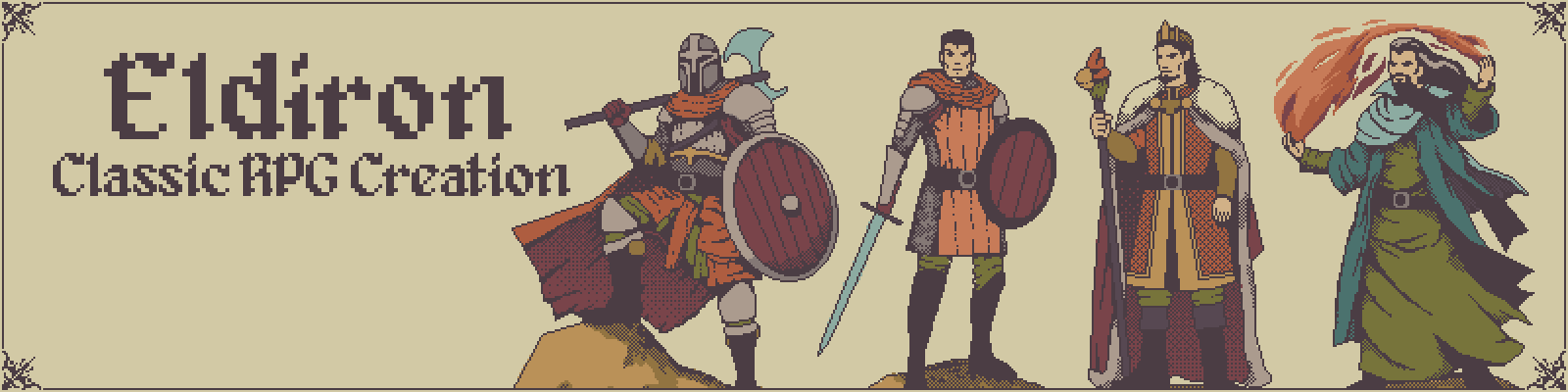
Retro RPG Creator | Eldiron
Eldiron is a retro RPG game creator for 2D, isometric, and first-person adventures. Build your own classic RPG worlds with powerful tools and cross-platform freedom.
More Actors with Tokio
In spring 2021, when I was first submerging into tokio, a colleague and friend mentioned I should ingest this article: Actors with Tokio by Alice Ryhl. And, did I ingest it. To summarize, the article proposes an architectural style which relies on message passing (channels) and inherent parallelism (tasks) as well as concurrency (via async/.await) to neatly and safely structure applications dealing with I/O. But really, go read the article.
Screen As Room: An Architectural Perspective on User Interfaces — Christoph Locher · Interaction Designer
With the use of video games as social spaces being observed for several years and the increased focus put on virtual social spaces due to the scarceness of physical social spaces in the last months, the concept of “spatial interfaces” is once again at the center of discussions. I want to add an alternative perspective to this, looking at the properties of physical spaces as metaphors, rather than models, for interfaces and exploring seven of them in more detail.
Agent skill · Libraries.dev
Teach your coding agent Border beam, Thinking orbs, Gooey, Voice, Bot avatars, Liquid metal and Image.

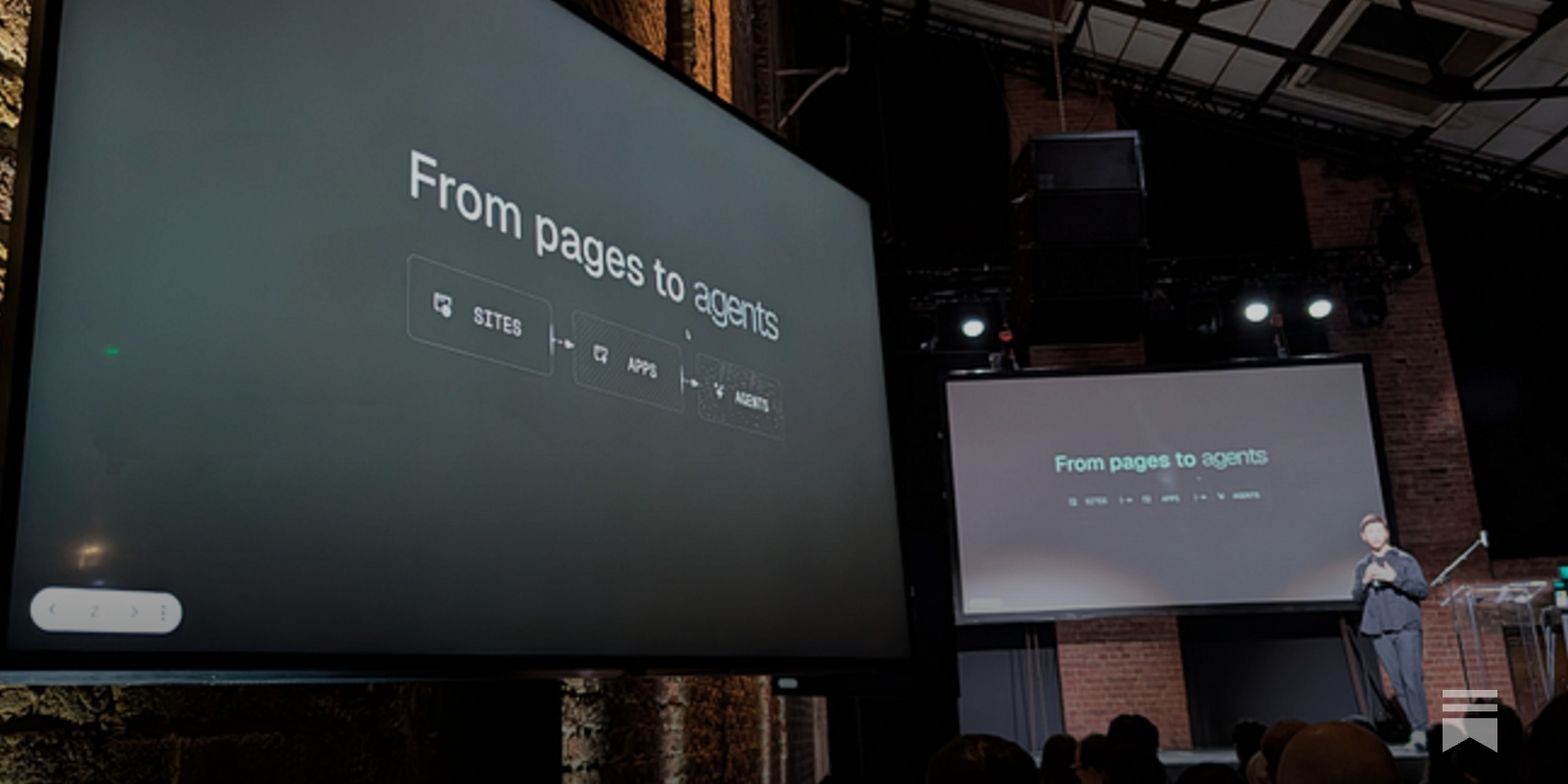
Are we evolving from pages to apps to agents?
Recently, Vercel came to London and teamed up with Anthropic’s local chapter to host a skills event.
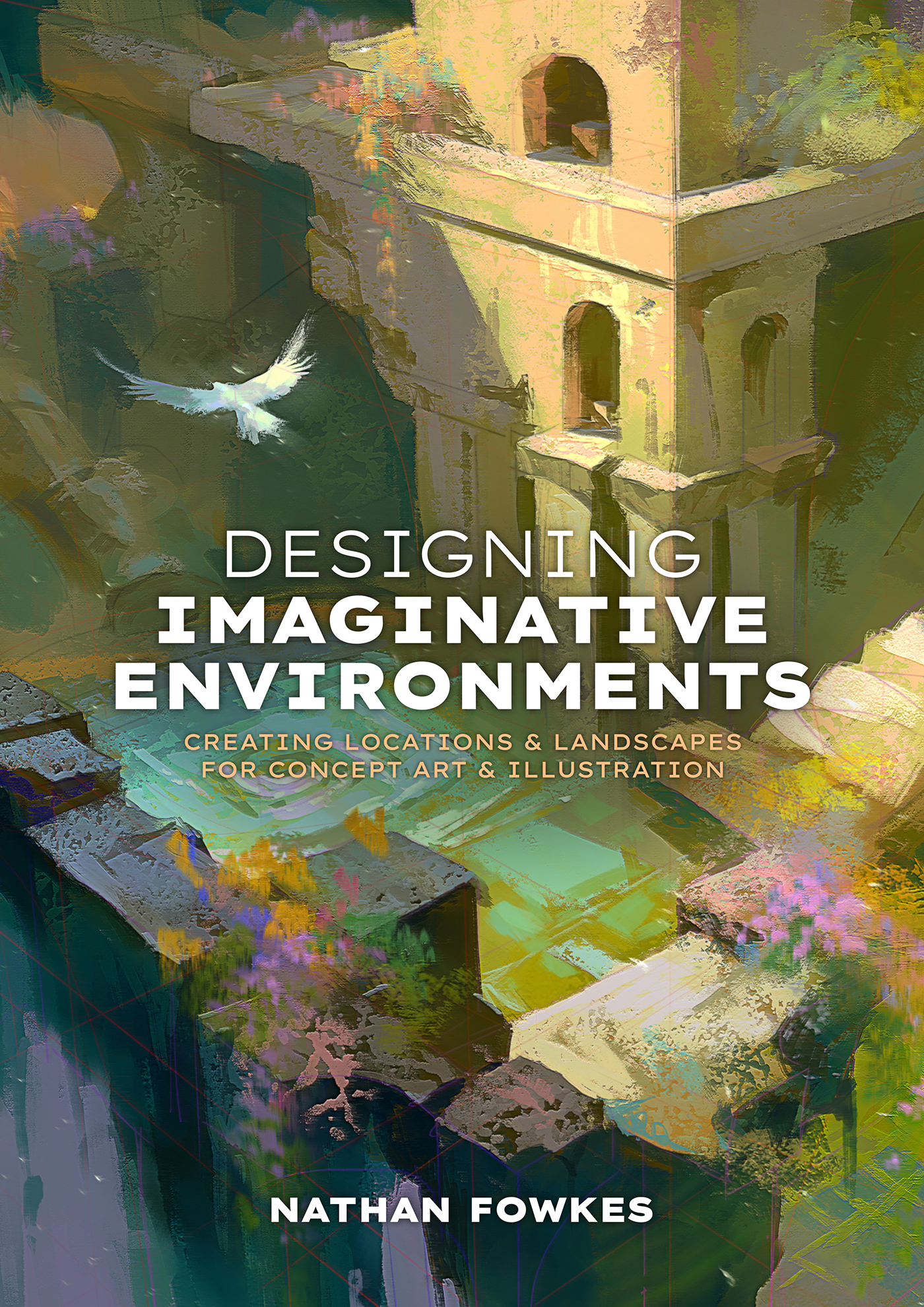
Designing Imaginative Environments by Nathan Fowkes
Join industry veteran Nathan Fowkes on a deep dive into the hows and whys of designing environments for entertainment. From creating mood with color and light, to exploring different biomes and weather, to crafting architecture and props, he will teach you how to design amazing environments that make your work stand out from the crowd.
Pony
An open-source, object-oriented, actor-model, capabilities-secure, high-performance programming language.
If LLMs Have Human-Like Attributes, Then So Does Age of Empires II
Much research has been carried out on large language models (LLMs) and LLM-powered agentic workflows. However, many works within the field state emergence of, ascribe to, or assume, generalised anthropomorphic attributes to them (e.g., morality or understanding of natural language). Our goal is not to argue in favour or against the existence of these attributes, but to point out that these conclusions could be incorrect. For this we build and train a simple neural network on the videogame Age of Empires II, and note that any entity in a sufficiently-powerful substrate, such as LEGO or the Greater Boston Area, could also present such attributes. Hence, the purported anthropomorphic attributes of LLMs are empirically non-unique: although some properties (e.g., responses to prompts) could remain constant, others, such as the interpretation of their perceived behaviour, might change with the substrate. Thus, any empirically-grounded discussion requires explicit measurement criteria; otherwise the interpretation is left to the representation. We then show that assuming that these attributes exist or not in a system, independent of the substrate and in a generalised way, leads to either circular or uninformative conclusions, regardless of the experimenter's viewpoint on the subject. Finally we propose a 'null' assumption, where one assumes LLM non-uniqueness instead of assuming anthropomorphic attributes to set up an experiment, along with examples of it. We also discuss potential objections to our work, briefly survey the field, and prove that Age of Empires II is functionally- and Turing-complete.

Cursor: AI coding agent
Built to make you extraordinarily productive, Cursor is the best AI coding agent.

The Persona Selection Model: Why AI Assistants might Behave like Humans
What sort of thing is a modern AI assistant? One perspective holds that they are shallow, rigid systems that narrowly pattern-match user inputs to training data. Another perspective regards AI systems as alien creatures with learned goals, behaviors, and patterns of thought that are fundamentally inscrutable to us. A third option is to anthropomorphize AIs and regard them as something like a digital human. Developing good mental models for AI systems is important for predicting and controlling their behaviors. If our goal is to make AI assistants that are useful and aligned with human values, the right approach will differ quite a bit if we are dealing with inflexible computer programs, aliens, or digital humans.
Strix the Stateful Agent
Meet Strix. I built Strix initially just as a hack project, but it’s become a tremendous help. But also, it’s gotten a little weird at times. Strix is a stateful agent. An AI that remembers long after the conversation is finished.

AI Act
The AI Act is the first-ever legal framework on AI, which addresses the risks of AI and positions Europe to play a leading role globally.