

The UK Government’s response to the Coronavirus pandemic was informed by its Scientific Advisory Groups for Emergencies (SAGE) ecosystem, which included the main SAGE committee, many sub committees, and information from government departments, public bodies (e.g. NHS, UKHSA, ONS) and commissioned academic research. From January 2020 to February 2022 this resulted in over 900 documents that fed into or were produced by SAGE. SAGE was stood down after February 2022.
Retracted coronavirus (COVID-19) papers
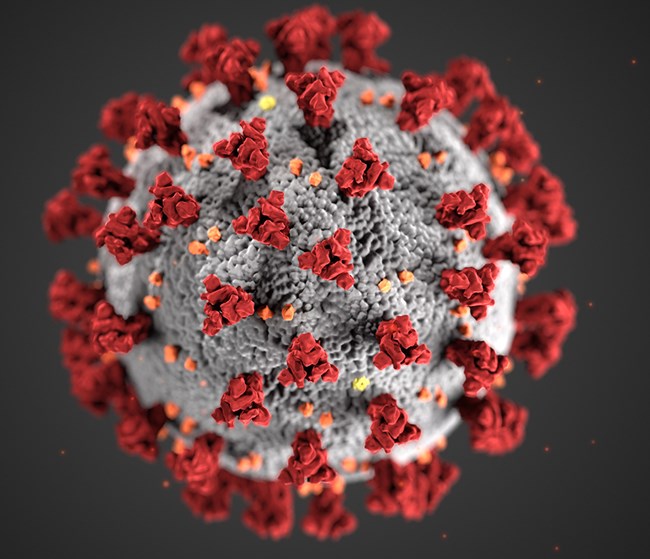
via CDC We’ve been tracking retractions of papers about COVID-19 as part of our database. Here’s a running list, which will be updated as needed. (For some context on these figures, see…
Public Body Vulnerabilities
From the Met Office to the UK Health Security Agency to the Office for National Statistics, the UK relies on independent expert bodies to generate evidence, regulate complex industries, and hold government to account. This reference guide maps how 44 of those bodies are constituted and how their independence could be eroded by a determined government.

What happened to Science Goodreads and how do we rebuild it? A 65 million dollar question (at least) - CAIROS Blog
The story of the rise and fall of Mendeley
Project 2025 Tracker
A comprehensive, community-driven initiative to track the implementation of Project 2025's policy proposals
Anatomy of a Frontier Lab Agent Intrusion: A Technical Timeline of the July 2026 Incident
We’re on a journey to advance and democratize artificial intelligence through open source and open science.

The Scientific Contribution Graph: Automated Literature-based Technological Roadmapping at Scale
Sir Isaac Newton famously wrote, “If I have seen further, it is by standing on the shoulders of giants”. Scientific contributions are rarely developed in isolation, but build upon prior contributions, such as problem framings, experimental methods, and empirical findings. Understanding these prerequisite relationships is important for studying scientific progress, and for automated scientific discovery systems that must reason about which existing capabilities can be used to develop new ones (e.g. Lu et al., 2024; Jansen et al., 2025b; Baek et al., 2025).
Curvenote | Web-first Scientific publishing
Curvenote’s Scientific Content Management System (SCMS) modernizes how research is organized, accessed, and published.
202605 - apenwarr
In recent months I've heard of several teams with an interesting policy: each pull request should be no more than a few files, and no more than a certain number of lines (say 500). And do just one thing and do it well. And be easy for a human to review. And be fully tested by the test suite.
ATScience 2026
A full-day exploration of AT Protocol for science, education, and open knowledge. A side event to AtmosphereConf 2026 @ Vancouver, March 27, 2026

US Domestic Policy Dashboard - Impact Counter | Impact Counter
Explore US domestic policies and their impact on public health across all branches of government.

Cybersecurity Looks Like Proof of Work Now
The UK's AI Safety Institute recently published Our evaluation of Claude Mythos Preview’s cyber capabilities, their own independent analysis of Claude Mythos which backs up Anthropic's claims that it is …
FR#154 – Search and Community
Fediverse search engine Holos Discover shut down this week, showing structural issues how to distinguish between individual and community consent.
Lab Notes #006: Open Collections and Community Stewardship - Cosmik Labs
Details on our first step towards supporting community stewardship and collaborative curation
Researchers published in NEJM about using OpenAI’s o3 DeepResearch to discover strong leads in 18 previously unsolved rare diseases o3 produced *explanations* of old lab results (not diagnoses), which researchers vetted and took to the lab AI is not just a black box openai.com/index/diagnose-rare-childhood…

Using AI to help physicians diagnose rare genetic diseases affecting children
openai.com