

What if another operating system isn't the solution to anything at all? What if device-level identity could tie into existing systems to help pull users out of walled gardens, rather than creating new gardens?
What Even Is An OS Now?
Computers now work the way I thought they did when I was 8. What does computing look like when most applications have an audience of 1-2 people? I'm leaving Fly.io to build a phone for that world.
Forking is Cool, or: A Unix Shell in Zig, or: Dave Learns How to Fork - ratfactor
In this article, I make a real, working interactive shell written in Zig. Though essentially a toy, it demonstrates the incredible elegance of the fork() system call and is an example of what can be done with absolutely no runtime memory allocations.
A Decent Identity Part 1: Theory
This essay outlines a set of capabilities and goals comprising decent social computing and then establishes a framework for assessing how well an ecosystem’s identity system supports those goals and capabilities.
Open Forks of Boring Apps With Authority - Woodys Rows
The Atmosphere can win by becoming the foundation for software people already need to use because of real-world relationships.
I've gone full Nix: Proxmox to NixOS + Incus | Bas Nijholt
After years of running a Proxmox cluster, I migrated my entire homelab to NixOS with Incus. I explain the philosophical friction of imperative 'appliance' OSs vs declarative hosts, share how I migrated my LXC/VM workloads, and why it is the perfect infrastructure to manage using AI agents.

third-party apis: community infrastructure on atproto - Keith's Thoughts
you can just build things from an open set of tools
Scott Jenson: Are we really going to use the same Desktop UX forever?
Composable Trust, Part 1: Communities Without Credible Exit - Eclectic Corvine Muses
We guarantee that users aren’t subject to platforms. Yet communities are still subject to their stewards. Can we fix this?
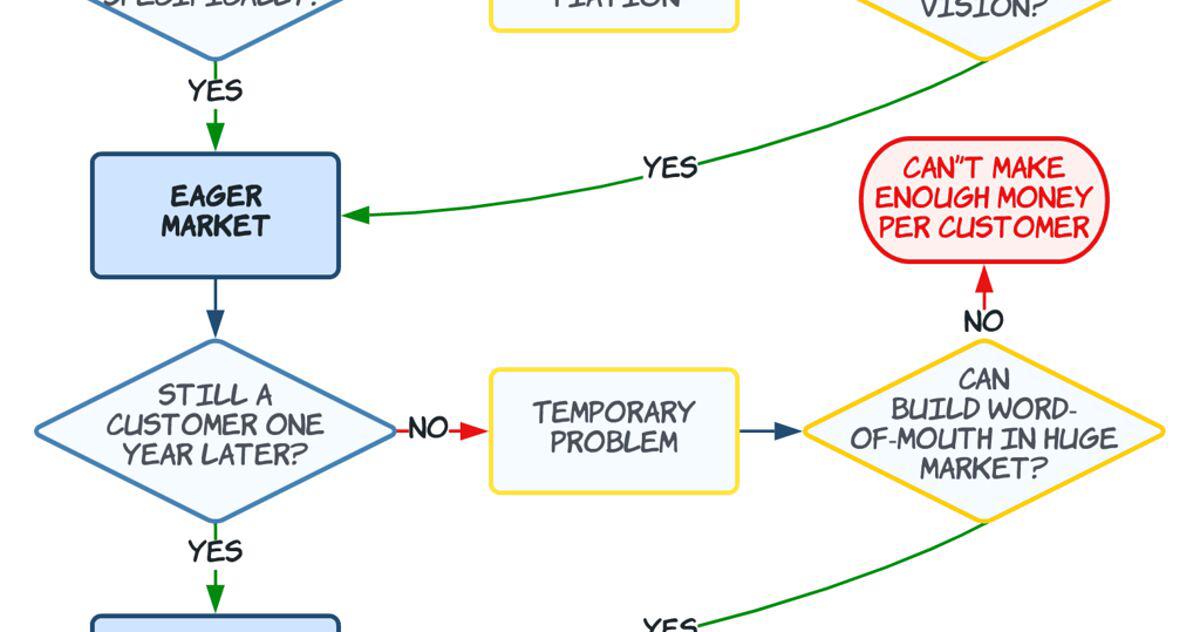
Excuse me, is there a problem?
Many startups fail despite identifying a real problem and building a product that solves that problem. This explains why, so you can avoid their fate.
Digital Gardening for Non-Technical Folks
How to build a digital garden without touching code
On an Atmosphere OS - Scott's Thoughts
What if an Atmosphere account could handle email, groupware, and device-level identity without putting Google or Apple at the center?
On an Atmosphere OS - Scott's Thoughts
What if an Atmosphere account could handle email, groupware, and device-level identity without putting Google or Apple at the center?
Extensible Software in the age of LLMs | Jeremy Morrell
Solid core + capability-based sandboxes + LLMs = Users with superpowers

On the coordination for better moderation systems
There is a need for better moderation systems on the fediverse. But getting people to coordinate to build and adopt such systems is proving to be a challenge.

Modular Politics: Toward a Governance Layer for Online Communities
Governance in online communities is an increasingly high-stakes challenge, and yet many basic features of offline governance legacies--juries, political parties, term limits, and formal debates, to name a few--are not in the feature-sets of the software most community platforms use. Drawing on the paradigm of Institutional Analysis and Development, this paper proposes a strategy for addressing this lapse by specifying basic features of a generalizable paradigm for online governance called Modular Politics. Whereas classical governance typologies tend to present a choice among wholesale ideologies, such as democracy or oligarchy, Modular Politics would enable platform operators and their users to build bottom-up governance processes from computational components that are modular and composable, highly versatile in their expressiveness, portable from one context to another, and interoperable across platforms. This kind of approach could implement pre-digital governance systems as well as accelerate innovation in uniquely digital techniques. As diverse communities share and connect their components and data, governance could occur through a ubiquitous network layer. To that end, this paper proposes the development of an open standard for networked governance.

CoMaps emerges as an Organic Maps fork
The open-source mobile app Organic Maps is used by millions of people on both the Android and i [...]