Anti-surveillance stories, reactions, analysis, and incitement built by privacy activists and human rights experts, in collaboration with Strange Horizons as well as the DWeb Camp, DragonCon, and RightsCon communities. The toolkit is now available globally and for free to all creators who want to write more dynamic stories that challenge fascist repression via surveillance tech.
Surveillance Self-Defense
We’re the Electronic Frontier Foundation, a member-supported non-profit working to protect online privacy for over thirty-five years. This is Surveillance Self-Defense: our expert guide to protecting you and your friends from online spying. Read the BASICS to find out how online surveillance works. Dive into our TOOL GUIDES for instructions...
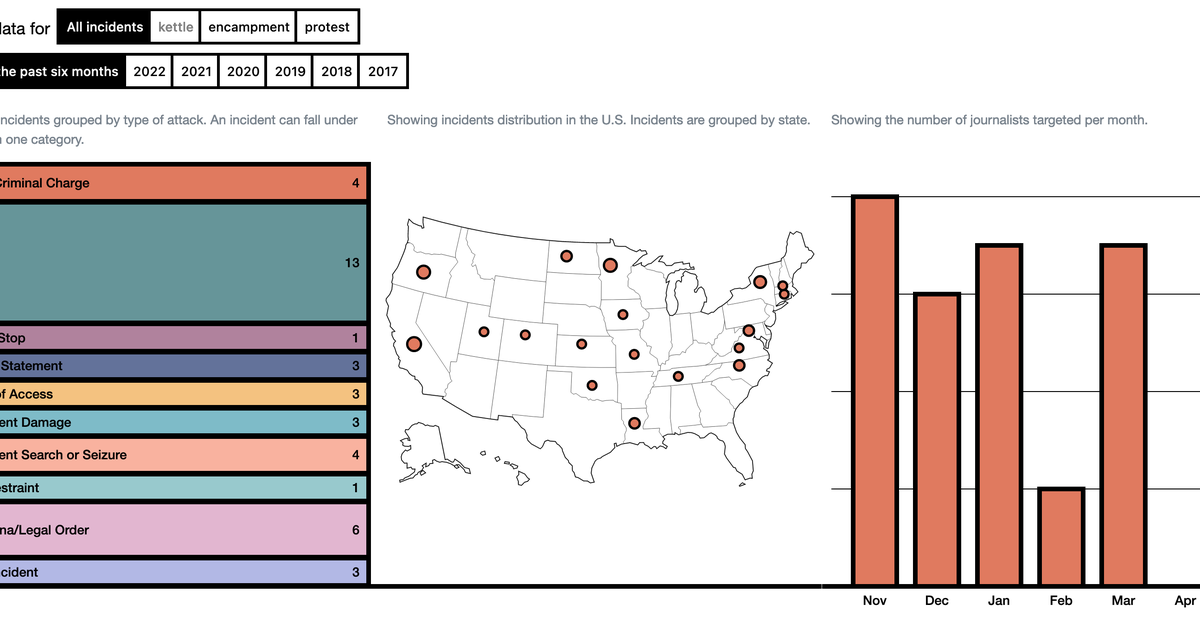
U.S. Press Freedom Tracker
The U.S. Press Freedom Tracker is a project that aims to comprehensively document press freedom incidents in the United States — such as the arrests of journalists, seizures of their equipment, interrogations and searches at the U.S. border, subpoenas to testify about sources, leak prosecutions and physical attacks. The Press Freedom Tracker documents cases across the country, involving national, state and local authorities.
Unlawful by design: Exposing the human rights costs of generative AI - Amnesty International
This briefing examines how standalone generative AI systems, based on unlawful web scraping, are in conflict with international human rights law (IHRL) and standards through their design, development and deployment. While these technologies promise sophisticated automation and efficiency, they rely on data collection and model training practices that abuse privacy rights, enable discrimination, and threaten […]

Trump Action Tracker | Keeping a tally of Trump's actions
Free and independent tracker documenting Trump-related actions using verified news sources. Statements & plans mapped to authoritarianism domains.
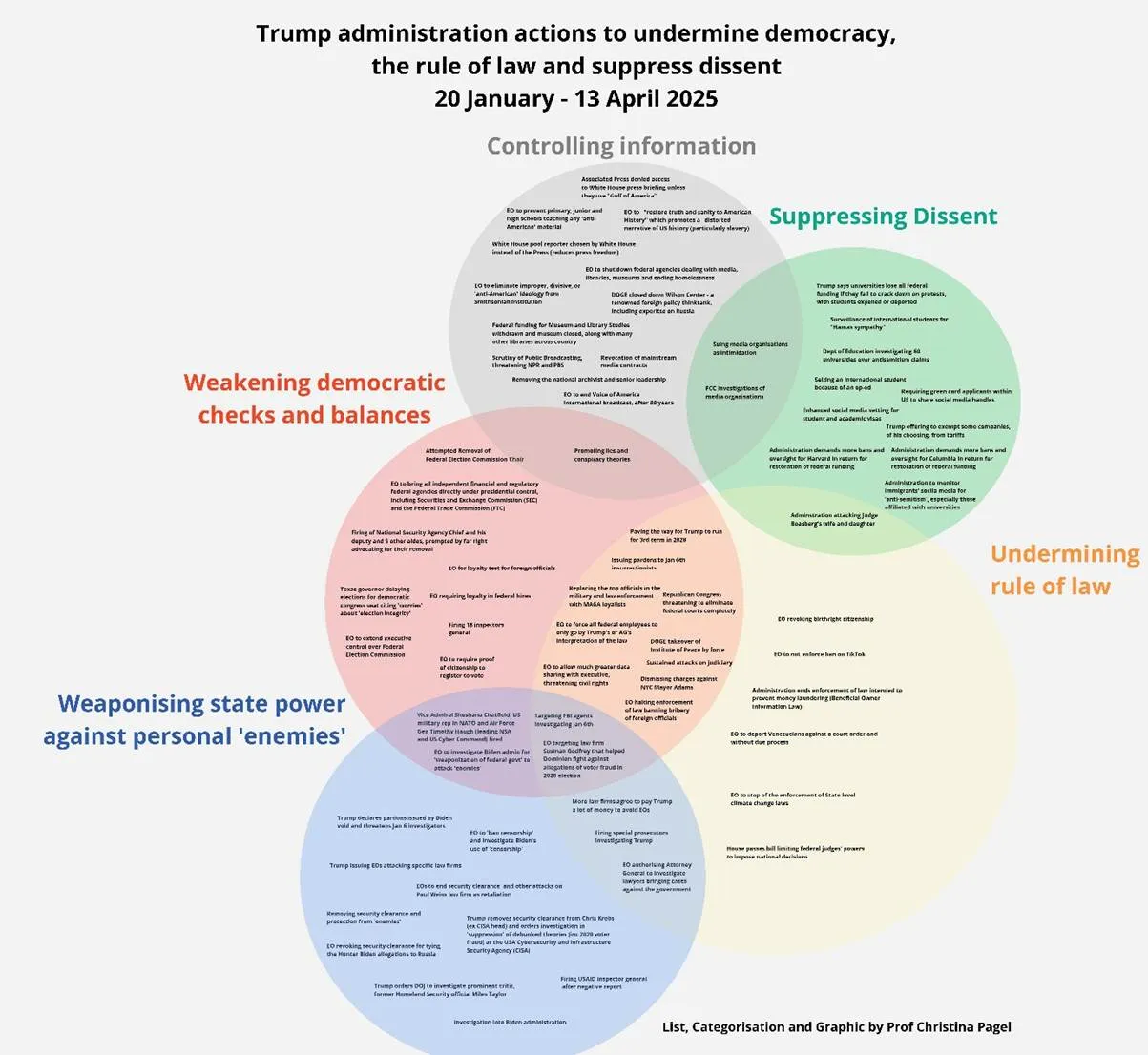
Trump Action Tracker | Keeping a tally of Trump's actions
Free and independent tracker documenting Trump-related actions using verified news sources. Statements & plans mapped to authoritarianism domains.
What happened to the fight for the Internet? -- Dustycloud Brainstorms
At the moment I am writing this, bad internet bills are being proposed across the US, Canada, Europe, and the UK. They're using the usual tactics: they claim they're fighting for kids or fighting security risks, but in general, that's what surveillance and censorship bills have always claimed.
Collection: Just Security’s Coverage of Trump Administration Executive Actions
Ongoing coverage, including in concise “What Just Happened” expert explainers, legal and policy analysis, and other resources.

Software Should Be Allowed to Be Weird - Ewan’s Blog
A fairly large amount of the software I write would probably die in a corporate planning meeting. There would be questions about the target audience, the bu…
Cybersecurity Looks Like Proof of Work Now
The UK's AI Safety Institute recently published Our evaluation of Claude Mythos Preview’s cyber capabilities, their own independent analysis of Claude Mythos which backs up Anthropic's claims that it is …
DWeb Virtual Meetup — Jan 2025 — Latest in the DWeb Ecosystem
DWeb Virtual Meetup (January 2026) featuring speakers sharing their latest DWeb product releases and community organizing efforts. SPEAKERSmauve signweaver, Awana Digital: Awana Digital supports those working to defend their human and environmental rights, but who lack the tools to do so. Their local partners represent marginalized communities worldwide, including Indigenous Peoples and ethnic minorities. They train local partners to use basic digital tools to gather, share, and manage information about environmental and human rights infractions. mauve presented CoMapeo Abare, an open-source local-first Android app designed with Indigenous communities, to enable non-technical users to easily map and document biodiversity, environmental threats, and human rights abuses.Blaine Cook, New_ Public: New_ Public is a nonprofit focused on building digital public spaces that foster connection, facilitate pluralism, and encourage civic engagement. Blaine presented Roundabout, their new social app and website to improve information sharing in rural and suburban towns, and city neighborhoods — areas with about 10,000-50,000 people.Afri Schoedon, Department of Decentralization (DoD): The Department of Decentralization is a collective of people from Berlin, who first assembled in 2018 to organize ETHBerlin hackathon. They aim to be an agnostic vehicle to drive adoption, educate newcomers, and raise awareness of the challenges and benefits of decentralization and open-source software. Afri shared their experience of previous DoD events and share the technologies and approaches that their collective sees as being on the horizon of network decentralization.Facilitated by DWeb Senior Organizer, mai ishikawa sutton

InVID Verification Plugin - InVID project
A verification “Swiss army knife” helping journalists to save time and be more efficient in their fact-checking and debunking tasks on social networks.
Assessing Claude Mythos Preview’s cybersecurity capabilities
Claude Mythos Preview is a new general-purpose language model that is strikingly capable at computer security tasks. This post provides technical details for researchers and practitioners who want to understand exactly how we have been testing this model, and what we have found over the past month.

Gazing Back at the Surveillance Cameras That Watch Us (Published 2018)
These photographers explored the implications of a culture of pervasive monitoring.

Meta CIB / ATP Dashboard
A comprehensive intelligence platform analysing 214 coordinated inauthentic behaviour and adversarial threat operations identified by Meta across 70 countries, spanning April 2018 to Q4 2025.
A Model for addressing privacy on ATproto
When I first got involved with Northsky social, we knew we would have to eventually address the elephant in the room. How do we proactively protect a community from outside influences without relying purely on moderation? And more importantly, how do we keep bad actors from simply pulling their data straight from a relay?
OpenSanctions: Supreme Data on Supreme Leaders
The open-source database of sanctions, watchlists, and politically exposed persons — aggregating hundreds of sources and relied on by compliance teams, investigators, and journalists.