

`sh.tangled.repo` records are one of the last few records that need atprotation (2-way sync between appview/pds). this one is tricky because we want consistency between knot state, appview state and PDS state. the path forward is described below: - migration to did/rkey syntax universally: in several places, we utilize `did/repo-name` as a globally unique identifier for a repository, we should migrate this to `did/rkey`: * for the tangled appview: this means reworking our ACLs, routers and DB to use `did/rkey` or ATURI as a globally unique identifier for a repo * for knots: this means changing paths on disk to be `did/rkey`, allowing git ops to `host:did/rkey` , updating ACLs, and XRPC endpoints * for spindles: this means updating ACLs and XRPC endpoints - once this is done, we can define ingestion logic for all services in the network to pull sh.tangled.repo records * for the tangled appview, this should create/delete/update a repo pointer record * for knots: this should create-or-ignore/delete-or-ignore/update-or-ignore a repo on disk. migration of repos needs to be thought out here. * for spindles: as above - define edge-case behaviors: * when referring to repos by rkey, it is possible for clever users to create duplicate records with the same repo-name, appview routers must handle this ambiguity with a new interstitial page that offers a redirect, knots must return an error upon push/pull on ambiguous git URLs * the `knot` cli can introduce a command `backfill` or `sync` to bring knot state up to sync with the rest of the world (repos, collaborators, pubkeys, ACLs etc.).
Introducing Tap: Repository Synchronization Made Simple | Bluesky
Just about every app built on AT needs data from a repository at some point. For many use cases – feed generators, labelers, bots – streaming live data through a Relay or Jetstream works well. But some applications need to go beyond what Jetstream was designed for, like tracking specific subsets of a repo, automatically backfilling a database when adding new repos to monitor, or even mirroring the entire Atmosphere.

Bitesize Proto: Upserting ATProto Records - Hitchhiker's Guide to the Atmosphere
Tired of creating duplicate records in a repo from your atproto app?
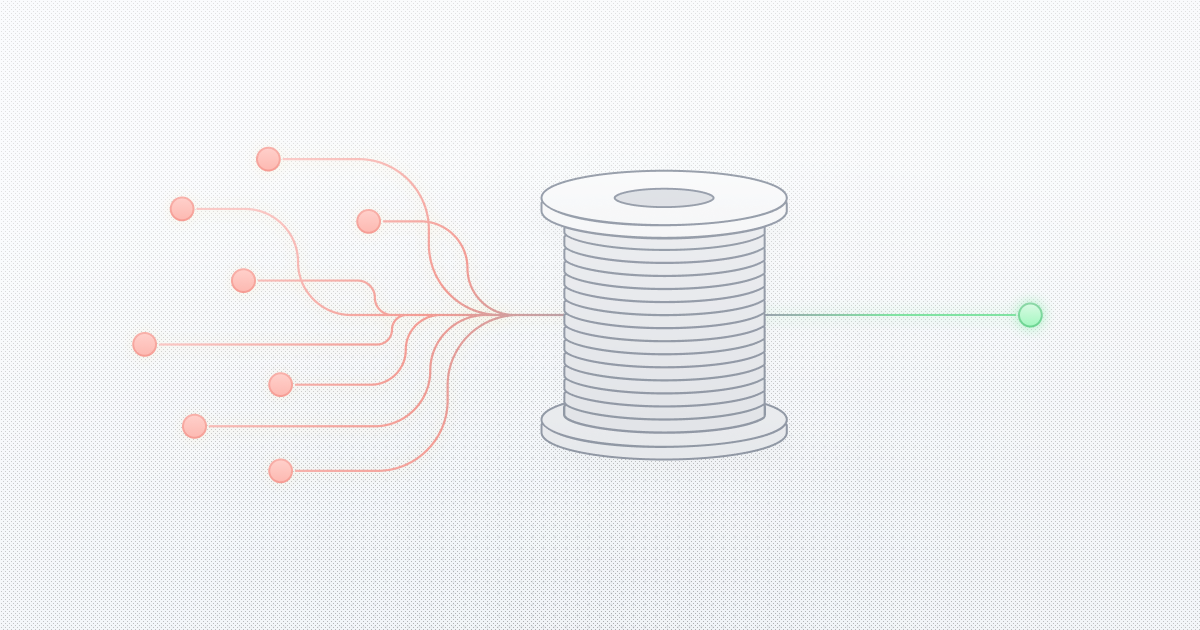
Slingshot: atproto edge record cache
API Documentation for Slingshot, a firehose-listening atproto edge record and identity cache.
calendar pt. 1: ATProtocol beyond AppViews - building [at] habitat
our approach to permissioned data (part 1!)
Permissioned Data Diary 7: Off the Record - Daniel's Leaflets
In which we put records in a repo, sign them, and sync them (but not quite the way you think).

Account delegation for atproto: orgs, aliases, alts and more - Nel Ramblings
Git at any scale · Cursor
Hosting Git repositories at scale is a nightmare. When Linus Torvalds designed the first version of the information manager from hell (that's actually the tagline for Git, look it up), he had a very specific use case in mind: his own. He wanted to replace BitKeeper, the distributed version control system that was being used to develop the Linux Kernel. Of course, the replacement had to be distributed too. The Kernel is an unusual software project; it is extremely decentralized, with many different maintainers for its many different subsystems. A distributed version control system is a natural fit for this workflow.

Building More Resilient Local-First Software with atproto | jakelazaroff.com
atproto has the potential to become a rock-solid replacement for the most fragile part of any local-first app: the sync server.

Permissioned Data Diary 2: Buckets - Daniel's Leaflets
The second in a series of posts building up a solution to permissioned data on atproto. We introduce buckets: a new protocol primitive for creating a shared social context.
third-party apis: community infrastructure on atproto - Keith's Thoughts
you can just build things from an open set of tools
