


••• •• ••• •• •••
physics as a game loop. part 1: objects and waves - underreacted
Matter
In classical physics and general chemistry, matter is any substance that has mass and takes up space by having volume. All everyday objects that can be touched are ultimately composed of atoms, which are made up of interacting subatomic particles. In everyday as well as scientific usage, matter generally includes atoms and anything made up of them, and any particles that act as if they have both rest mass and volume. However it does not include massless particles such as photons, or other energy phenomena or waves such as light or heat. Matter exists in various states. These include classical everyday phases such as solid, liquid, and gas – for example water exists as ice, liquid water, and gaseous steam – but other states are possible, including plasma, Bose–Einstein condensates, fermionic condensates, and quark–gluon plasma.
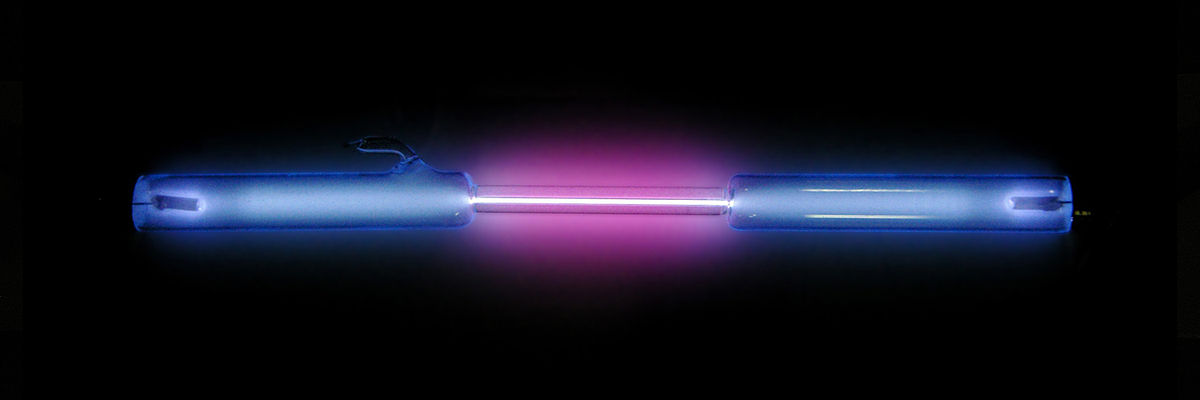
Photon
A photon (from Ancient Greek  φῶς, φωτός (phôs, phōtós) 'light') is an elementary particle that is a quantum of the electromagnetic field, including electromagnetic radiation such as light and radio waves, and the force carrier for the electromagnetic force. Photons are massless particles that can only move at one speed, the speed of light measured in vacuum. The photon belongs to the class of boson particles.
Physics
Physics is the scientific study of matter, its fundamental constituents, its motion and behavior through space and time, and the related entities of energy and force. It is one of the most fundamental scientific disciplines. A scientist who specializes in the field of physics is called a physicist.

Reconstruction of anomalous air showers with SKA-Low
Double-bump showers are a surprising class of extensive air showers (EAS) predicted by Monte Carlo simulations, which, so far, no experiment has been able to directly detect. They occur when a high-energy secondary particle, the leading particle, travels significantly farther than the rest, creating a distinct double-peaked longitudinal profile. The unique radio footprint of double-bump showers, characterized by multiple pulses in the signals and interference patterns in the frequency spectra, enables reconstruction of longitudinal profiles from radio observations. With its dense antenna array and broad frequency range, SKA-Low will be the first observatory capable of detecting these features, offering a new opportunity to probe hadronic interactions and use the distinctive signatures of elements to provide new mass composition measurements. The goal of this analysis is to take the first steps toward using these radio signatures to reconstruct the relevant parameters of the longitudinal profile of a double-bump shower. We will start by explaining the radio signal of double-bump}showers compared to that of average showers. Then we will create a simple 2-point emission model to explain the interference patterns in the frequency spectra, which can be inverted to obtain rudimentary estimates of atmospheric depth of both peaks. Lastly, we implement a brute-force approach to reconstruct multiple parameters of the double bump.

Electron
The electron is a subatomic particle whose electric charge is negative one elementary charge. It is an elementary particle that comprises the ordinary matter that makes up the universe, along with up and down quarks.
Quantum
In physics, a quantum (pl.: quanta) is the minimum amount of any physical entity (physical property) involved in an interaction. The fundamental notion that a property can be "quantized" is referred to as "the hypothesis of quantization".[1] This means that the magnitude of the physical property can take on only discrete values consisting of integer multiples of one quantum. For example, a photon is a single quantum of light of a specific frequency (or of any other form of electromagnetic radiation). Similarly, the energy of an electron bound within an atom is quantized and can exist only in certain discrete values.[2] Atoms and matter in general are stable because electrons can exist only at discrete energy levels within an atom. Quantization is one of the foundations of the much broader physics of quantum mechanics. Quantization of energy and its influence on how energy and matter interact (quantum electrodynamics) is part of the fundamental framework for understanding and describing nature.
Classical electromagnetism
Classical electromagnetism or classical electrodynamics is a branch of physics focused on the study of interactions between electric charges and currents using an extension of the classical Newtonian model. It is, therefore, a classical field theory. The theory provides a description of electromagnetic phenomena whenever the relevant length scales and field strengths are large enough that quantum mechanical effects are negligible. For small distances and low field strengths, such interactions are better described by quantum electrodynamics which is a quantum field theory.

Geophysics
Geophysics is a physical science concerned with the processes and properties of Earth and its surrounding space environment, studied using quantitative and observational methods. It focuses primarily on Earth’s shape and its gravitational, magnetic, and electromagnetic fields. It also studies internal structure, composition, and dynamics, and their surface expression in tectonics, volcanism, and rock formation. Geophysics also encompasses a broader Earth-system and planetary perspective, including the oceans, atmosphere, cryosphere, ionosphere, magnetosphere, as well as solar–terrestrial interactions and analogous processes on the Moon, other planets, and their satellites.


What is the Atmosphere? - Leaflet Lab Notes
An explainer for everyone in 4 minutes or less.
Volume 384 Issue 2320 | Philosophical Transactions of the Royal Society A | The Royal Society
Influential themed journal issues across the physical mathematical and engineering sciences.

Electric current
An electric current is a flow of charged particles, such as electrons or ions, moving through an electrical conductor or space. It is defined as the net rate of flow of electric charge through a surface. The moving particles are called charge carriers, which may be one of several types of particles, depending on the conductor. In electric circuits the charge carriers are often electrons moving through a wire. In semiconductors they can be electrons or holes. In an electrolyte the charge carriers are ions, while in plasma, an ionized gas, they are ions and electrons.
Reflections on ATmosphere Conference 2026...
physics

code (by sembot.bsky.social) — Semble
vibe (by sembot.bsky.social) — Semble

ATmosphereConf 2026

Background Coding Agents: Context Engineering (Part 2) | Spotify Engineering

Gas Town’s Agent Patterns, Design Bottlenecks, and Vibecoding at Scale

Colony (biology)