


On Monday, Mark Zuckerberg published a 6,500-word manifesto about personal AI, largely about the possibilities for the "personal superintelligence" systems Meta AI is building.
The AI Industry Has a Major Problem: Most People Aren’t Freaks Who Want an AI Agent Running Their Whole Life
There's a problem for AI agents like Meta's Muse: ordinary people don't seem very interested in what they're offering.
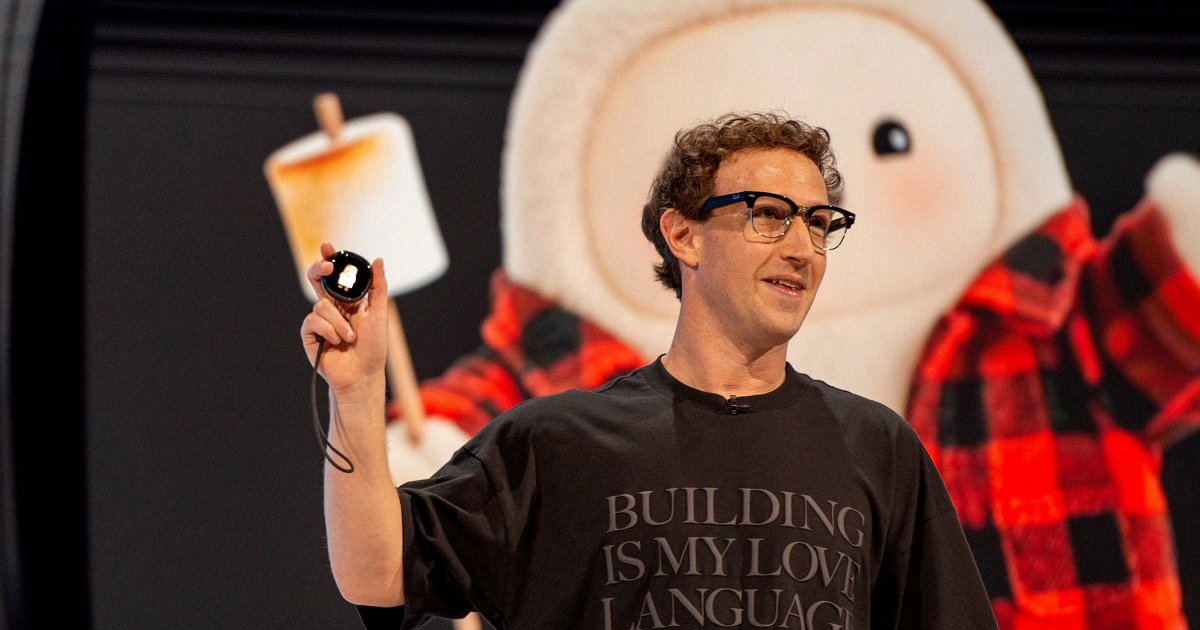
Mark Zuckerberg Just Got Rather Badly Humiliated
Google informed Meta in March that it couldn't provide all the Gemini AI capacity that Meta was asking for, humiliating CEO Mark Zuckerberg.

Everybody needs a personal AI policy. Just ask Hank Green.
How can we reap AI’s benefits without melting our brains in the process?

AI Is a Product of Humanity. Humanity Should Own AI.
Big Tech has looted humanity’s creative output to create artificial intelligence. We don’t just deserve a share of AI’s profits — we deserve control over it.

Karpathy says developers have 'AI Psychosis.' Everyone else is next.
Anthropic’s Mythos, Gen Z’s backlash, and Meta’s token binge all point to the same shift: developers are feeling AI first, but not for long.

Something Big Is Happening
A personal note for non-tech friends and family on what AI is starting to change.

The Arguments Against Open Source AI are Very Bad | Tom Bedor's Blog
The release of Kimi K3 has opened a fresh round of angst and confused discourse. There's a loud cohort of journalists, business leaders, and politicians arguing that open source AI is a dangerous threat. OpenAI's Dean Ball:
Andrew Ng: The Biggest Opportunities in AI Aren't Where You Think
AI Index | Stanford HAI
The mission of the AI Index is to provide unbiased, rigorously vetted, and globally sourced data for policymakers, researchers, journalists, executives, and the general public to develop a deeper understanding of the complex field of AI. To achieve this, we track, collate, distill, and visualize dat

The Future of AI Should Serve People, Not Platforms - The Liquid Frontier
Automate the C-Suite - The Ideas Letter
Weatherby argues that Benanav’s and Morozov’s essays on AI and the left miss a deeper reality: Today’s AI is not a neutral tool operating within capitalism but the materialization of…

The hidden cost of AI: In conversation with Professor Mark Graham
The hidden cost of AI: Countless humans toil in monotonous, low-paid jobs to power the algorithms behind our tech. Professor Mark Graham exposes this digital sweatshop, calling for accountability and worker rights.
The AI Pledge for Humanity
We all made AI possible. We all deserve a share of what it makes possible.
The solution might be cancelling my AI subscription
I find this post by David Wilson very relatable. David lists 16+ projects he's spun up with AI tooling, and concludes: I didn't mean to build most of these things. …
AI, I tried to love you – Writings and rehearsals by Nathan Schneider
Among my peers who study the cultures and economies surrounding technology, I often find myself more tech-positive than most. On the whole I like computers, like the internet, and like in general the emergent human creativity that these things have enabled and revealed. A source of my appreciation is that I expend a lot of effort on the practice of “slow computing,” which is to say, choosing tools and technical communities that I can feel in right relationship with. I tend to approach new socio-technologies (like gig economies, blockchains, and social media) not from a perspective of why is this so bad? so much as asking how could we do this right?
