

Paste text below — or load it from a URL — and it highlights sentences that match known LLM clichés, including the tells catalogued in Wikipedia’s Signs of AI writing guide. Chain patterns like “no X, no Y” get a badge counting their items; tap or hover a highlight to see which cliché it hit.
Wikipedia:Signs of AI writing
This is a list of writing and formatting conventions typical of AI chatbots such as ChatGPT, with real examples taken from Wikipedia articles and drafts. It is a field guide to help detect undisclosed AI-generated content on Wikipedia: while some of the signs may be broadly applicable, some may not apply in a non-Wikipedia context.[a] Not all text featuring these indicators is AI-generated, as the large language models that power AI chatbots are trained on human writing, including Wikipedia. Many elements of AI writing can be found in editorials, blogs, or fan fiction.
How To Write With An LLM
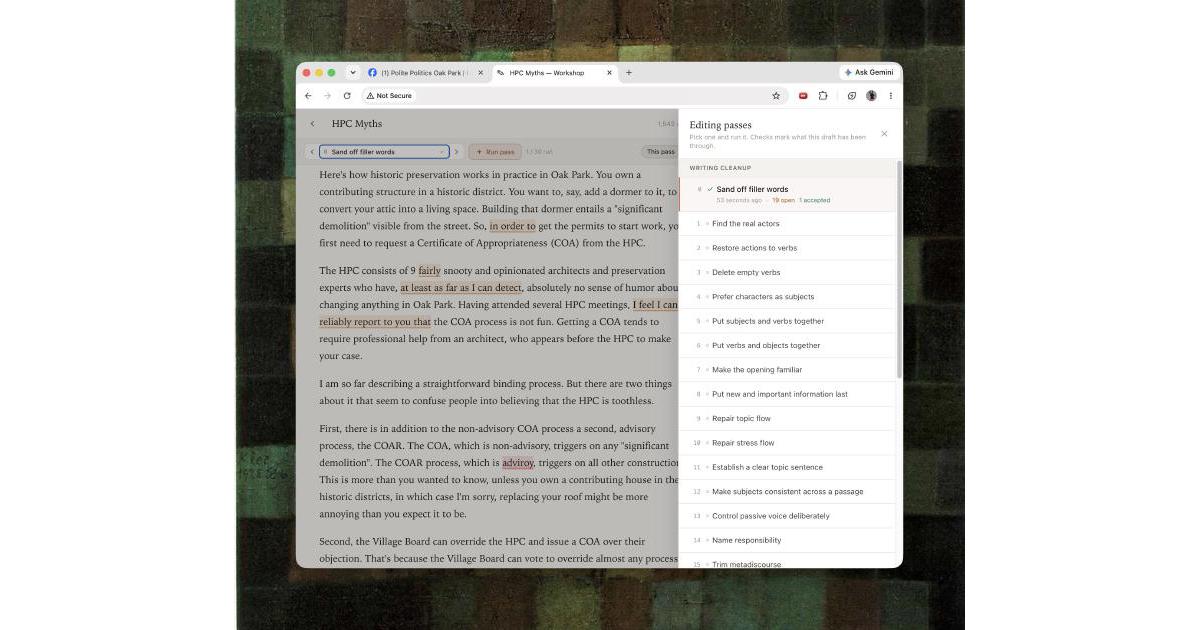
Two rules keep an LLM from pasteurizing your writing: never take a word it suggests, and never let it encourage you. Then hand it all the tedious work.
Tropes - AI Writing Pattern Directory
The definitive reference for identifying AI writing patterns. Learn to spot the tropes that give away AI-generated text.
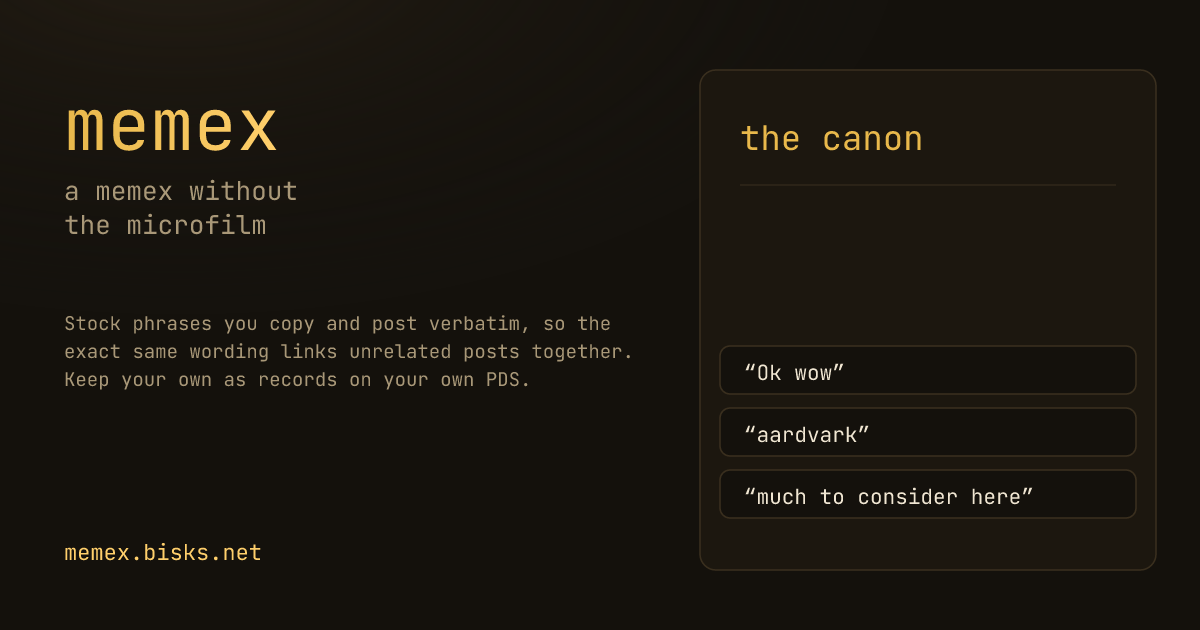
memex — stock phrases that link your posts
A phrasebook of quotable, re-quotable stock phrases — the same wording links otherwise-unrelated posts together, memex-style. Seeded from @tk0l.bsky.social's original thread. Sign in to add your own, kept as records on your own PDS.
How to write it like you told it
What do you say to someone who wants to write but struggles with writing and is tempted to use an LLM-based chatbot?

The Unsolved Mystery of Lorem Ipsum
Are you Slop??
Are you Slop? Analyze your 'slop score' - a measure of how generic or unique your text appears to language models.

I Built an LLM From Scratch
An Ode to Links
Writing about the big beautiful mess that is making things for the world wide web.
Agentics: Memorizing Session Transcripts Isn't Useful
Keep track of artifacts, not scratch. Alt title: Claude, please stop trying to memorize random crap


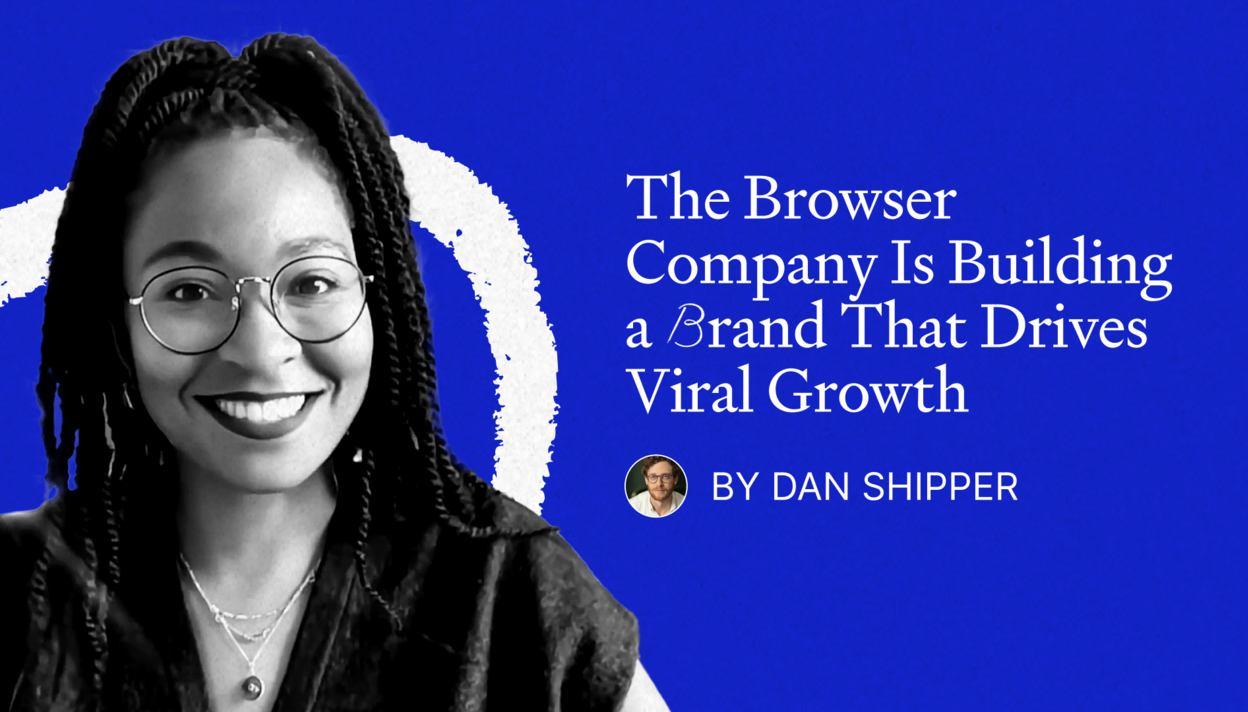
🎧 The Browser Company Is Building a Brand That Drives Viral Growth
Head of storytelling Nashilu Mouen-Makoua on how to tell memorable stories
Guardian Angels: LLM Personalization for Productivity and Security
I propose an approach for highly personalized LLMs, for near-future productivity gains and personal info/cybersecurity against increasingly powerful LLMs: they should, in the spirit of uploading, try to emulate the user’s values and preferences in order to amplify the principal—not replace them. I discuss a package of techniques and proposals to accomplish such ‘guardian angels’; dynamic evaluation of LLMs combined with active learning and elicitation and heavy inner-monologue search/data-augmentation.

LLMs reward expertise
In the 2010s, if you had technical gaps (say, you couldn’t write CSS), you had to either rely on a skilled colleague or just hope that the answer to your exact problem was out there on the internet. Today, everyone can write sort-of-okay CSS by delegating the task to an LLM. LLMs make everybody into a generalist.

KARMA: Leveraging Multi-Agent LLMs for Automated Knowledge Graph Enrichment
Maintaining comprehensive and up-to-date knowledge graphs (KGs) is critical for modern AI systems, but manual curation struggles to scale with the rapid growth of scientific literature. This paper presents KARMA, a novel framework employing multi-agent large language models (LLMs) to automate KG enrichment through structured analysis of unstructured text. Our approach employs nine collaborative agents, spanning entity discovery, relation extraction, schema alignment, and conflict resolution that iteratively parse documents, verify extracted knowledge, and integrate it into existing graph structures while adhering to domain-specific schema. Experiments on 1,200 PubMed articles from three different domains demonstrate the effectiveness of KARMA in knowledge graph enrichment, with the identification of up to 38,230 new entities while achieving 83.1% LLM-verified correctness and reducing conflict edges by 18.6% through multi-layer assessments.