

if you're writing an AT application you probably have a lexicons folder in your repo with all of your Lexicons in JSON. it might look something like this t…
Lex make a registry - Sri's leaflets
Introducing lexicon.store - an unconventional ATProto Lexicon Registry
atproto made simple: publishing lexicons - underreacted
atproto made simple: publishing lexicons - underreacted

Lexicon Service Docs - at:// pizza thoughts
Riffing on some ways to make network services more legible to humans and machines
Lexicon Store - ATProto Lexicon Schema Registry
Discover and explore AT Protocol lexicon schemas. The verified registry for Bluesky and ATProto lexicons.
lexicon.community
lexicon.community has 7 repositories available. Follow their code on GitHub.

Andrej Karpathy on Twitter / X
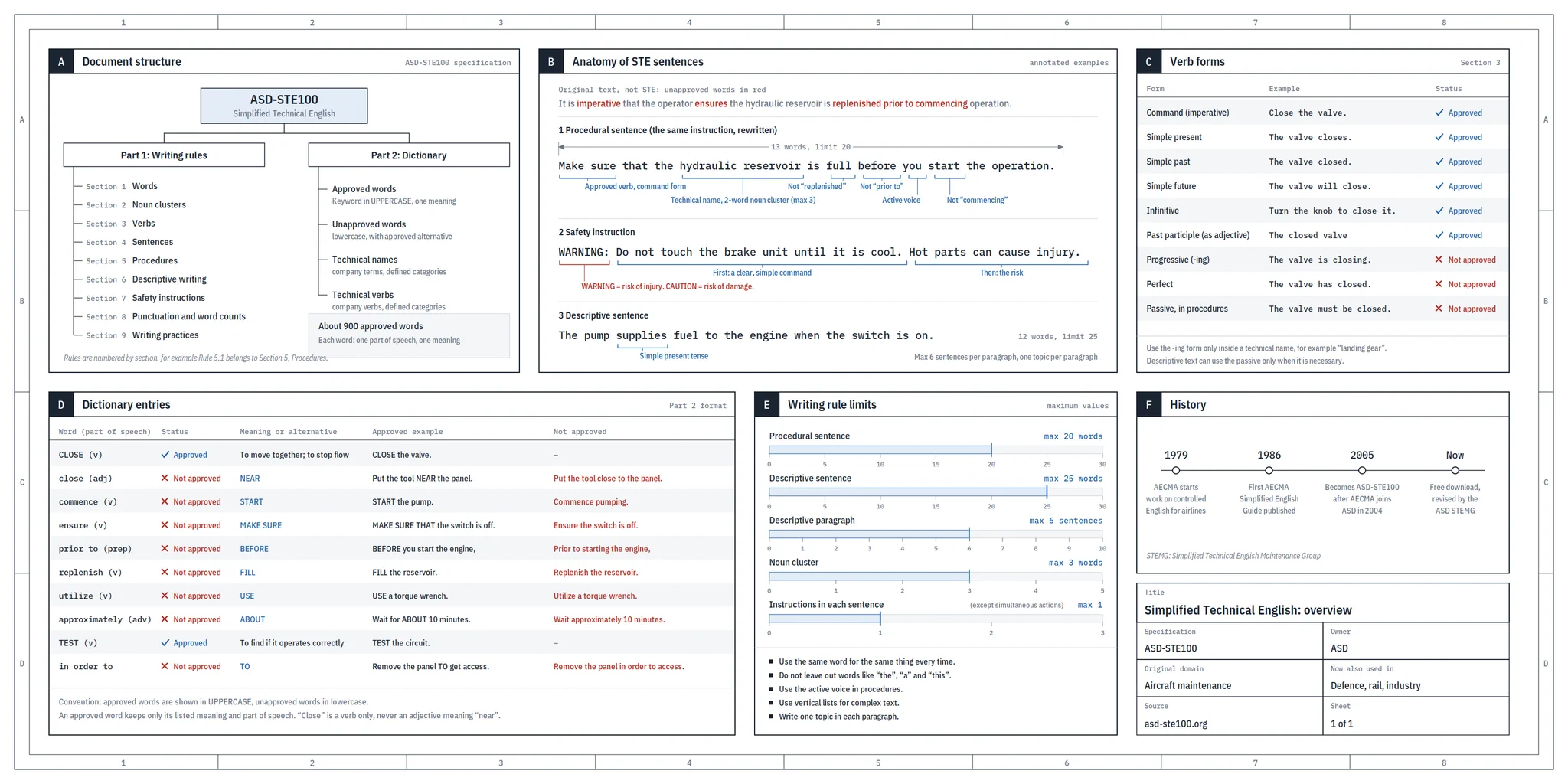
We'll be spending a lot more time trying to understand the outputs of language models. A few thoughts, tips & tricks:Writing. Something I've had success with: Ask your LLM to explain something in ASD-STE100, it's a controlled language specification originally developed for… pic.twitter.com/uMFWTcBCsl— Andrej Karpathy (@karpathy) October 2, 2026
Lexicon Garden - ATProtocol Lexicon Browser
Browse and discover ATProtocol lexicon schema definitions

The Lexicon Interop Problem - anuj's leaflets
Competing AT platforms are using different lexicons. Should we be worried?
Locale · localization on the AT Protocol
Locale is a modern, open alternative to Crowdin, Lokalise, and Phrase, built natively on the AT Protocol. Your translations and your identity stay in your own repo: portable, open, no lock-in.
at3d.app docs — lexicon reference
Every record type in the app.at3d namespace. These AT Protocol Lexicons define portable 3D identity data stored in a user's Personal Data Server.
Lexicon Garden is growing - Nick's Blog
Lexicon Garden is growing and moving! With community support, the service is migrating to new infrastructure in Europe, offering better hardware and more space for new features.
Fight fire with pedantry
Over the last two years, I’ve heard a bunch of speculation about how to design a programming language specifically for an LLM. It usually centers around typechecking, formal verifiability, or context engineering. It’s a fun thought experiment, but always felt aimless. First, my experience has been that designing for humans is the best way to design for an LLM, as long as you restrict yourself to text. Second, being in-distribution is so critical that there’s no point unless you’re also training a frontier coding model.