
DASL: Web Tiles
Tiles are composable web docs and apps that can safely be used in arbitrary contexts and assembled from multiple sources to carry out complex user interface tasks. Their composability, security, and privacy properties make them ideal for use in social media, chat, agents, and malleable software.

Web Tiles as the base for Lexicon Embeds
Now that @robin.berjon.com has released an initial spec and implementation of Web Tiles, we can see how we can use or extend this as a base for Lexicon Embeds. Lexicon Embeds is my label for how to have native ATProto content embed in different apps, from display all the way to interactivity— eg an event post in bsky with an RSVP button. Getting this as a general capability - and getting security and display right - means embeds can function in Leaflet and Bsky and anywhere else, rather than o...

Web Tiles
Trust has been the defining constraint on the Web's evolution towards more powerful, more applicative capabilities. In a Web context, the user must be able to safely load any arbitrary URL, to safely click on any arbitrary link. The way in which this is achieved is that the runtime places strict limits on what a Web page can do, which in turn necessarily limits powerful capabilities. Could we get more power using a primitive that places more stringent constraints in what pages can do?


[uZine 2] The Indie Web Manifesto
Manifest des unabhängigen Web Manifèste del Web independent Det Frie Web Manifest Manifesto del Web independiente Manifesto del Web indipendente Manifesto da Web independente Manifeste du Web indépendant
The small web is beautiful
A vision for the "small web", small software, and small architectures.
Responsive Web Design
Designers have coveted print for its precision layouts, lamenting the varying user contexts on the web that compromise their designs. Ethan Marcotte advocates we shift our design thinking to approp…

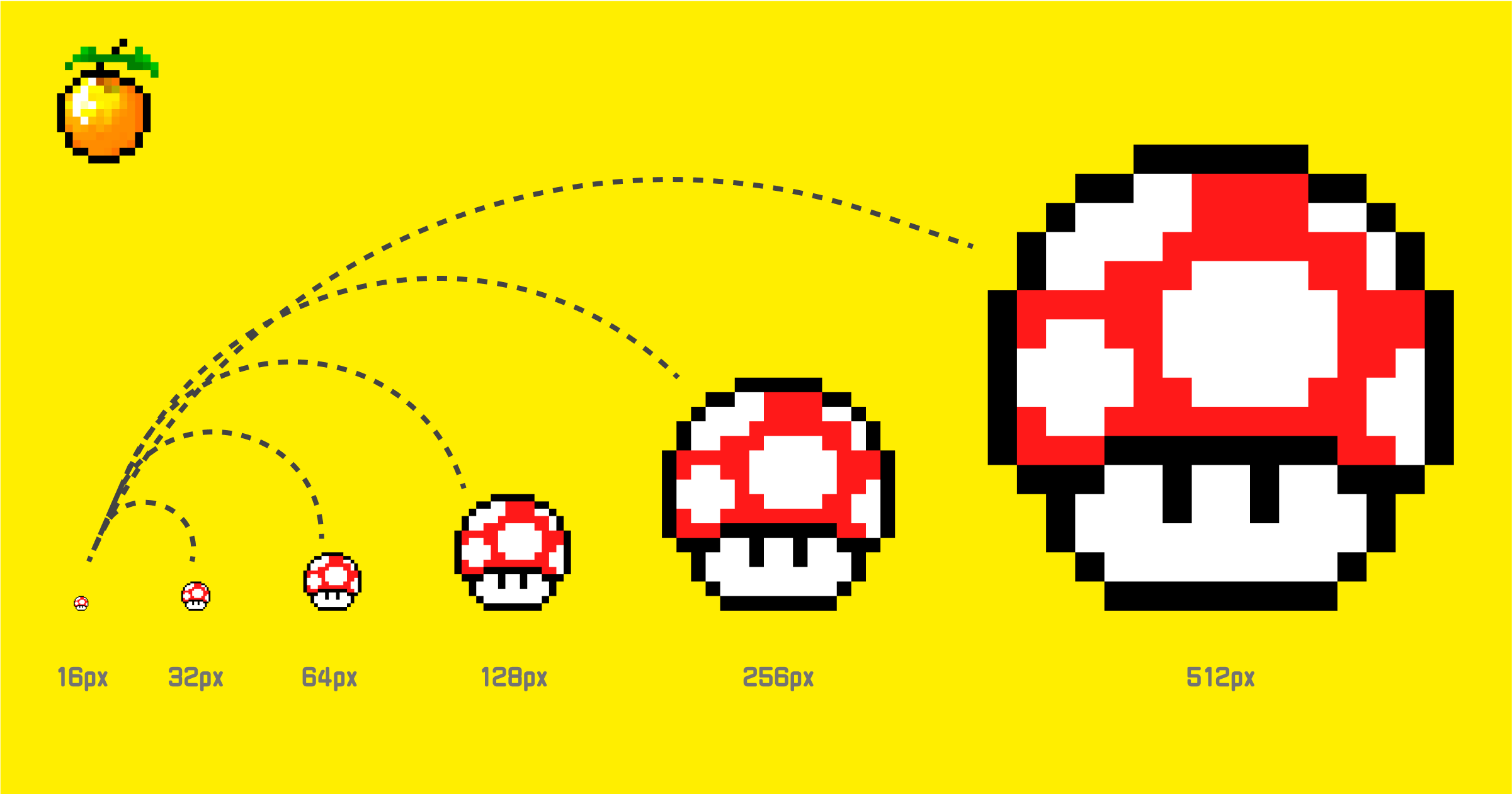
Preserving the Pixel Art Look in Web Content
Learn essential CSS techniques, scaling strategies, and design principles that preserve the crisp, totally-cool aesthetic of pixel graphics across high-resolution displays and responsive web environments.
What is Standard Site, and why is it useful? - Leaflet Lab Notes
Lab Notes 029: explaining how Standard Site works, how it compares to RSS, and its utility for readers and publishers
MDN Web Docs
The MDN Web Docs site provides information about Open Web technologies including HTML, CSS, and APIs for both Web sites and progressive web apps.
Web Apps · The Omarchy Manual · DHH
You can add your own web apps using Install > Web App in the Omarchy menu (Super + Alt + Space). It'll ask you for the app name, app URL, and the icon URL, if it can't retrieve it via favicon. You can get great PNG icons for many popular web apps on Dashboard Icons.
The Web Needs a Context Layer Built on a Shared Protocol
Making context a shared protocol, rather than a platform feature, would let readers see competing perspectives anywhere on the web, argue Mallory Knodel, Evan Friedman, and Brad Friedman.

All you need is links
When Tim Berners Lee talks about how he designed the web, he uses an analogy from physics, describing his process as a quest to find “fundamental laws” which can generate a desired system:

Editable — the website you can edit on the page
Editable lets you build and edit a Svelte website without adding a separate CMS. Editors work directly on the page, while the content model, components, layouts, and styling is defined in code.