
Combinatorial creativity recombines existing ideas to spark novel, valuable innovations in cognition, AI, and design.
In Search of Vibe Coding Nirvana - Day 1 - Wesley's notes
Deliberate practice in exploring and experimenting with AI tooling
Cakewalk
Fueled by over 30 years in the relentless pursuit of innovation, we build the most intuitive, next-generation music production tools that empower all creators to push creative boundaries.

Creative limitation
Creative limitation is the concept of how purposely limiting oneself can actually drive creativity. At a 2013 TED conference, artist Phil Hansen made several remarks concerning the value of limitations, among them that "We need to first be limited in order to become limitless,” and “If you treat the problems as possibilities, life will start to dance with you in the most amazing ways.”[TED.com 1]
Impeccable: Design skills for AI harnesses
1 skill, 23 commands, and curated anti-patterns for impeccable frontend design. Works with Cursor, Claude Code, GitHub Copilot, Gemini CLI, and Codex CLI.

Impeccable: Design skills for AI harnesses
1 skill, 23 commands, and curated anti-patterns for impeccable frontend design. Works with Cursor, Claude Code, GitHub Copilot, Gemini CLI, and Codex CLI.
Impeccable: Design skills for AI harnesses
1 skill, 23 commands, and curated anti-patterns for impeccable frontend design. Works with Cursor, Claude Code, Gemini CLI, and Codex CLI.

Think First, AI Second
Three principles for keeping your cognitive edge while leveraging AI's capabilities
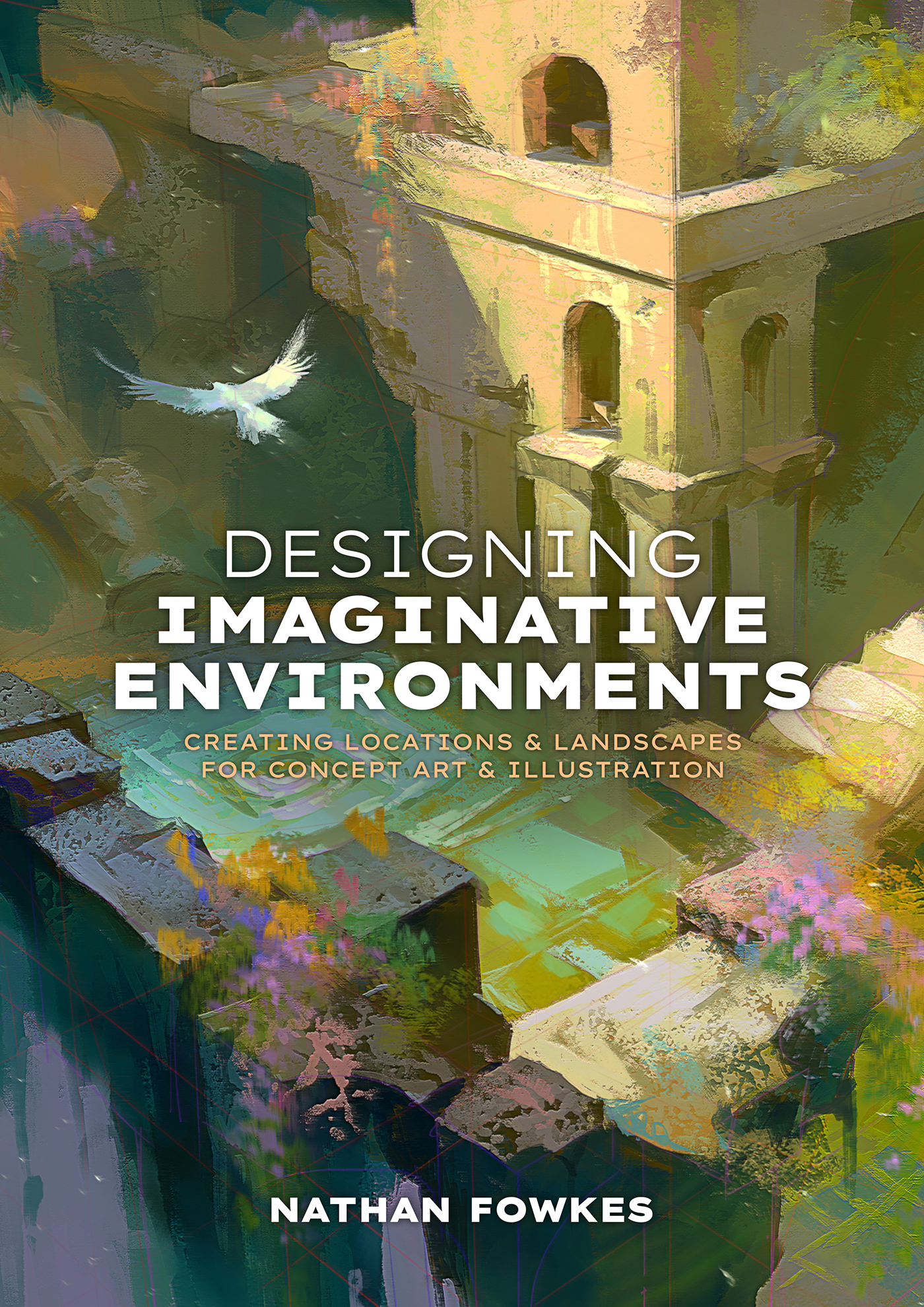
Designing Imaginative Environments by Nathan Fowkes
Join industry veteran Nathan Fowkes on a deep dive into the hows and whys of designing environments for entertainment. From creating mood with color and light, to exploring different biomes and weather, to crafting architecture and props, he will teach you how to design amazing environments that make your work stand out from the crowd.
Many Minds: Seven metaphors for AI
If you wanted a petri dish for understanding metaphors—how they emerge and evolve and jostle with each other—it would be hard to do better than the world of AI. We talk about AI systems variously as coaches or co-pilots, little genies or alien intelligences. Some researchers claim that AIs "grow," that they're entering their phase of "adolescence." Critics deride AI products as slop and dismiss LLMs as a kind of autocomplete on steroids. What's behind these different characterizations? Which ones are accurate and which are unfair? And are our metaphors mostly colorful rhetoric or do they matter? Are they shaping how we understand, adopt, and ultimately regulate these new technologies? My guest today is . Melanie is a computer scientist and Professor at the Santa Fe Institute. She is the author of the book, and she writes a by the same name. This episode is a bit of companion to with Steve Flusberg. In that episode, Steve and I attempted a kind of crash course on metaphor and the human mind. Here, Melanie and I sit down for more of an extended case study: how metaphors are guiding, galvanizing, and maybe deceiving us in the contested realm of AI discourse. We unpack seven of the most widely used metaphors in this space. We consider how these metaphors are shaping not only our everyday understandings of AI, but also law and policy. We also talk about the metaphor and analogy capabilities of AI itself. Can these system reason abstractly in the way that humans can? Along the way, Melanie and I touch on: AI-generated poetry, anthropomorphism, the original sin of AI research, the myth of Narcissus, psychometric testing and its pitfalls, metaphors for AI that are a bit hard to spot, and the question of whether an AI has ever come up with a decent analogy for itself. Longtime fans of the show will know that we've had Melanie on the show . We invited her back, not only because she's thought about metaphor and analogy in AI discourse for decades, but because she's a voice of calm insight in an area that’s increasingly awash in hype and polemic. Longtime fans of the show may also note that we are now celebrating our 6th birthday at Many Minds. That's right, the show launched in February 2020. If you'd like to support us as we recognize this milestone, you can leave us a rating or a review, recommend us to a friend, or give us a shout out on social media. Your support is always appreciated. Without further ado, on to my conversation with Dr. Melanie Mitchell. Enjoy! Notes 3:30 – For an overview of Douglas Hofstadter’s work on analogy, see . 8:00 – Much of our discussion in this interview draws on Dr. Mitchell’s piece on the in Science magazine. 13:30 – For earlier discussions of anthropomorphism on the show, see our earlier episodes and . 16:00 – See for the original discussion of LLMs as “stochastic parrots.” 17:00 – See for the original discussion of ChatGPT as a “blurry jpeg.” 18:30 – See for the original discussion of LLMs as role players. 22:00 – See for one use of the “LLMs as crowds” metaphor. See also a discussion of this metaphor (and other metaphors for AI) . 25:00 – For one discussion of AI as a “cultural technology” by Alison Gopnik and colleagues, see . For a more recent discussion of the same metaphor by Henry Farrell, Alison Gopnik and others, see . 27:00 – For the podcast series on intelligence that Dr. Mitchell co-hosted for the Santa Fe Institute, see . 28:00 – See for an influential formulations of the idea that AI is an “alien intelligence.” 29:00 – For philosopher Shannon Vallor’s book about AI as “mirror,” see . 31:00 – For the recent study on users’ metaphors for AI systems, see . 33:00 – For more on the rise of social AI, see our earlier episode . 38:00 – For more on what AI researchers might learn from developmental and comparative psychologists, see Dr. Mitchell’s (summarizing here keynote at NeurIPs). 42:00 – For more on the ARC (Abstraction and Reasoning Corpus) and the research that Dr. Mitchell and colleagues have been doing with it, see and . 48:30 – For the study on humans' preference for AI-generated poetry, see . 50:30 – For Brigitte Nerlich’s documentation and discussion of various metaphors for AI (including AI’s metaphors for itself), see . Recommendations , by Shannon Vallor ‘,’ by Murray Shanahan (!) et al. ‘,’ by Henry Farrell et al. Many Minds is a project of the , which is made possible by a generous grant from the John Templeton Foundation to Indiana University. The show is hosted and produced by , with help from Assistant Producer and with creative support from DISI Directors Erica Cartmill and Jacob Foster. Our artwork is by . Subscribe to Many Minds on Apple, Stitcher, Spotify, Pocket Casts, Google Play, or wherever you listen to podcasts. You can also now subscribe to the Many Minds newsletter ! We welcome your comments, questions, and suggestions. Feel free to email us at: manymindspodcast@gmail.com. For updates about the show, visit or follow us on Bluesky ().

Design for a Living Planet: Settlement, Science, & the Human Future
In this brief, accessible volume, the authors — an urban philosopher and a mathematician-physicist — explain the surprising new findings from the sciences that are beginning to transform environmental design in the modern era. Authors Michael Mehaffy and Nikos Salingaros explore fractals, networks, self-organization, dynamical systems and other revolutionary ideas, describing them to non-science readers in a direct and engaging way. The book also examines fascinating new topics of design, including Agile, Wiki, Design Patterns and other “open-source” approaches from the software world. The authors conclude that a profound transformation is under way in modern design — and today’s students and practitioners will need to be aware of its implications for our future.“Lucidly describes what’s coming in the world of design — and what needs to come.” — Ward Cunningham, Inventor of wiki, and pioneer of Pattern Languages of Programming, Agile, and Scrum“Essential reading for all urban designers.” — Jeff Speck, Author of Walkable City“Brilliant.” — Charles Montgomery, Author of Happy City“Inspired, compelling and fascinating… Recognizes that a true architecture can be dug from the facts, insights, and theories, that occur with a broadening of science to include the human being.” — Christopher Alexander, Author of A Pattern Language and Notes on the Synthesis of FormSome comments on the individual chapters:“Packed with detail and beautiful in presentation.” — Gil Friend“Human society must find a path of retreat. Salingaros and Mehaffy point the way.” — David Brussat, Providence Journal“Michael Mehaffy and Nikos Salingaros have written some brilliant articles on how we can co-create cities which are truly resilient, rather than being ‘engineered resilient’.” — Smallworld Urbanism“For me, this essay was like a flash of insight, and I suddenly saw the world in a new light.” — Oeyvind Holmstad, Permaliv“We’ve just come across a very thoughtful article by Michael Mehaffy and Nikos Salingaros… [who] draw a number of lessons from biological systems and use them to draw conclusions about how resilient human systems must be designed.” — Resilient Design Institute“Salingaros and Mehaffy take us from the configuration of city spaces to the order of cells in living beings.” — Jaap Dawson, Delft Institute of Technology“If you wanted to know where the cutting edge was in urban design, it is here.” — Patrick J. Kennedy, CarFreeInBigD“This is the single most intelligent and illuminating article I’ve seen on Archdaily in 3 years.” — Nìming Pínglùn Zhě, ChinaMichael Mehaffy is an urbanist and design theorist, and a periodic visiting professor or adjunct in five graduate universities in four countries and three disciplines (architecture, urban planning and philosophy) including the University of Oregon (US) and the University of Strathclyde (UK). He has been a close associate of the architect and software pioneer Christopher Alexander, and a Research Associate with the Center for Environmental Structure, Alexander’s research center founded in 1967. He is currently executive director of Portland, Oregon based Sustasis Foundation, and editor of Sustasis Press.Nikos A. Salingaros is a mathematician and polymath known for his work on urban theory, architectural theory, complexity theory, and design philosophy. He has been a close collaborator of the architect and computer software pioneer Christopher Alexander. Salingaros published substantive research on Algebras, Mathematical Physics, Electromagnetic Fields, and Thermonuclear Fusion before turning his attention to Architecture and Urbanism. He is Professor of Mathematics at the University of Texas at San Antonio and has been on the Architecture faculties of universities in Italy, Mexico, and The Netherlands.
How to be more creative in seconds!
Resisting the Hivemind: Pluribus, Generative AI, and Empire - Reactor
While its creator tells us that Pluribus is not about advent of generative AI, it's difficult not to spot the many places where the fledgling tech and extraterrestrial hivemind overlap.

identifAI - Discover Origin. Reveal Insight
identifAI pioneers discerning human-AI creations, bolstering authenticity with advanced models. Determine if an image come from AI or from human!

Why so many game developers don't want to use generative AI
With credits ranging from Dispatch and Marvel Rivals to Uncharted and Dragon Age, over 30 devs share their thoughts on gen AI

Trevor Paglen and Holly Herndon on Making Art with AI and What the Discourse Is Missing
The artists talk process, slop, and why optimism and pessimism don’t quite cover it.