


This study, first published in 1958, offers Michael Pol…
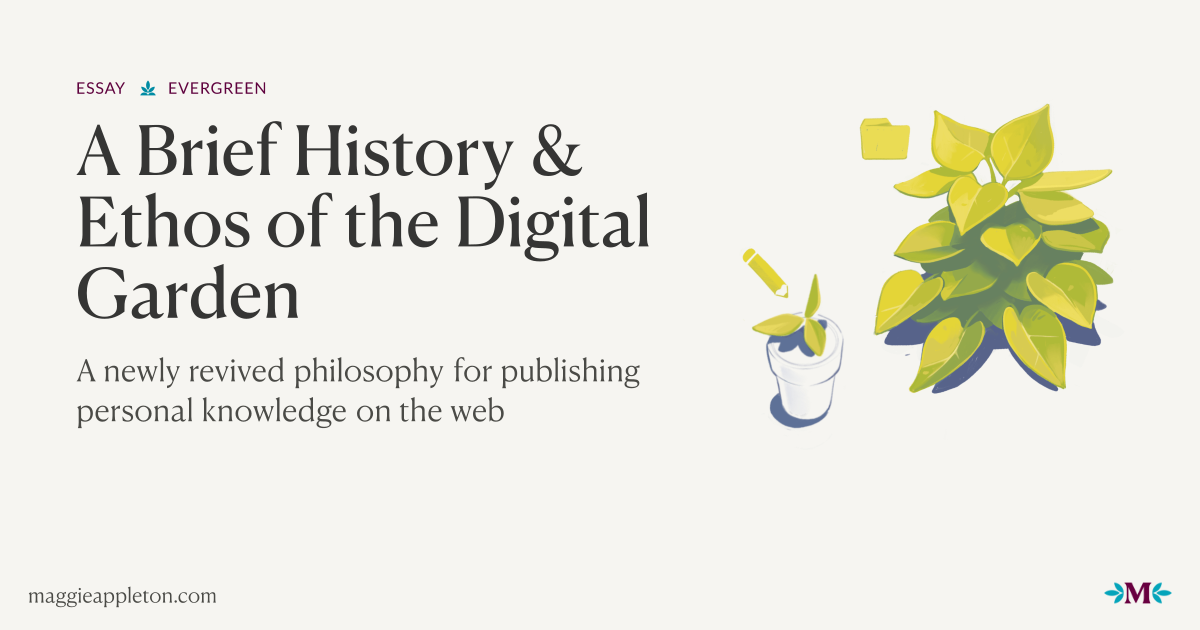
A Brief History & Ethos of the Digital Garden
A newly revived philosophy for publishing personal knowledge on the web
Wikipedia Is Battling for the Soul of the Internet
The internet’s largest stockpile of free knowledge is under threat from MAGA, A.I. and foreign autocrats. A bibliophile ex-ambassador is here to help.

The Who Cares Era | dansinker.com
Earlier this week, it was discovered that the Chicago Sun-Times and the Philadelphia Inquirer had both published an externally-produced "special supplement" that contained facts, experts, and book titles entirely made up by an AI chatbot. There's been a lot written about this (former Chicago Reader editor Martha Bayne's is the best), and I don't need to rehash it all. But the thing that is most disheartening to me is how at every step along the way, nobody cared.
#760: Gambling the future into existence
Plus: Cosmo for conservatives, AI;DR and being "agentic"

Governable Spaces: Democratic Design for Online Life – Writings and rehearsals by Nathan Schneider
Read the free, open access editionBuy: Amazon, Bookshop, Narrow Gauge Book Co-op, UC Press
Rotating the Space: On LLMs as a Medium for Thought
An essay on LLMs as a cognitive medium
Social Capital - Hitchhiker's Guide to the Atmosphere
The problem Atproto is solving
Zonder ons, Geen wij | NPO Start
Onderzoek naar het effect van de afname van burgerparticipatie en sociale netwerken op de Amerikaanse democratie, aan de hand van het werk van academicus Robert Putnam.
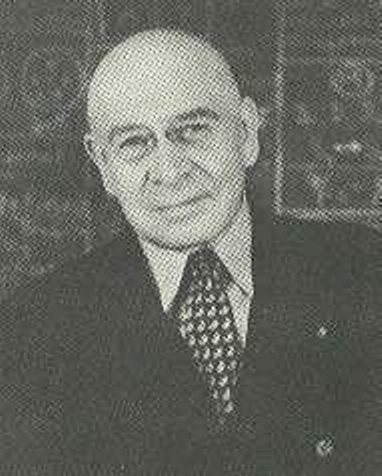
Alfred Korzybski
Alfred Habdank Skarbek Korzybski was a Polish-American philosopher and independent scholar who developed a field called general semantics, which he viewed as both distinct from, and more encompassing than, the field of semantics. He argued that human knowledge of the world is limited both by the human nervous system and the languages humans have developed, and thus no one can have direct access to reality, given that the most we can know is that which is filtered through the brain's responses to reality. His best known dictum is "The map is not the territory". Many of his ideas were presented in his book Science and Sanity (1933).

Humanists Have Done Nothing Wrong | Defector
For many years, I’ve held a pet theory that cultural consumers can be grouped into two broad categories: Primary Source People and Secondary Source People. The former are the book lovers, cinephiles, archive perusers, and history buffs who grew to love their areas of study because of the specific objects that constitute the field: the…
Web of Science Master Journal List - WoS MJL by Clarivate
