

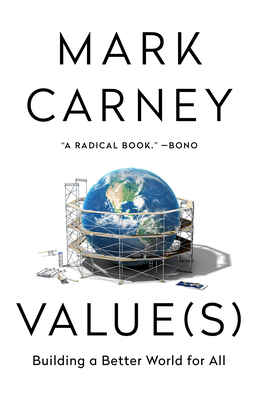
A bold, urgent argument on the misplacement of value in…
CMV: The labor theory of value is flawed
72 votes, 407 comments. This might be an obscure topic, however, in some—largely Marxist circles— the approach seems to motivate much of the dialogue…
AI Values Dashboard
How leading AI models value different people, companies, countries, and groups.
The Great Simplification with Nate Hagens
The Great Simplification with Nate Hagens explores money, energy, economy, and the environment with world experts and leaders to understand how everything fits together, and where we go from here

Opinion | The Age of Interdisciplinary Slop
The corporate jargon of change masks the decimation of intellectual life.

Humanity’s Endgame
A new history of societal collapse by an expert in existential risk argues that our globalized society is edging toward the precipice.

The marketplace of rationalizations
Recent work in economics has rediscovered the importance of belief-based utility for understanding human behaviour. Belief ‘choice’ is subject to an important constraint, however: people can only bring themselves to believe things for which they can find rationalizations. When preferences for similar beliefs are widespread, this constraint generates rationalization markets, social structures in which agents compete to produce rationalizations in exchange for money and social rewards. I explore the nature of such markets, I draw on political media to illustrate their characteristics and behaviour, and I highlight their implications for understanding motivated cognition and misinformation.
Worse on Purpose
Investigative essays on corporate enshittification — how the brands you trusted made everything worse on purpose, and who profits when they do.
Capitalism, the Commons, and Divine Right - Schumacher Center for a New Economics
Barnes defines the commons as "the sum of all we inherit together and must pass on, undiminished and more or less equally, to our heirs." The commons includes watersheds, air, DNA, playgrounds, Main Street, radio waves, political systems, and numerous other natural resources and social innovations. Barnes suggests that the commons should be held in trust for the benefit of current and future generations as a way of countering the power of the market and its search for short-term private profits.
Effective Altruism’s Problems Go Beyond Sam Bankman-Fried - Bloomberg
archived 12 Mar 2026 21:01:45 UTC

Social Capital - Hitchhiker's Guide to the Atmosphere
The problem Atproto is solving
The Return of the Cutting-Off Way
Structural changes are driving us towards a more chaotic world, defined by "neither peace nor war, but conflict."

Risk, Uncertainty and Profit
A timeless classic of economic theory that remains fasc…
Dami Lee on Instagram: "What holds up a society? This art piece in Korea stopped me cold, and I haven’t stopped thinking about it since. 180,000 tiny figures. Arms raised. A glass floor you’re meant to walk on. The artist is Do Ho Suh, and the question he’s asking feels more urgent than ever right now: is it the collective that holds everything up, or the individual? Because both stories have produced extraordinary things. Korea’s GDP per capita in the 1960s was lower than Sudan’s. Sixty years later, it’s the twelfth largest economy in the world. Built on coordination, sacrifice, twelve-hour days, families who gave everything for the next generation. And then there’s the Western story. The entrepreneur. The innovator. The one who puts a car in space but somehow can’t build affordable housing or a high-speed rail. As the world order gets reshaped in real time, I keep coming back to this floor. Who’s actually holding it up? And does the person walking on it ever think to look down? Tell me what you think in the comments. #DoHoSuh #KoreaArt #ContemporaryArt #PublicArt #SeoulArt"
14K likes, 59 comments - damileearch on June 11, 2026: "What holds up a society? This art piece in Korea stopped me cold, and I haven’t stopped thinking about it since. 180,000 tiny figures. Arms raised. A glass floor you’re meant to walk on. The artist is Do Ho Suh, and the question he’s asking feels more urgent than ever right now: is it the collective that holds everything up, or the individual? Because both stories have produced extraordinary things. Korea’s GDP per capita in the 1960s was lower than Sudan’s. Sixty years later, it’s the twelfth largest economy in the world. Built on coordination, sacrifice, twelve-hour days, families who gave everything for the next generation. And then there’s the Western story. The entrepreneur. The innovator. The one who puts a car in space but somehow can’t build affordable housing or a high-speed rail. As the world order gets reshaped in real time, I keep coming back to this floor. Who’s actually holding it up? And does the person walking on it ever think to look down? Tell me what you think in the comments. #DoHoSuh #KoreaArt #ContemporaryArt #PublicArt #SeoulArt".

Dynamic Pricing: What It Is & Why It's Important | HBS Online
Are you reevaluating your digital platform’s pricing model? Here’s an overview of dynamic pricing and why it’s important to your business.
The Missing Institution: A Global Dividend System for the Age of Transformative AI — Digitalist Papers
How do we share prosperity in society if work no longer sits at the center of people’s lives? In this essay, Anna Yelizarova explores one provocative possibility: a “global dividend.” If transformative AI shows little respect for national borders, with effects that spill across countries, then we ne
