An LLM is a computer program. We should talk about it like a computer program.
Fight fire with pedantry
Over the last two years, I’ve heard a bunch of speculation about how to design a programming language specifically for an LLM. It usually centers around typechecking, formal verifiability, or context engineering. It’s a fun thought experiment, but always felt aimless. First, my experience has been that designing for humans is the best way to design for an LLM, as long as you restrict yourself to text. Second, being in-distribution is so critical that there’s no point unless you’re also training a frontier coding model.
Giving LLMs a personality is just good engineering
AI skeptics often argue that current AI systems shouldn’t be so human-like. The idea - most recently expressed in this opinion piece by Nathan Beacom - is that language models should explicitly be tools, like calculators or search engines. Although they can pretend to be people, they shouldn’t, because it encourages users to overestimate AI capabilities and (at worst) slip into AI psychosis. Here’s a representative paragraph from the piece:

Build agents, not pipelines
There are only two ways to use LLMs in a computer program: as part of a pipeline, or as an agent. In other words, either you express the control flow of the program in code, or you give a LLM tools and allow it to manage the control flow itself1.
What Happens, Exactly, When a Person Talks to an LLM?
A phenomenology of thinking with a model.

Can LLMs Be Computers? | Percepta
We build a computer inside a transformer — executing arbitrary C programs for millions of steps with exponentially faster inference via 2D attention heads.

I Built an LLM From Scratch
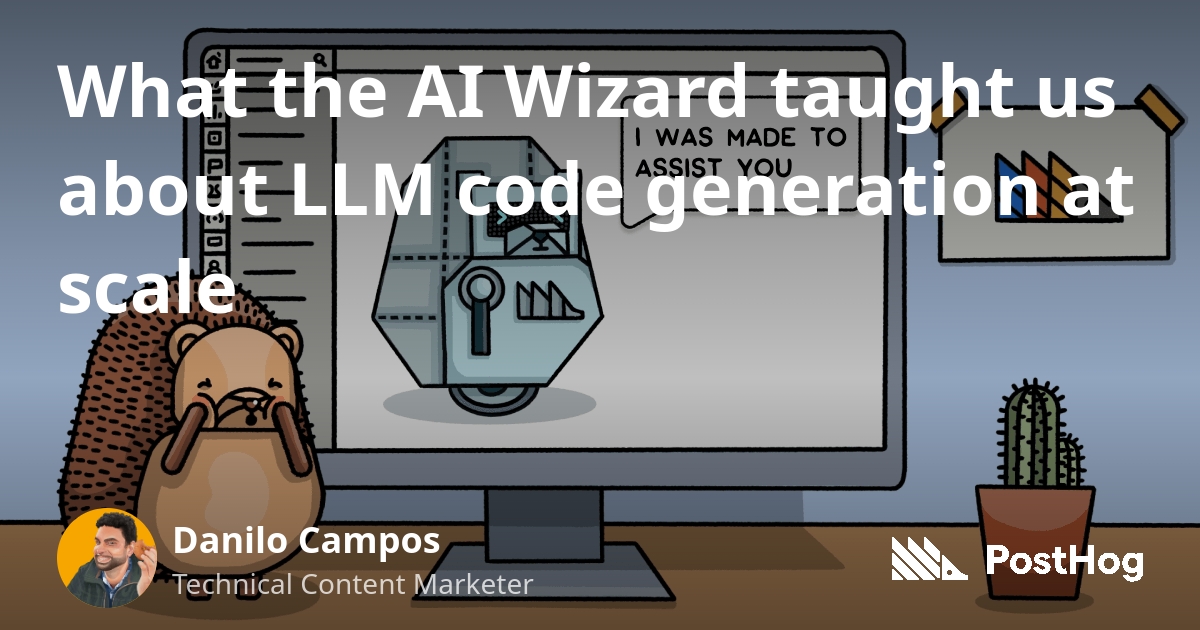
What the AI Wizard taught us about LLM code generation at scale - PostHog
You know what’s boring? Writing integrations. It’s a task you’ll do once, but you always need to do it right, which means carefully reading docs…
Rotating the Space: On LLMs as a Medium for Thought
An essay on LLMs as a cognitive medium
We Don't Understand Neural Networks At The Algorithmic Level
The largest ongoing debate about AI is “Are Large Language Models (LLMs) intelligent?” That makes sense, at least: the evidence is ambiguous and the stakes a...
Systems design 3: LLMs and the semantic revolution
Long ago in the 1990s when I was in high school, my chemistry+physics teacher pulled me aside. "Avery, you know how the Internet works, righ...

Artificial Intelligence Glossary | Stanford HAI
Artificial Intelligence (AI) is rapidly growing, with new terms and concepts being introduced at a breakneck speed. You may have seen terms such as AGI, machine learning, or foundation models in media headlines, emerging legislation, or in your everyday life.

LLM-generated skills work, if you generate them afterwards
LLM “skills” are a short explanatory prompt for a particular task, typically bundled with helper scripts. A recent paper showed that while skills are useful to LLMs, LLM-authored skills are not. From the abstract:
Extensible Software in the age of LLMs | Jeremy Morrell
Solid core + capability-based sandboxes + LLMs = Users with superpowers

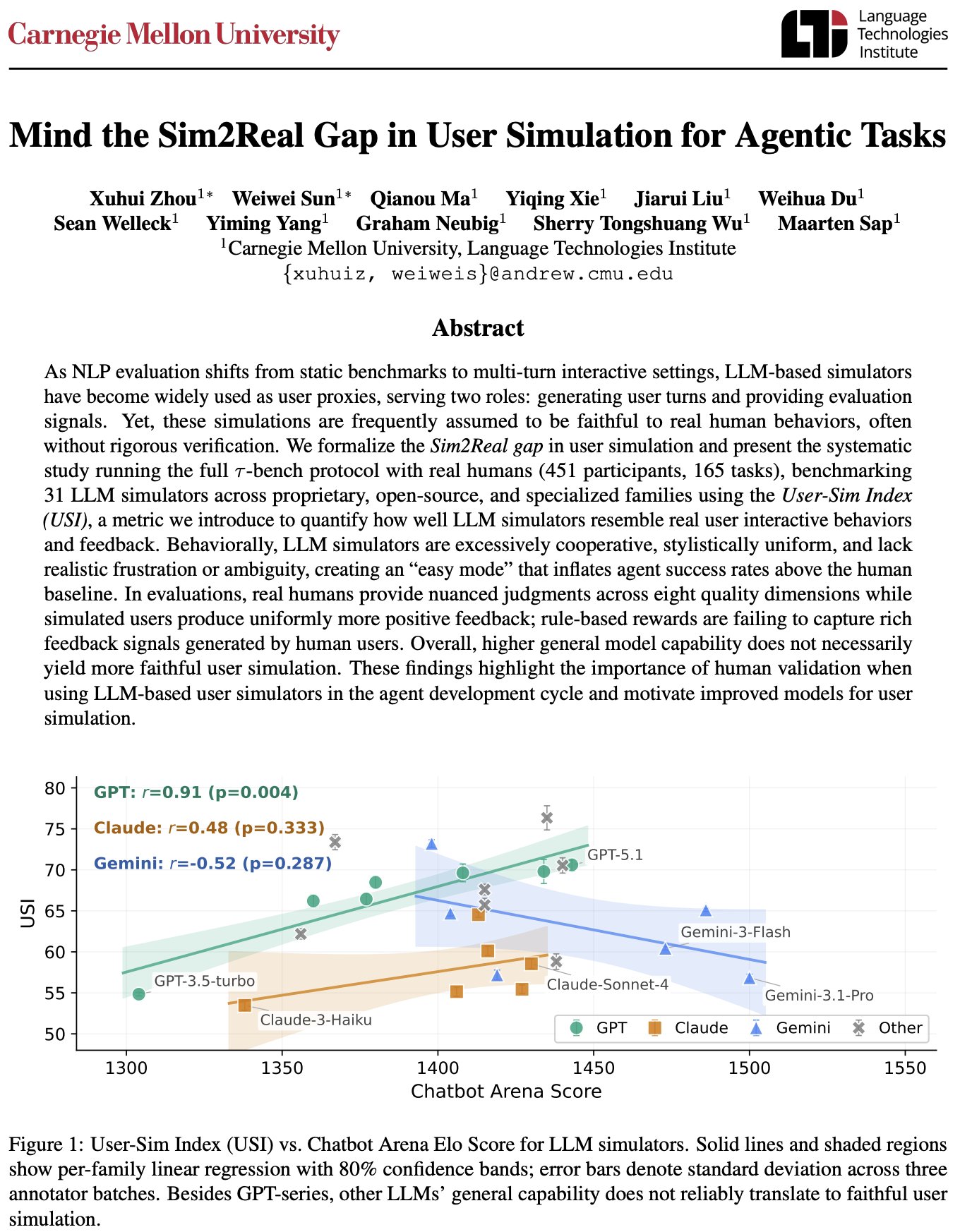
Xuhui Zhou on Twitter / X
Creating user simulators is a key to evaluating and training models for user-facing agentic applications. But are stronger LLMs better user simulators?TL;DR: not really.We ran the largest sim2real study for AI agents to date: 31 LLM simulators vs. 451 real humans across 165… pic.twitter.com/SkswSzeBrz— Xuhui Zhou (@nlpxuhui) March 19, 2026