

If you're a materialist, you probably think that rabbits are conscious. And you ought to think that. After all, rabbits are a lot like us, biologically and neurophysiologically. If you're a materialist, you probably also think that conscious experience would be present in a wide range of naturally-evolved alien beings behaviorally very similar to us even if they are physiologically very different. And you ought to think that. After all, to deny it seems insupportable Earthly chauvinism. But a materialist who accepts consciousness in weirdly formed aliens ought also to accept consciousness in spatially distributed group entities. If she then also accepts rabbit consciousness, she ought to accept the possibility of consciousness even in rather dumb group entities. Finally, the United States would seem to be a rather dumb group entity of the relevant sort. If we set aside our morphological prejudices against spatially distributed group entities, we can see that the United States has all the types of properties that materialists tend to regard as characteristic of conscious beings.

Structural Monism — Canon v1.0.0 | SUBIT-Theory | Nautilus Docs
This repository contains the official release of the Canon of Structural Monism (version 1.0.0). Structural Monism is an ontological doctrine that describes consciousness as a single field and all forms of existence as configurations of that field. The doctrine includes the SUBIT‑64 spectral model, the principle of vertical coherence, the mathematical framework, ethical implications, and canonical definitions.
Humanists Have Done Nothing Wrong | Defector
For many years, I’ve held a pet theory that cultural consumers can be grouped into two broad categories: Primary Source People and Secondary Source People. The former are the book lovers, cinephiles, archive perusers, and history buffs who grew to love their areas of study because of the specific objects that constitute the field: the…
The Divided Brain (2019) | How the Left Brain Hijacked the Modern World

Does modernisation erase cultural difference – or amplify it? | Psyche Ideas
We understandably fear the flattening effect of modernity. But global data from China to Peru tells a hopeful story

Technoableism
Technoableism is a belief in the power of technology that considers the elimination of disability a good thing, something we should strive for. It’s a classic form of ableism—bias against disabled people, bias in favor of nondisabled ways of life. Technoableism is the use of technologies to reassert those biases, often under the guise of empowerment.

Abundant intelligences: placing AI within Indigenous knowledge frameworks
The current trajectory of artificial intelligence development suffers from fundamental epistemological shortcomings, resulting in the systematic operationalization of bias against non-white, non-male, and non-Western peoples. We argue that these failings are, in part, the result of certain Western rationalist epistemologies that exclude many ways of knowing about the world, and therefore they cannot provide a sufficient foundation on which to adequately, robustly, and humanely conceptualize intelligence. We present a new research agenda, Abundant Intelligences, an Indigenous-led, Indigenous-majority international, interdisciplinary research program that imagines anew how to conceptualize and design artificial intelligence (AI) based on Indigenous knowledge (IK) systems. Abundant Intelligences draws on the rich plurality of Indigenous knowledge systems, bringing together diverse sets of thought, culture, and protocol together. We show IK systems provide one way to rebuild AI’s epistemological foundations and transform these tools’ current role in reinforcing colonial practices of exclusion, extraction, manipulation, and eradication into engines of abundance that enable us to care better for ourselves, our communities, and our world. Our proposition is to fully engage with AI to explore how different conceptions of intelligence could be embodied in these technologies. In this paper, we present the tenets of the research program in detail, account for our methodological approach, describe the impact and limitations, and conclude on a discussion of the implications of the program.
Furries Are Everywhere. That's Because We're People. - Ewan’s Blog
I genuinely cannot believe this is something I am writing about.
The UK’s War on Anonymity Has Come to America — Effort
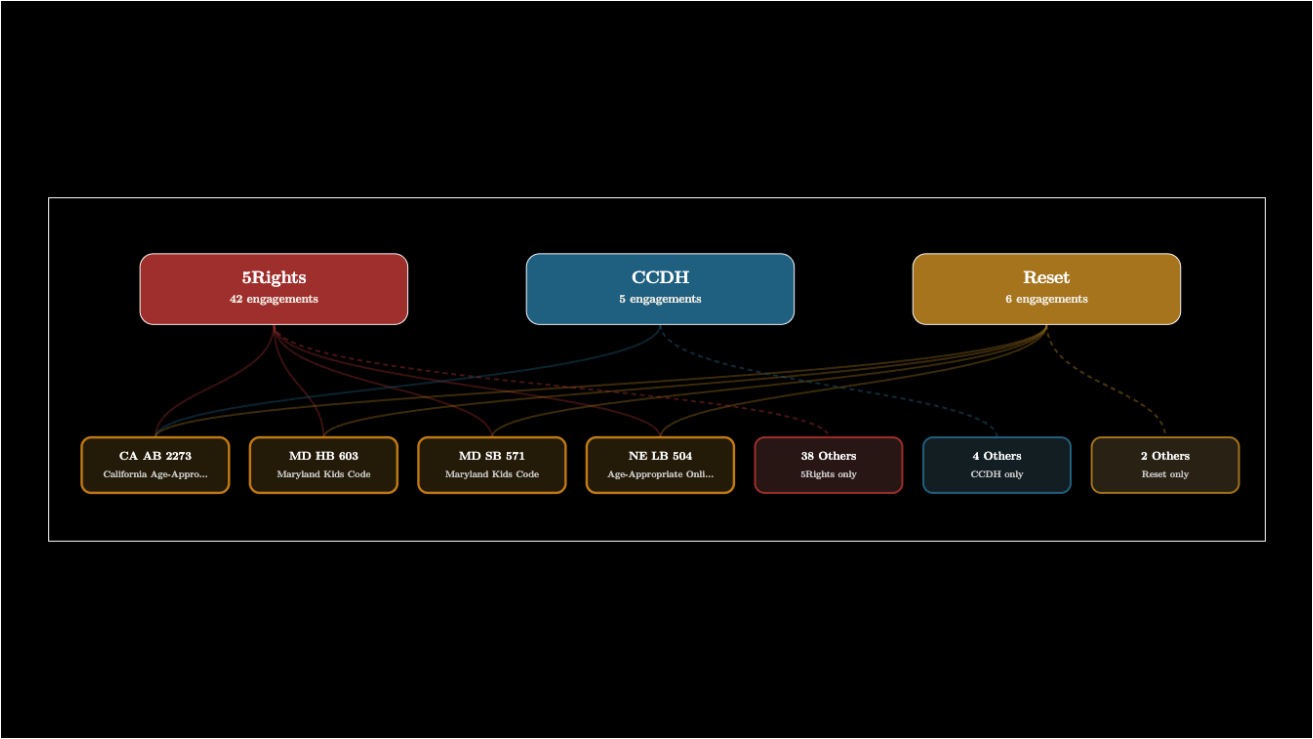
The NGOs Behind Britain's Digital ID Laws are Targeting American Statehouses
The Rubber Tree People: Mayan or Myth
A long ranting essay proving that Commander Chakotay of Star Trek Voyager is not Mayan.
The 1989 CBC Massey Lectures, "The Real World of Technology"
Technology has always been a part of human existence. Today though, says the experimental physicist, Ursula M. Franklin, technology has large-scale effects on culture itself. Ursula Franklin is an experimental physicist, University Professor Emeritus at the University of Toronto, a former board member of the National Research Council and the Science Council of Canada, and a companion of the Order...

The politics of decentralization and the libertarian allure of Mastodon – Structural Integrity
I am currently reading the fabulous “Hayek’s Bastards” by Quinn Slobodian. It made me think about decentralisation in Mastodon (yes, the federated social network). And it made me think about the lack of a coherent progressive vision for the digital age. I will explain what that book has to do with both. But let’s go back to the political meaning of “decentralisation” in digital discourse first.
10 Examples of Affordances - The Boffins Portal
Affordance is a concept in design that refers to the possible actions or uses that an object or environment offers a user. It is the relationship between an object and the person using it and what the person perceives they can do with the object based on its physical characteristics. In other words, affordance is ... Read more

The Physics and Metaphysics of Social Powers: Bridging Cognitive Processing and Social Dynamics, a New Perspective on Power through Active Inference