Compilers occupy a special place in computer science. They're a canonical course in computer science education. Building one is a rite of passage. It forces you to confront how software actually works, by examining languages, abstractions, hardware, and the boundary between human intent and machine execution.
Claude Is Not a Compiler - exe.dev blog
In early 2025, I wrote Is Claude a Compiler? At the time, my answer was: I don’t know.
Coding After Coders: The End of Computer Programming as We Know It - …
archived 16 Mar 2026 15:14:04 UTC

"Concatenative programming and stack-based languages" by Douglas Creager

Pony
An open-source, object-oriented, actor-model, capabilities-secure, high-performance programming language.
Daily Deal: The 2026 C# Course Bundle
The 2026 C# Course Bundle offers 8 courses that cover everything C#. You’ll master the fundamentals, explore object-oriented programming, and start building your own apps in no time. It’…

"Code was never the hard part" is an insult to all programmers — Senko Rašić
The software development profession is in the midst of upheaval. Nobody knows how the AI revolution will play out in the end, but it is c...

The Future of Software Engineering Isn’t What You Think
Over the past two decades, I’ve watched software eat the world, then hardware catch up, then Generative AI reshape both at the same time…
A break from programming languages
This is a blog post I have been considering writing for a long time.
Coding After Coders: The End of Computer Programming as We Know It
In the era of A.I. agents, many Silicon Valley programmers are now barely programming. Instead, what they’re doing is deeply, deeply weird.

Why Futhark?
A high-performance and high-level purely functional data-parallel array programming language that can execute on the GPU and CPU.
Prism: An Impure Functional Language With Typed Effects - Stephen Diehl
Personal blog of Stephen Diehl - Software engineer writing about technology, programming, and the future

The New Software Lifecycle
I co-wrote a Google whitepaper about how AI is changing the software lifecycle. I'm not going to summarize the whole thing. Instead, here are the handful of ...
The peril of laziness lost | The Observation Deck
In his classic Programming Perl — affectionately known to a generation of technologists as "the Camel Book" — Larry Wall famously wrote of the three virtues of a programmer as laziness, impatience, and hubris: If we’re going to talk about good software design, we have to talk about Laziness, Impatience, and Hubris, the basis of good software design. We’ve all fallen into the trap of using cut-and-paste when we should have defined a higher-level abstraction, if only just a loop or subroutine. To be sure, some folks have gone to the opposite extreme of defining ever-growing mounds of higher level abstractions when they should have used cut-and-paste. Generally, though, most of us need to think about using more abstraction rather than less.
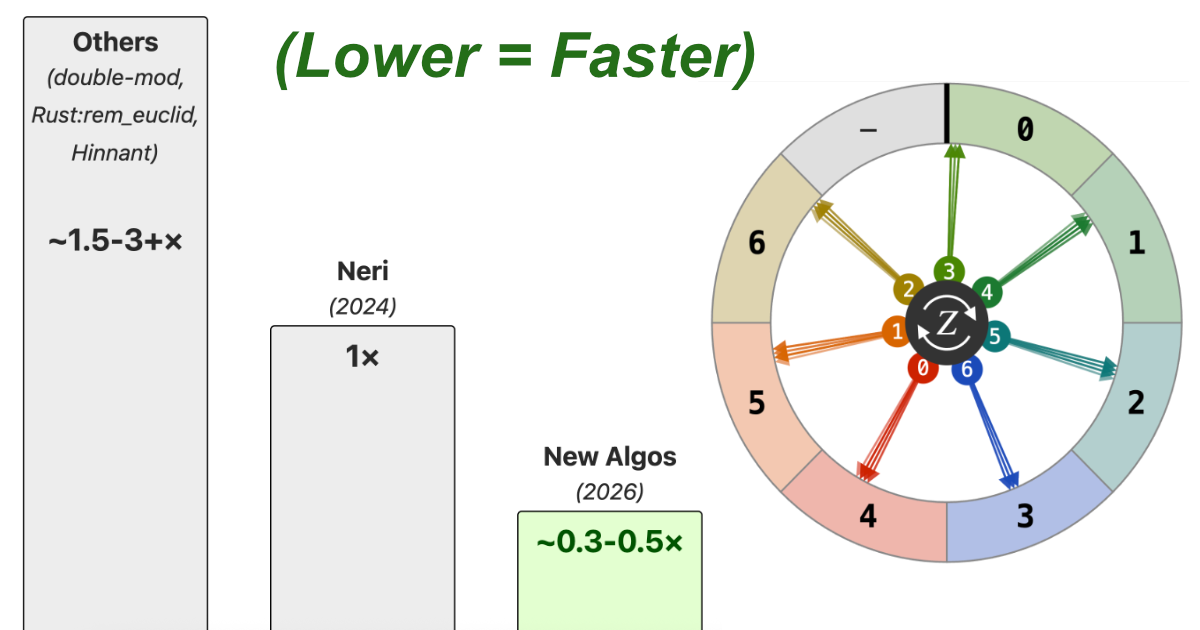
A faster way to calculate the day-of-the-week
A range of fast modulus techniques that beat compiler output