Mass media influences how facts are viewed and debated in a society, contributing to crafting its public opinion. Independence and pluralism...
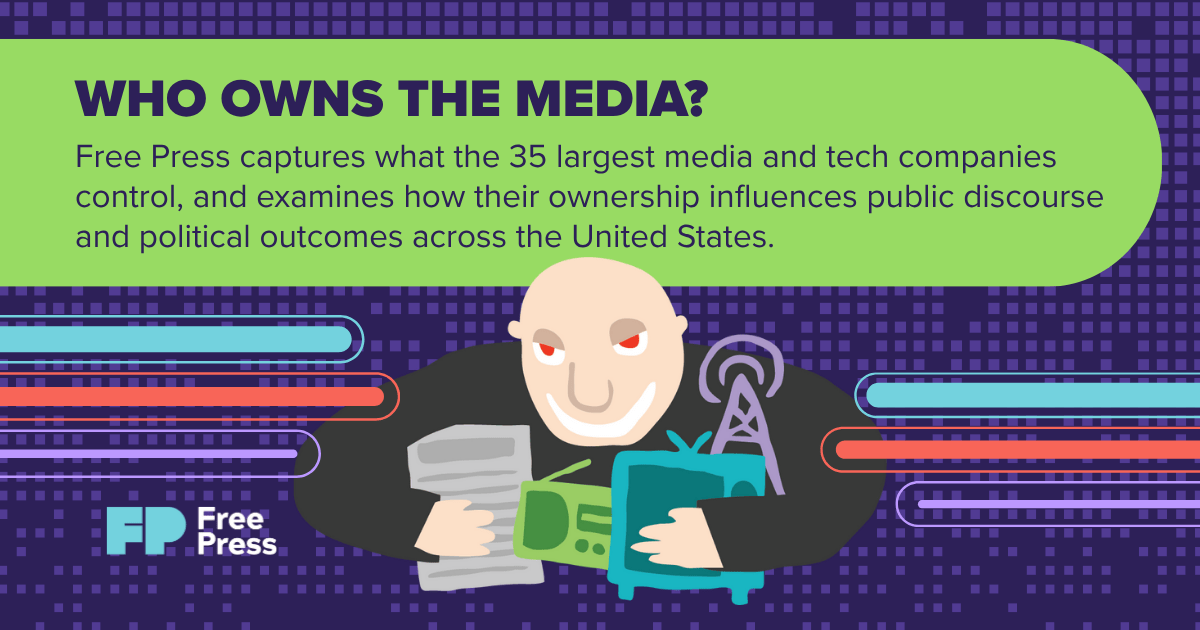
Who Owns the Media
Who owns the 35 most powerful media companies in America? The Media Capitulation Index shows how these conglomerates came to dominate the U.S. media landscape. Using a chicken scale, Free Press rates their ability to defend democracy during a time of authoritarianism.
Media Bias/Fact Check News
We are the most comprehensive media bias resource on the internet. There are currently 3900+ media sources listed in our database and growing every day.
Web Browsers, AI, and the Politics of Media Power
The left keeps building media strategies on top of platforms built to undermine them. As browsers are rebuilt for mass surveillance and manipulation, the systems that decide what people see and who gets heard are being rewritten without us. Control over the browser is control over political reality.

PropagandaScope
Tracking articles from newspapers. Real-time analysis of propaganda transmission patterns.
Local Journalism Directory | Media and Democracy Project
We created a directory to help you find local journalism and local news sources in your area worth reading and supporting.

Owning media again - Kedara.eu
This year, one of my aspirations is to rely less on the big streaming services for my entertainment. Why? Well, for one thing, if we give too much power to large corporations by getting overly …

Gazing Back at the Surveillance Cameras That Watch Us (Published 2018)
These photographers explored the implications of a culture of pervasive monitoring.

U.S. Press Freedom Tracker
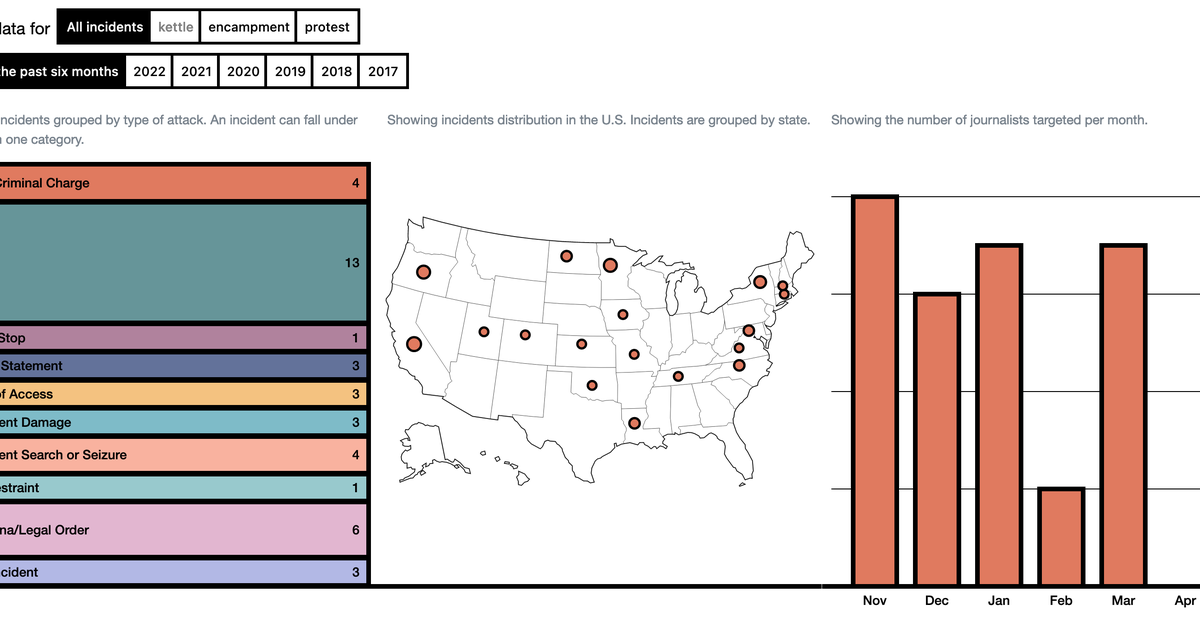
The U.S. Press Freedom Tracker is a project that aims to comprehensively document press freedom incidents in the United States — such as the arrests of journalists, seizures of their equipment, interrogations and searches at the U.S. border, subpoenas to testify about sources, leak prosecutions and physical attacks. The Press Freedom Tracker documents cases across the country, involving national, state and local authorities.
Media Media
The authoritarians are winning, we can all see that. It wouldn't be the worst thing if the pro-democracy camp stopped being naive about social media.

Tetrad of media effects
Marshall McLuhan's tetrad of media effects uses a tetrad - a four-part construct - to examine the effects on society of any technology/medium by dividing its effects into four categories and displaying them simultaneously. The tetrad first appeared in print in articles by McLuhan in the journals Technology and Culture (1975) and et cetera (1977). It first appeared in book form in his posthumously-published works Laws of Media (1988) and The Global Village (1989).

Verification Handbook | DataJournalism.com
This book equips journalists with the knowledge to investigate on disinformation and media manipulation.

The political effects of X’s feed algorithm
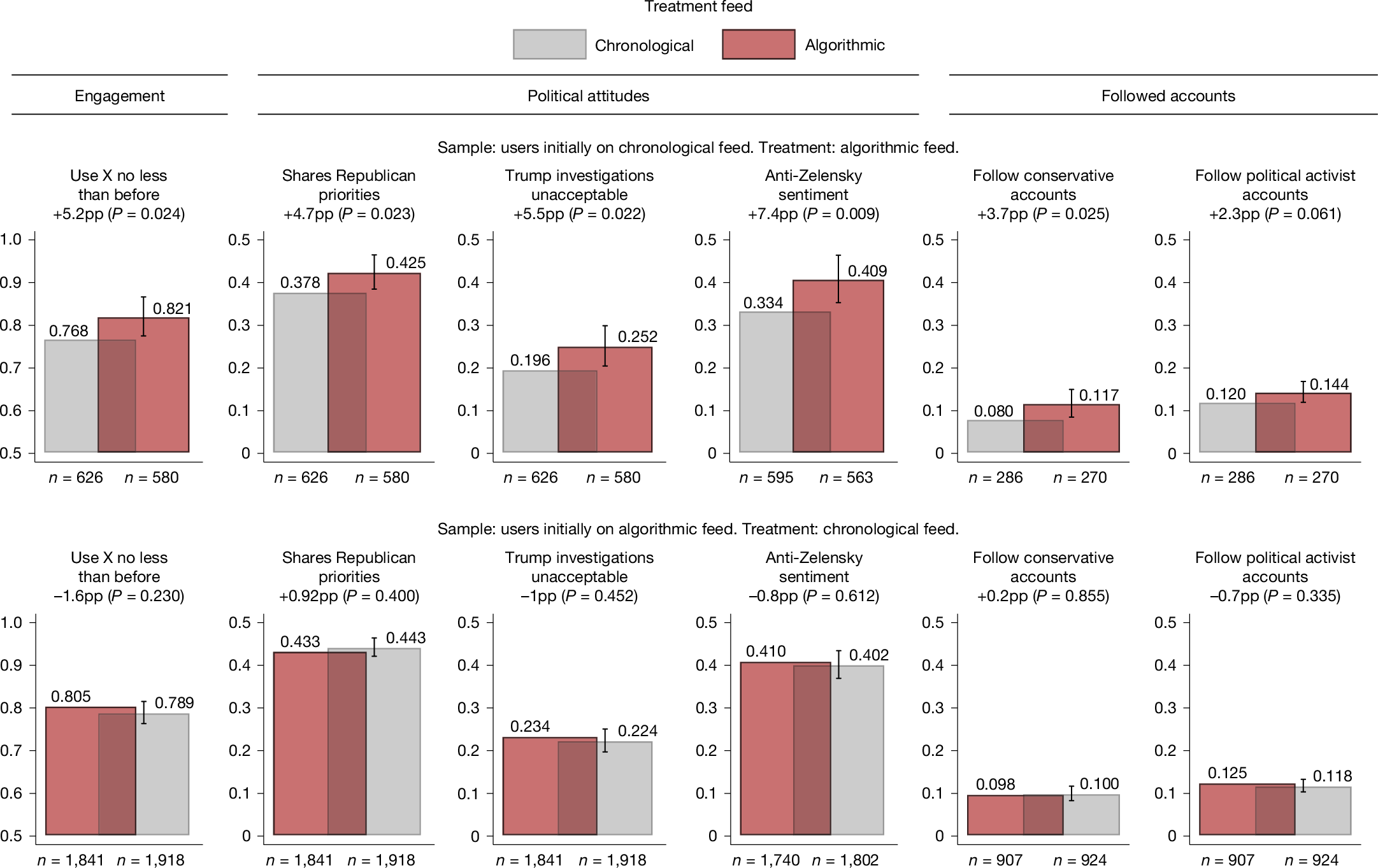
Feed algorithms are widely suspected to influence political attitudes. However, previous evidence from switching off the algorithm on Meta platforms found no political effects1. Here we present results from a 2023 field experiment on Elon Musk’s platform X shedding light on this puzzle. We assigned active US-based users randomly to either an algorithmic or a chronological feed for 7 weeks, measuring political attitudes and online behaviour. Switching from a chronological to an algorithmic feed increased engagement and shifted political opinion towards more conservative positions, particularly regarding policy priorities, perceptions of criminal investigations into Donald Trump and views on the war in Ukraine. In contrast, switching from the algorithmic to the chronological feed had no comparable effects. Neither switching the algorithm on nor switching it off significantly affected affective polarization or self-reported partisanship. To investigate the mechanism, we analysed users’ feed content and behaviour. We found that the algorithm promotes conservative content and demotes posts by traditional media. Exposure to algorithmic content leads users to follow conservative political activist accounts, which they continue to follow even after switching off the algorithm, helping explain the asymmetry in effects. These results suggest that initial exposure to X’s algorithm has persistent effects on users’ current political attitudes and account-following behaviour, even in the absence of a detectable effect on partisanship.
Community by Design
Social media empower distributed content creation by algorithmically harnessing "the social fabric" (explicit and implicit signals of association) to serve this content. While this overcomes the bottlenecks and biases of traditional gatekeepers, many believe it has unsustainably eroded the very social fabric it depends on by maximizing engagement for advertising revenue. This paper participates in open and ongoing considerations to translate social and political values and conventions, specifically social cohesion, into platform design. We propose an alternative platform model that includes the social fabric an explicit output as well as input. Citizens are members of communities defined by explicit affiliation or clusters of shared attitudes. Both have internal divisions, as citizens are members of intersecting communities, which are themselves internally diverse. Each is understood to value content that bridge (viz. achieve consensus across) and balance (viz. represent fairly) this internal diversity, consistent with the principles of the Hutchins Commission (1947). Content is labeled with social provenance, indicating for which community or citizen it is bridging or balancing. Subscription payments allow citizens and communities to increase the algorithmic weight on the content they value in the content serving algorithm. Advertisers may, with consent of citizen or community counterparties, target them in exchange for payment or increase in that party's algorithmic weight. Underserved and emerging communities and citizens are optimally subsidized/supported to develop into paying participants. Content creators and communities that curate content are rewarded for their contributions with algorithmic weight and/or revenue. We discuss applications to productivity (e.g. LinkedIn), political (e.g. X), and cultural (e.g. TikTok) platforms.

Local U.S. TV News Will Soon Be Entirely Right Wing Propaganda
Thanks to the destruction of media consolidation limits, Republicans will soon enjoy propaganda and market domination over what's left of local U.S. news.

W-Social: What does sovereignty mean for social media? – Open Future
The European Commission’s move to W-Social frames it as a European alternative to X, but its closed-source code and reliance on Bluesky’s infrastructure show that sovereign social media requires open infrastructure—not European ownership alone.

Blacksky
Decentralized social media built for community power, culture, and collective freedom.