


Policy-makers and scientists dominate high-level sustainability debates but any decision that follows has consequences for ordinary people in their local communities and environments. We asked experts to reflect on the importance of embracing a culturally informed, bottom-up approach to the sustainability discourse and action.
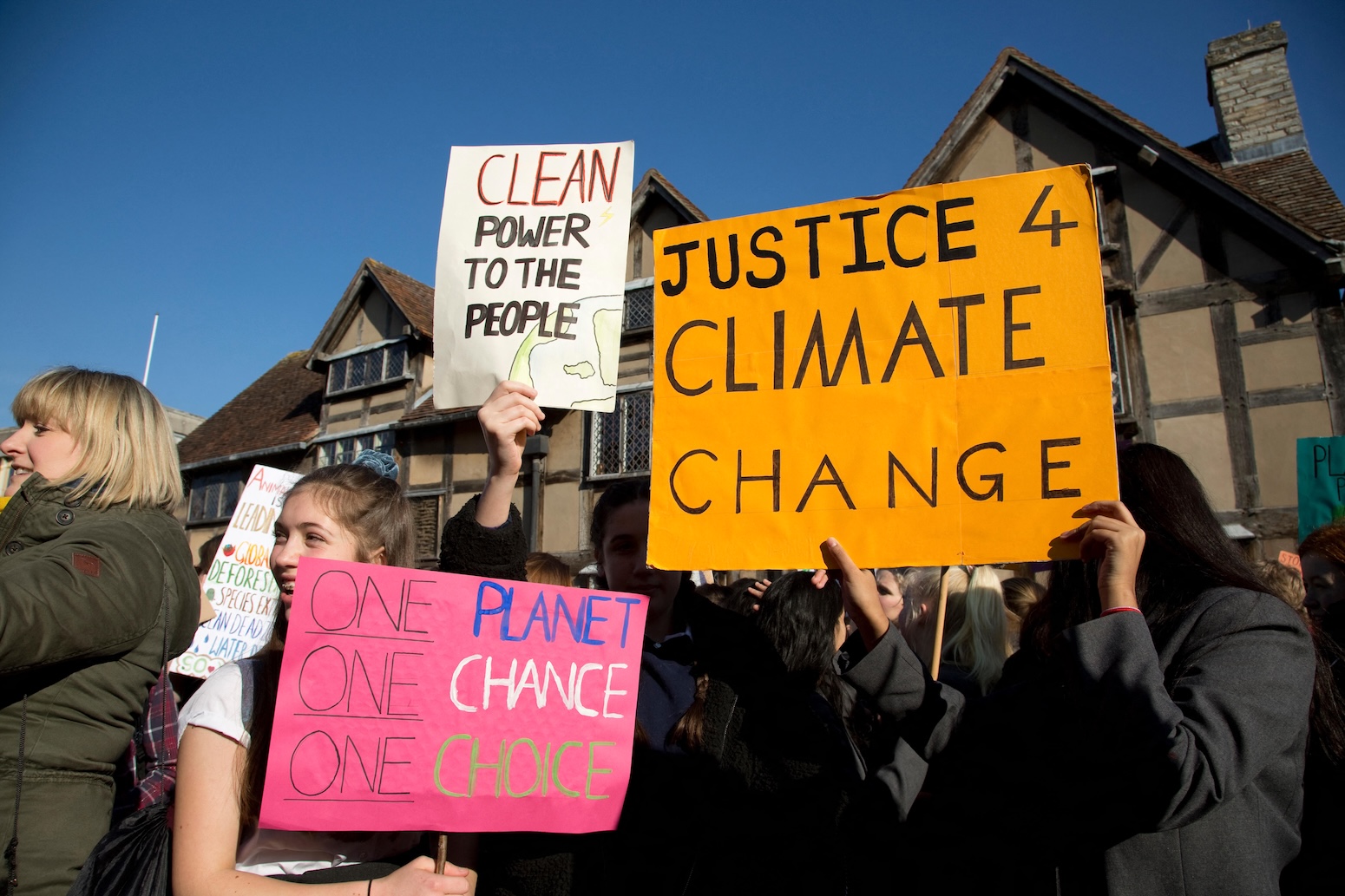
Climate Change: Global Crisis To Local Action By Kevin Anderson
Leveraging agency for climate change mitigation
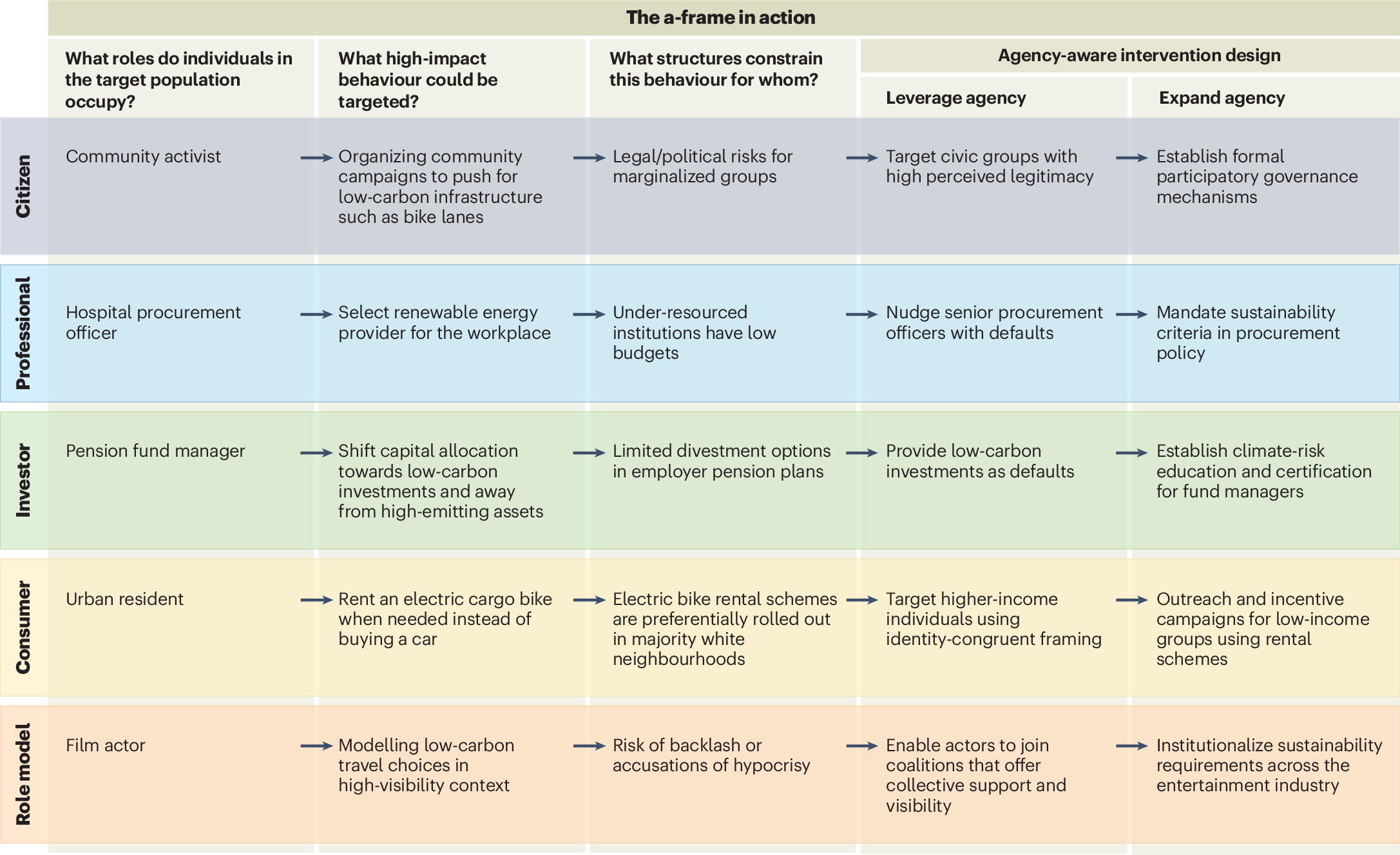
Climate debates often frame individual behaviour and systems change as distinct pathways to action. We suggest that social change arises from individuals’ agency within their roles in societal systems, and that this agency should be actively leveraged to achieve meaningful climate change mitigation.
Fighting for a Livable Future: Exploring Frontier Climate Interventions - The Great Simplification
While current conversations about global heating tend to center around a few well-established pieces of science, we don’t often hear about the scientists and leaders working at the frontier of what is still unknown about Earth’s systems. This includes unpredictable tipping points and cascading effects of our rapidly changing climate, as well as the unconventional adaptation strategies that might help us maintain a stable planet. What is the newest climate science being researched right now, and what areas are we still needing to explore as we fight for a livable future?

Humanists Have Done Nothing Wrong | Defector
For many years, I’ve held a pet theory that cultural consumers can be grouped into two broad categories: Primary Source People and Secondary Source People. The former are the book lovers, cinephiles, archive perusers, and history buffs who grew to love their areas of study because of the specific objects that constitute the field: the…

The Global Village Coffeehouse Aesthetic | Are.na Editorial
Woodcuts, tribal imagery, suns, curvy figures, aroma swirls, and earth tones: Evan Collins defines the look of the 90s

Fighting for a Livable Future: Exploring Frontier Climate Interventions with Kelly Erhart
Listen to Fighting for a Livable Future: Exploring Frontier Climate Interventions with Kelly Erhart from The Great Simplification with Nate Hagens wherever you get your podcasts!
Dami Lee on Instagram: "What holds up a society? This art piece in Korea stopped me cold, and I haven’t stopped thinking about it since. 180,000 tiny figures. Arms raised. A glass floor you’re meant to walk on. The artist is Do Ho Suh, and the question he’s asking feels more urgent than ever right now: is it the collective that holds everything up, or the individual? Because both stories have produced extraordinary things. Korea’s GDP per capita in the 1960s was lower than Sudan’s. Sixty years later, it’s the twelfth largest economy in the world. Built on coordination, sacrifice, twelve-hour days, families who gave everything for the next generation. And then there’s the Western story. The entrepreneur. The innovator. The one who puts a car in space but somehow can’t build affordable housing or a high-speed rail. As the world order gets reshaped in real time, I keep coming back to this floor. Who’s actually holding it up? And does the person walking on it ever think to look down? Tell me what you think in the comments. #DoHoSuh #KoreaArt #ContemporaryArt #PublicArt #SeoulArt"
14K likes, 59 comments - damileearch on June 11, 2026: "What holds up a society? This art piece in Korea stopped me cold, and I haven’t stopped thinking about it since. 180,000 tiny figures. Arms raised. A glass floor you’re meant to walk on. The artist is Do Ho Suh, and the question he’s asking feels more urgent than ever right now: is it the collective that holds everything up, or the individual? Because both stories have produced extraordinary things. Korea’s GDP per capita in the 1960s was lower than Sudan’s. Sixty years later, it’s the twelfth largest economy in the world. Built on coordination, sacrifice, twelve-hour days, families who gave everything for the next generation. And then there’s the Western story. The entrepreneur. The innovator. The one who puts a car in space but somehow can’t build affordable housing or a high-speed rail. As the world order gets reshaped in real time, I keep coming back to this floor. Who’s actually holding it up? And does the person walking on it ever think to look down? Tell me what you think in the comments. #DoHoSuh #KoreaArt #ContemporaryArt #PublicArt #SeoulArt".

The Unsolvable Dilemma: Open Networks vs. Economic Sustainability - Nightflight
Oil and Gas=Peril and Poverty/ Solar and Wind=Prosperity and Protection
2026 has changed the psychological meaning of energy forever
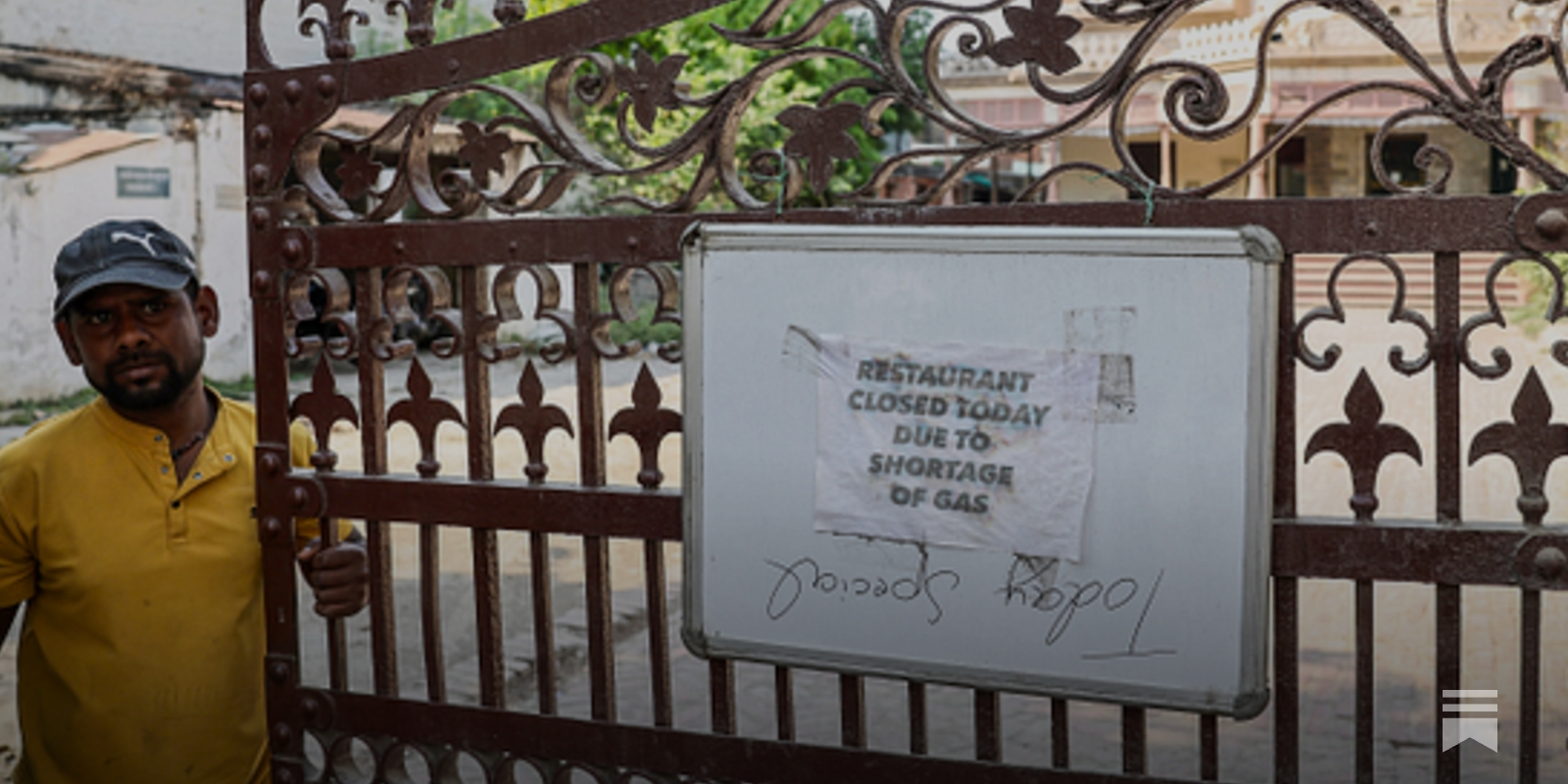
Does modernisation erase cultural difference – or amplify it? | Psyche Ideas
We understandably fear the flattening effect of modernity. But global data from China to Peru tells a hopeful story

Fighting for a Livable Future: Exploring Frontier Climate Interventions with Kelly Erhart
Governance Archaeology: Research as Ancestry
Abstract. This essay presents the idea of governance archaeology, an approach to learning from the past to inform the politics of the future. By reporting on a prototype historical database, we outline a strategy for co-producing a global commons of collective governance practices that can inspire institutional learning and experimentation, particularly in the face of rapid technological change and vexing global crises. Embedded in our approach is an orientation of ancestry whereby practitioners cultivate relationships of accountability and responsibility to the legacies they learn from, recognizing the harm from past patterns of exploitation. By taking seriously a wide range of historical governance practices, particularly those outside the Western canon, governance archaeology seeks to expand the options available for the design of more moral political economies.
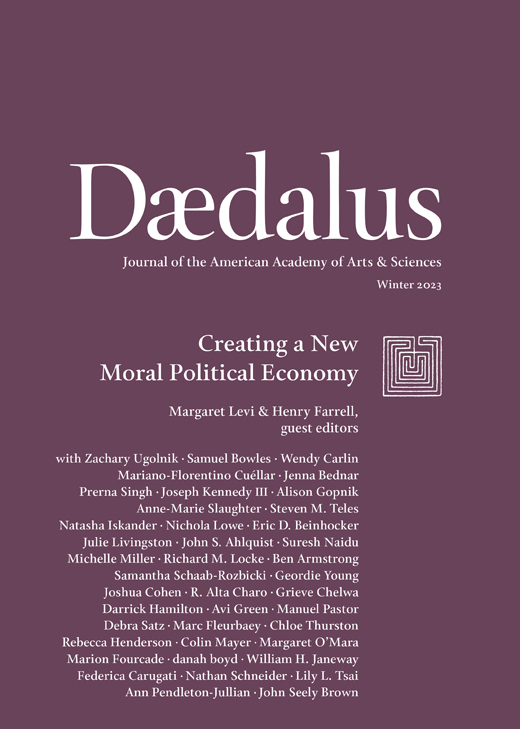
At the heart of the Snow/Leavis ‘two cultures’ clash | Aeon Essays
C P Snow’s ‘Two Cultures’ lecture provoked a savage response from fellow critic F R Leavis. What was at the heart of it all?
Correcting climate ‘misperceptions’ may not boost climate action - Carbon Brief
Most people "underestimate" general support for climate change and "overestimate" actual, real-world climate action.
Abundant intelligences: placing AI within Indigenous knowledge frameworks
The current trajectory of artificial intelligence development suffers from fundamental epistemological shortcomings, resulting in the systematic operationalization of bias against non-white, non-male, and non-Western peoples. We argue that these failings are, in part, the result of certain Western rationalist epistemologies that exclude many ways of knowing about the world, and therefore they cannot provide a sufficient foundation on which to adequately, robustly, and humanely conceptualize intelligence. We present a new research agenda, Abundant Intelligences, an Indigenous-led, Indigenous-majority international, interdisciplinary research program that imagines anew how to conceptualize and design artificial intelligence (AI) based on Indigenous knowledge (IK) systems. Abundant Intelligences draws on the rich plurality of Indigenous knowledge systems, bringing together diverse sets of thought, culture, and protocol together. We show IK systems provide one way to rebuild AI’s epistemological foundations and transform these tools’ current role in reinforcing colonial practices of exclusion, extraction, manipulation, and eradication into engines of abundance that enable us to care better for ourselves, our communities, and our world. Our proposition is to fully engage with AI to explore how different conceptions of intelligence could be embodied in these technologies. In this paper, we present the tenets of the research program in detail, account for our methodological approach, describe the impact and limitations, and conclude on a discussion of the implications of the program.
Humanity’s Endgame
A new history of societal collapse by an expert in existential risk argues that our globalized society is edging toward the precipice.
