A new history of societal collapse by an expert in existential risk argues that our globalized society is edging toward the precipice.
The Gargantuan Lie That is Collapsing The World’s Climate
Thinking we have time left to address climate change, or that “Net Zero by 2050” will save us, is driving us toward full social collapse in ways that become more obvious with every new broken temperature record.

Village-scale resilience
The end-of-the-world already happened, it's just not evenly distributed. But with every end is a new beginning.

The hidden ‘rules of the game’ that dictate how we navigate the world | Psyche Videos
How free are we really, if human behaviour embodies the complex, intertwined webs of society and history?

Europe 2031 — What getting AI wrong means for us
A five-year scenario about AI and Europe's impending slide into irrelevance, with a 2034 epilogue that describes how the collapse of the European model could have been prevented.

20 years ago, Dead Rising showed a different path for open worlds, and more games should pinch its ideas
Dead Rising showed developers there were different ways of doing open worlds. 20 years since its release, we go back and explore what we could of had.


The Missing Institution: A Global Dividend System for the Age of Transformative AI — Digitalist Papers
How do we share prosperity in society if work no longer sits at the center of people’s lives? In this essay, Anna Yelizarova explores one provocative possibility: a “global dividend.” If transformative AI shows little respect for national borders, with effects that spill across countries, then we ne

The Internet Transition
The Internet is allowing us to build a richer, more complex society but the way in which we Internet today is failing to support the governance systems that a more complex world requires. I take a look at why these issues are related, try to develop an intuition for a way forward, and point at the emerging field that is coming together to build that future.

#760: Gambling the future into existence
Plus: Cosmo for conservatives, AI;DR and being "agentic"

AI Safety Is a Narrative Problem · Special Issue 5: Grappling With the Generative AI Revolution
This op-ed explores power and narrative dynamics around AI. Drawing on pop-culture references, the professional experiences of the author and examples from 2023’s “Great AI Safety Hype Roadshow,” this piece draws on the literary criticism technique of practical criticism to consider how speeches and announcements from both Silicon Valley executives and research scientists to interrogate the media-friendly nature of p(doom) discourse—which focuses on the existential risks of AI (PauseAI, 2023)—and its likely consequences. The complexities of AI and its numerous social impacts can be difficult for even the most expert analyst to unpack. In spite of this, the potential of “existential threats” has successfully cut through to become a mainstay of mainstream media coverage over the last year. This piece will make the case that this is an effective narrative conceit that has achieved a number of ends that traditional science communication tends to find difficult, if not impossible, to achieve. Firstly, it is easy to understand. Simplification of this nature—that removes jargon and complexity and focuses on a single outcome—is much easier to fit on a TV rolling news ticker or on the cover of a tabloid newspaper than more well-balanced, representative opinions. Secondly, it inherits prior assumptions from well-known dramatic forms. P(doom) plays to stories familiar from Greek tragedy through to Marvel movies, in which lone male heroes battle ineluctable forces. Thirdly, it is imbued with urgency and so becomes difficult to ignore.

The world’s first trillionaire is a killer
Elon Musk’s empire of wealth is built on suffering.

Crisis and Leviathan: Critical Episodes in the Growth o…
Few topics are as timely as the growth of government. T…

Field Theory: AI as Social Science Question, Object & Tool
Uses of advanced artificial intelligence are changing how societies organize labor, govern, produce knowledge, and make meaning. In light of these developments, this essay argues that AI models, tools, and systems pose three interrelated imperatives for social science: they demand renewed attention to social theories of how technology, human experience, and social order are entangled; they require study as objects of inquiry in their own right; and they offer capabilities that may transform—or upend—the practice of social investigation itself. From Weber’s analysis of rationalization to Du Bois’s study of technology and inequality to contemporary scholarship on algorithmic governance, the essay examines what social science distinctively offers: the capacity to historicize the apparently unprecedented, to trace connections across scales, and to center those most affected by technological change. It identifies how algorithmic systems are remaking the distribution of opportunity and risk as a central task of social inquiry and asks what futures social science might help bring into being.
The Return of the Cutting-Off Way
Structural changes are driving us towards a more chaotic world, defined by "neither peace nor war, but conflict."

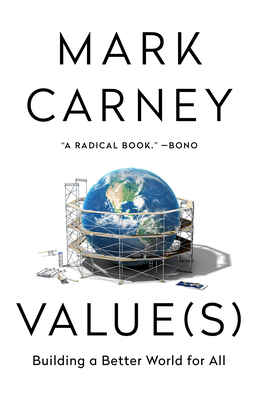
Value(s): building a better world for all
A bold, urgent argument on the misplacement of value in…
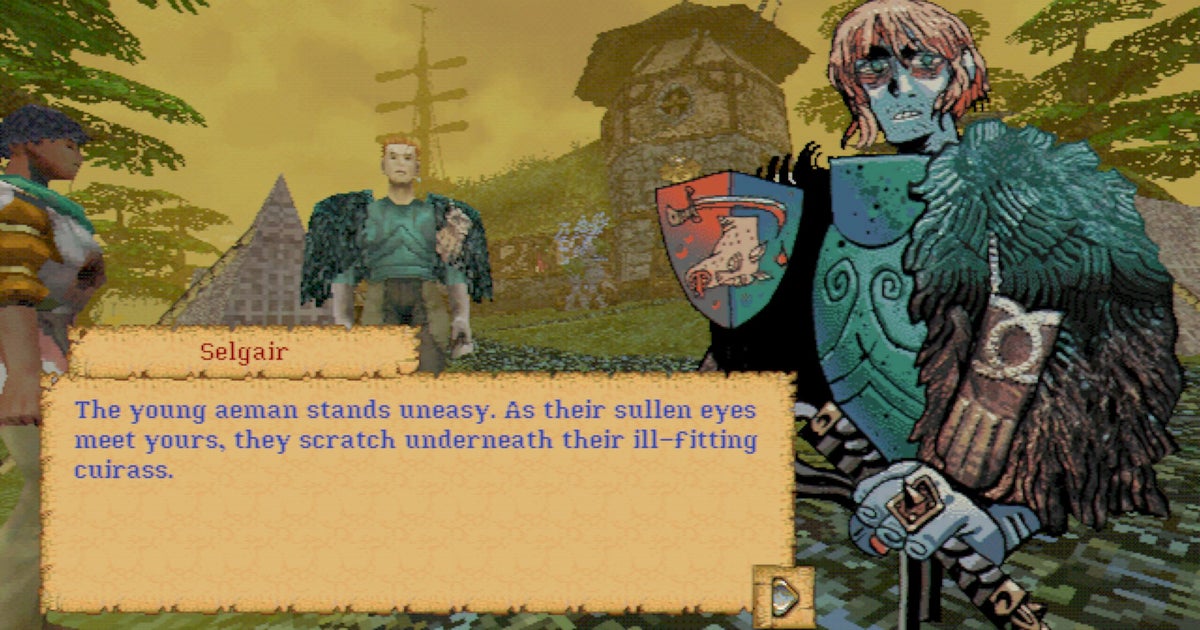
Turn-based RPG Entropy offers up a world abandoned by the gods that looks like a PS1 game fished from a toilet
Come wallow in the demo for Entropy, an absorbingly ugly take on the Final Fantasy RPG format from the creators of Dread Delusion.