

Explore 27 interactive philosophy experiments that challenge your moral intuitions, test your logical reasoning, and probe the boundaries of belief.
Cognitive Bias Lab | Learn to Make Better Decisions
Explore cognitive biases with interactive tests, simulations, and real-world examples. Free platform to sharpen decision-making and critical thinking — no sign-up needed.
Rotating the Space: On LLMs as a Medium for Thought
An essay on LLMs as a cognitive medium
Chinese room
The Chinese room argument holds that a computer executing a program cannot have a mind, understanding, or consciousness, regardless of how intelligently or human-like the program may make the computer behave. The argument was presented in a 1980 paper by the American philosopher John Searle, entitled "Minds, Brains, and Programs" and published in the journal Behavioral and Brain Sciences.[1] Similar arguments had been made previously by others, including Gottfried Wilhelm Leibniz, Peter Winch, and Anatoly Dneprov. Searle's version has been widely discussed in the years since.[2] The centerpiece of Searle's argument is a thought experiment known as the "Chinese room".[3]
People Who Can't Visualize Anything Are Challenging a 300-Year-Old Theory of Thought
Mental imagery might not be as central to complex human thought as we believed, philosophers say.

Introducing Persimmon | humans&
A model of human behavior, and new ways to measure how faithfully AI can simulate people.

- 1000-Word Philosophy: An Introductory Anthology
Welcome to 1000-Word Philosophy: An Introductory Anthology, an ever-growing set of essays on philosophical questions, theories, figures, and arguments.

How to be more creative in seconds!
In Search of Vibe Coding Nirvana - Day 1 - Wesley's notes
Deliberate practice in exploring and experimenting with AI tooling
HAH — social media art experiments
Mystified magicians of the mind
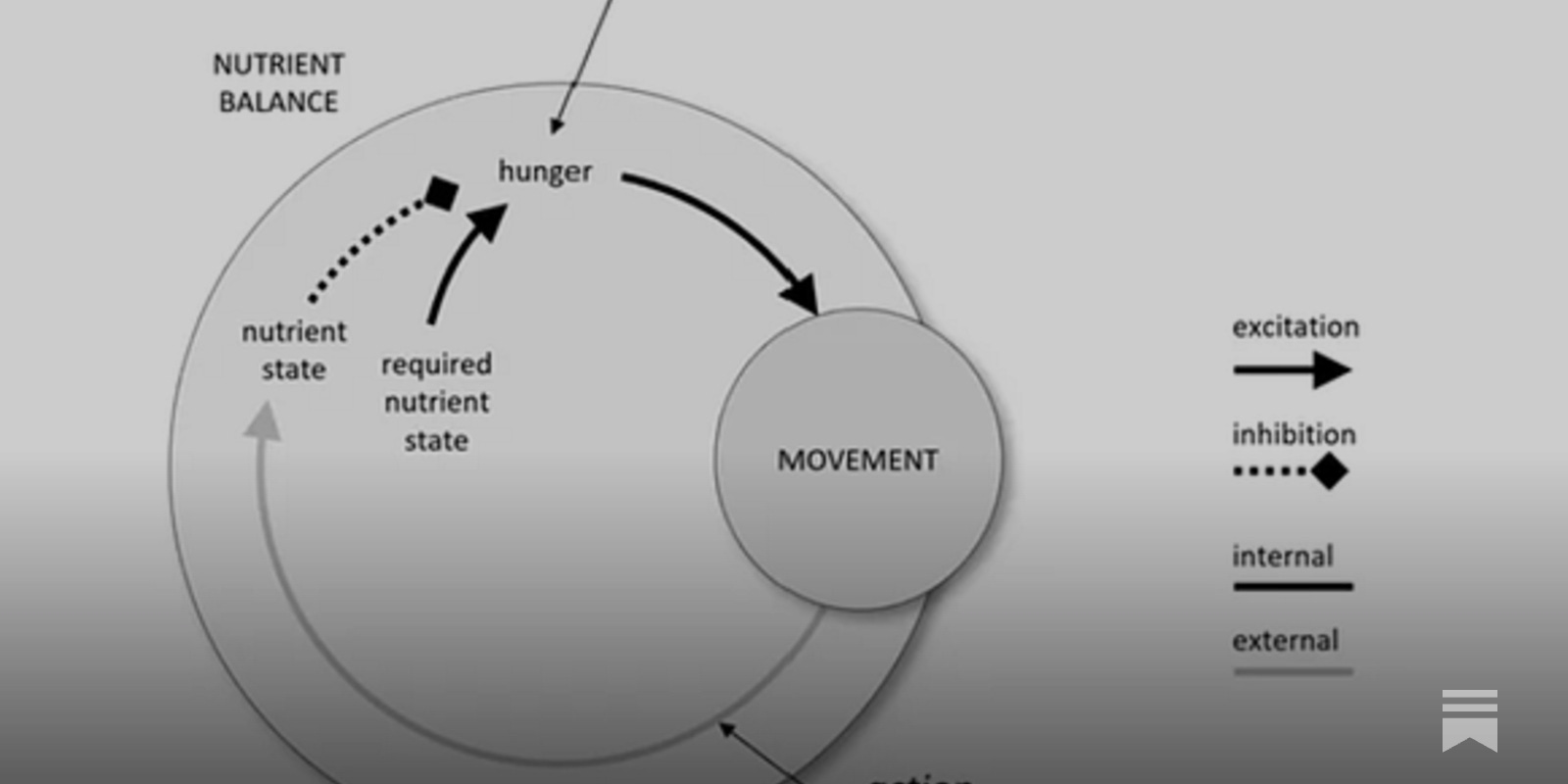
My conversation with neuroscientist Paul Cisek
Essays
Personal website of Gwern Branwen (writer, self-experimenter, and programmer): topics: psychology, statistics, technology, deep learning, anime. This index page is a categorized list of Gwern.net pages.

Prompting Claude Opus 5.5
Behavioral differences from Claude Opus 5 and the prompting and harness patterns that address them: effort calibration, thinking behavior in API integrations and chat, progress updates, unattended and multiagent tasks, safeguard refusals, frontend design, complex visual inputs, multi-app workflows, and pasted text in user messages.
Discourse Graphs and the Future of Science | Protocol Labs Research
Interview between Tom Kalil, Chief Innovation Officer of Schmidt Futures, Dr. Evan Miyazono, Research Team Lead at Protocol Labs, and Dr. Matt Akamatsu, Assistant Professor of Biology at the University of Washington.

1/ quick notes from a great meeting yesterday with a Boston area researcher, interested in cutting edge research tools like Discourse Graphs, @cosmik.network and science social media. The research questions they are looking at are too complex and interdisciplinary to be tackled by any single lab >
