


Scientists have long debated the origins of exceptional human achievements. This literature review summarizes recent evidence from multiple domains on the acquisition of world-class performance. We review published papers and synthesize developmental patterns of international top scientists, musicians, athletes, and chess players. The available evidence is highly consistent across domains: (i) Young exceptional performers and later adult world-class performers are largely two discrete populations over time. (ii) Early (e.g., youth) exceptional performance is associated with extensive discipline-specific practice, little or no multidisciplinary practice, and fast early progress. (iii) By contrast, adult world-class performance is associated with limited discipline-specific practice, increased multidisciplinary practice, and gradual early progress. These discoveries advance understanding of the development of the highest echelons of human achievement. , Editor’s summary From athletes like Simone Biles and Michael Phelps to scientists like Marie Curie and Albert Einstein, identifying exceptional talent is essential in the science of innovation. But how does talent originate? Did the most talented athletes, scientists, and musicians reach peak performance relatively early or late in their career? Did they forgo mastering multiple sports, academic subjects, and musical instruments to reach world-class performance in only one? In an Analytical Review, Güllich et al . looked at published research in science, music, chess, and sports and found two patterns: Exceptional young performers reached their peak quickly but narrowly mastered only one interest (e.g., one sport). By contrast, exceptional adults reached peak performance gradually with broader, multidisciplinary practice. However, elite programs are designed to nurture younger talent. —Ekeoma Uzogara , BACKGROUND Exceptional performers push the boundaries of human capability, drive innovation, and help solve the world’s most pressing problems. For decades, research on the acquisition of human performance across domains (e.g., science, academia, music, sports, and chess) has primarily been conducted with young and sub-elite performers. This research suggested that, within these populations, higher early performance and larger amounts of discipline-specific practice generally are predictors of better later performance. Correspondingly, many elite schools, universities, conservatories, and youth sport academies around the world typically aim to select the top-performing young people and then seek to further accelerate their performance through intensified discipline-specific practice. Given that previous expertise research largely focused on young performers and that many elite training programs aim to select the top-performing young people, two critical questions arise: (i) Are exceptional performers at young ages and at later peak performance age largely the same individuals? And (ii) do predictors of young exceptional performance also predict later exceptional peak performance? Until recently, these questions were not systematically investigated among the world’s best performers across domains. ADVANCES In recent years, research on the acquisition of exceptional performance has progressed. Several large datasets from adult world-class performers have become available to review and synthesize. The present literature review synthesizes findings on the development of more than 34,000 adult international top performers in different domains, including Nobel laureates, the most renowned classical music composers, Olympic champions, and the world’s best chess players. The available evidence suggests a common pattern across domains with three major features. (i) Early exceptional performers and later exceptional performers within a domain are rarely the same individuals but are largely discrete populations over time. For example, world top-10 youth chess players and later world top-10 adult chess players are nearly 90% different individuals across time. Top secondary students and later top university students are also nearly 90% different people. Likewise, international-level youth athletes and later international-level adult athletes are nearly 90% different individuals. (ii) Most top achievers (Nobel laureates and world-class musicians, athletes, and chess players) demonstrated lower performance than many peers during their early years. Across the highest adult performance levels, peak performance is negatively correlated with early performance. (iii) The pattern of predictors that distinguishes among the highest levels of adult performance is different from the pattern of predictors of early performance. Higher early performance in a domain is associated with larger amounts of discipline-specific practice, smaller amounts of multidisciplinary practice, and faster early discipline-specific performance progress. By contrast, across high levels of adult performance, world-class performance in a domain is associated with smaller amounts of discipline-specific practice, larger amounts of early multidisciplinary practice, and more gradual early discipline-specific performance progress. These predictor effects are closely correlated with one another, suggesting a robust pattern. OUTLOOK The new evidence enhances our understanding of how world-class performance develops. The similar developmental pattern of world-class performers across different domains suggests widespread, if not universal, principles underlying the acquisition of exceptional human performance. Assumptions suggested by the evidence from young and sub-elite performers, along with other approaches discussed in the literature, cannot adequately explain the recent evidence. New explanations may further advance scientific understanding. As a starting point, we suggest three explanatory hypotheses: the search-and-match hypothesis, the enhanced-learning-capital hypothesis, and the limited-risks hypothesis. On the basis of the recent evidence, scientists can enhance theories, program managers can promote evidence-based practices, and policy-makers can better allocate funding. Such efforts may foster opportunities to enhance world-class performance across science, sports, music, and other fields. The development of the highest levels of human achievement. Across domains, world-class performers, compared with peers performing just below this level, engaged in more multidisciplinary practice and showed more gradual performance progress through their early years.
How does AI impact skill formation?
Two days ago, the Anthropic Fellows program released a paper called How AI Impacts Skill Formation. Like other papers on AI before it, this one is being treated as proof that AI makes you slower and dumber. Does it prove that?

A Severe Misalignment of AI in Mathematics
I am proud to be among the list of 25 initial signatories — all Fields Medallists — to the declaration below, which grew out of discussions between ourselves over the last week. We have…

Three important steps in my maturation process – Thomas Dullien / Halvar Flake
My father passed recently, and he was twice my age. I am approximately the same age that he was when I was born, and I am now “the old generation” - there’s no one left in the generation above me.
We Need To Stop Calling Entertainers ‘Artists’
Expert in building reliable digital platforms and leading high-impact technical teams. 20+ years experience at the intersection of technology, teams, and learning.
The Rise of Alt-Pop Stars
Welcome to a messier and more daring era of pop music.

The 1989 CBC Massey Lectures, "The Real World of Technology"
Technology has always been a part of human existence. Today though, says the experimental physicist, Ursula M. Franklin, technology has large-scale effects on culture itself. Ursula Franklin is an experimental physicist, University Professor Emeritus at the University of Toronto, a former board member of the National Research Council and the Science Council of Canada, and a companion of the Order...

Dario Amodei — The Adolescence of Technology
Confronting and Overcoming the Risks of Powerful AI
Harness Engineering for Self-Improvement
The concept of recursive self-improvement (RSI) dates back to I. J. Good (1965), where he defined an “ultraintelligent machine” as a system that can surpass humans in all intellectual activities and design better machines to improve itself. Yudkowsky (2008) used the phrase “recursive self-improvement” for a specific feedback loop: an AI uses its current intelligence to improve the cognitive machinery that produces its intelligence. This feedback loop in modern AI may indicate the model rewriting its own weights directly, or more broadly the model improves the training pipeline and the deployment system, which in turn enables a better successor model with improved performance across economically valuable tasks. The speed of research development in AI has been shown to drastically accelerated in frontier labs (Anthropic; OpenAI).
The first modern Olympics begin in Athens – archive, April 1896
On 6 April 1896, the inaugural Games opened in the Greek capital. Over the next nine days, male athletes from 12 countries competed in sports ranging from running to rope-climbing. See how the Guardian reported events

People don't buy who they are. They buy who they want to become.
Why the most successful brands build against a muse, not a demographic


The Art Of Marathon
A look at some of the work that went into one of the coolest-looking video games in recent memory
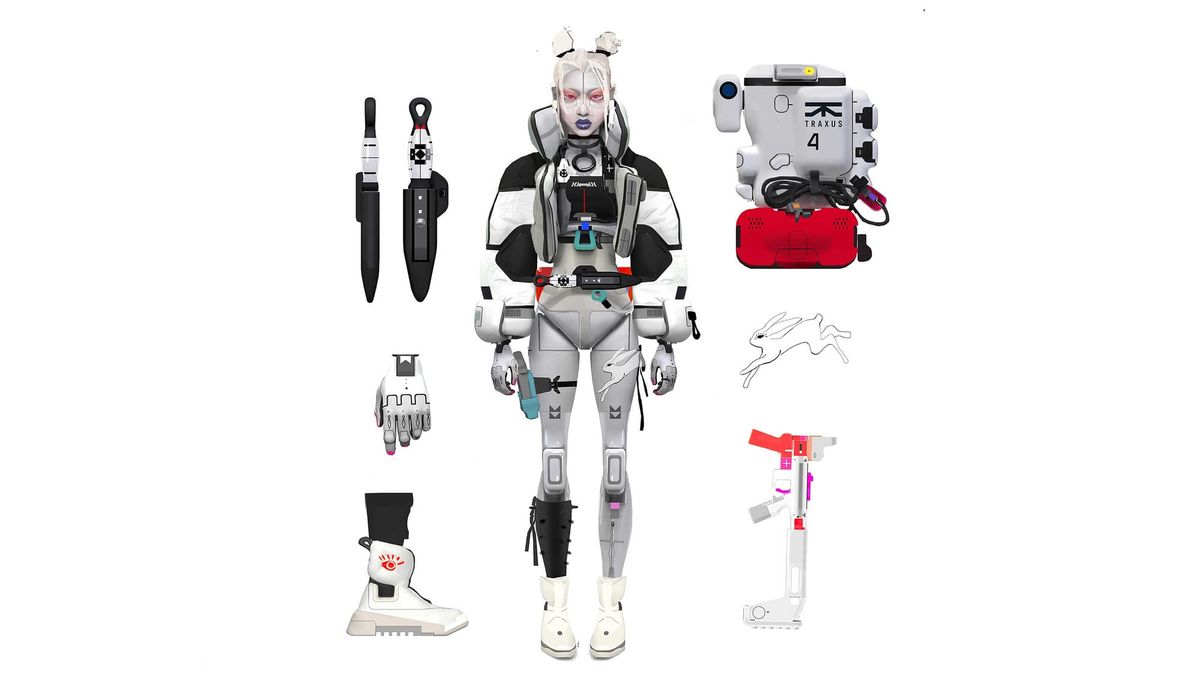
Anthropeum
A daily game that challenges our understanding of human cultures. Ten objects. 5,000 years of human history. Guess where and when each artifact was made. See how you rank.

The hidden ‘rules of the game’ that dictate how we navigate the world | Psyche Videos
How free are we really, if human behaviour embodies the complex, intertwined webs of society and history?

Should You Use AI for a Task? Here’s a Simple Way to Decide - Schneier on Security
This essay originally appeared in The Guardian. I teach public policy at the Harvard Kennedy School and the Munk School at the University of Toronto. And it will come as no surprise to you that my students regularly use AI to complete their writing assignments. Doing so is a waste of their tuition money. But if their entire career is going to include AI writing assistants, why shouldn’t they embrace their future? The best way I’ve found to explain the dilemma comes from the AI researcher Daniel Meissler: it’s the difference between work and the gym...