

Two days ago, the Anthropic Fellows program released a paper called How AI Impacts Skill Formation. Like other papers on AI before it, this one is being treated…
Labor market impacts of AI: A new measure and early evidence
Anthropic is an AI safety and research company that's working to build reliable, interpretable, and steerable AI systems.
What happens when AI replaces the parts of work people love?
We’re using AI to move faster. I’m not yet convinced we’re using it to work better.
How AI assistance impacts the formation of coding skills
Anthropic is an AI safety and research company that's working to build reliable, interpretable, and steerable AI systems.
AI Doesn’t Reduce Work—It Intensifies It
Aruna Ranganathan and Xingqi Maggie Ye from Berkeley Haas School of Business report initial findings in the HBR from their April to December 2025 study of 200 employees at a …
When AI builds itself
Our progress toward recursive self-improvement, and its implications.

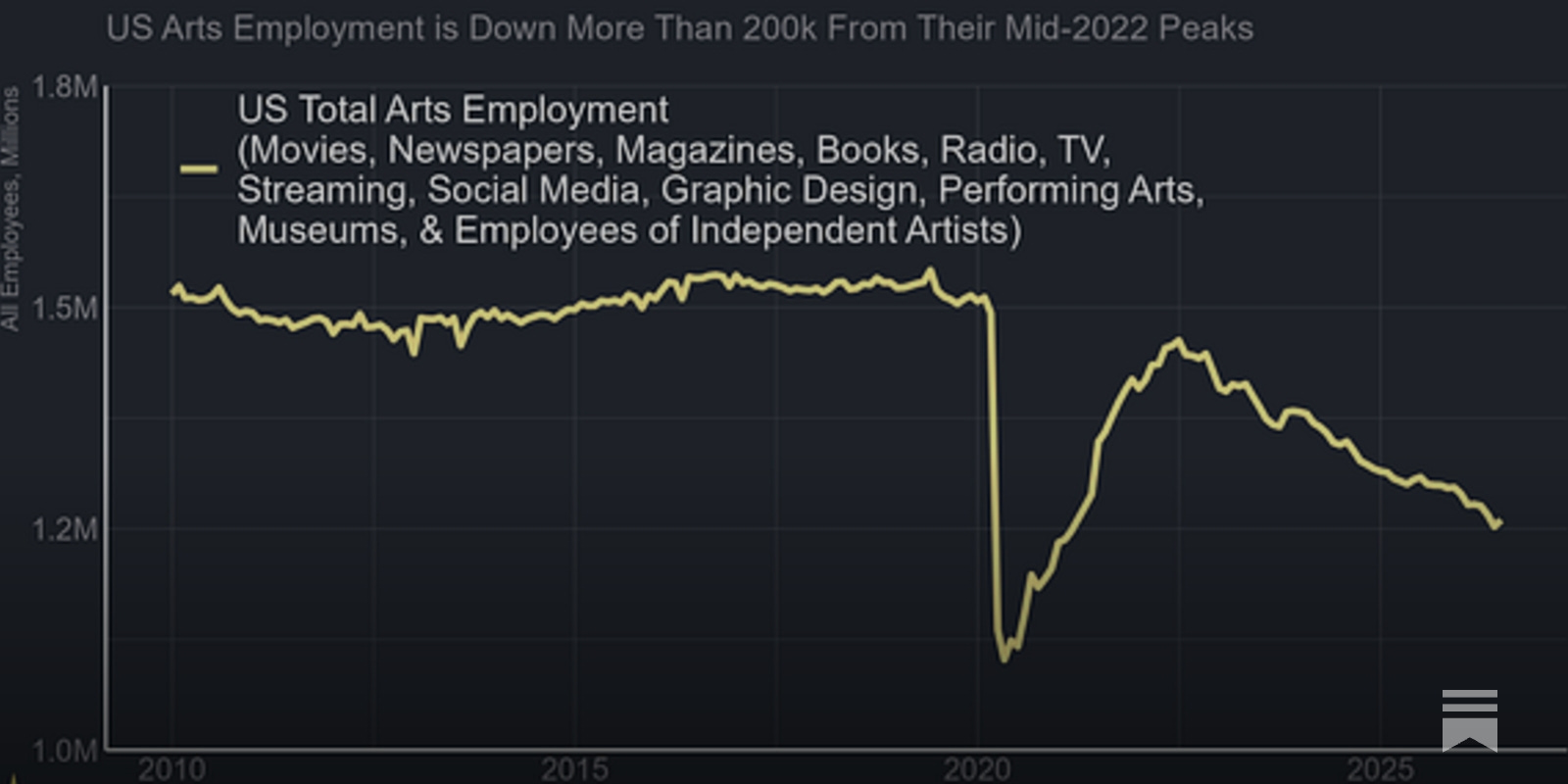
AI and the Fall? of the Creative Class
America is Losing Hundreds of Thousands of Jobs in Media, Film & the Arts. How Much is AI to Blame?
Andrew Ng: The Biggest Opportunities in AI Aren't Where You Think
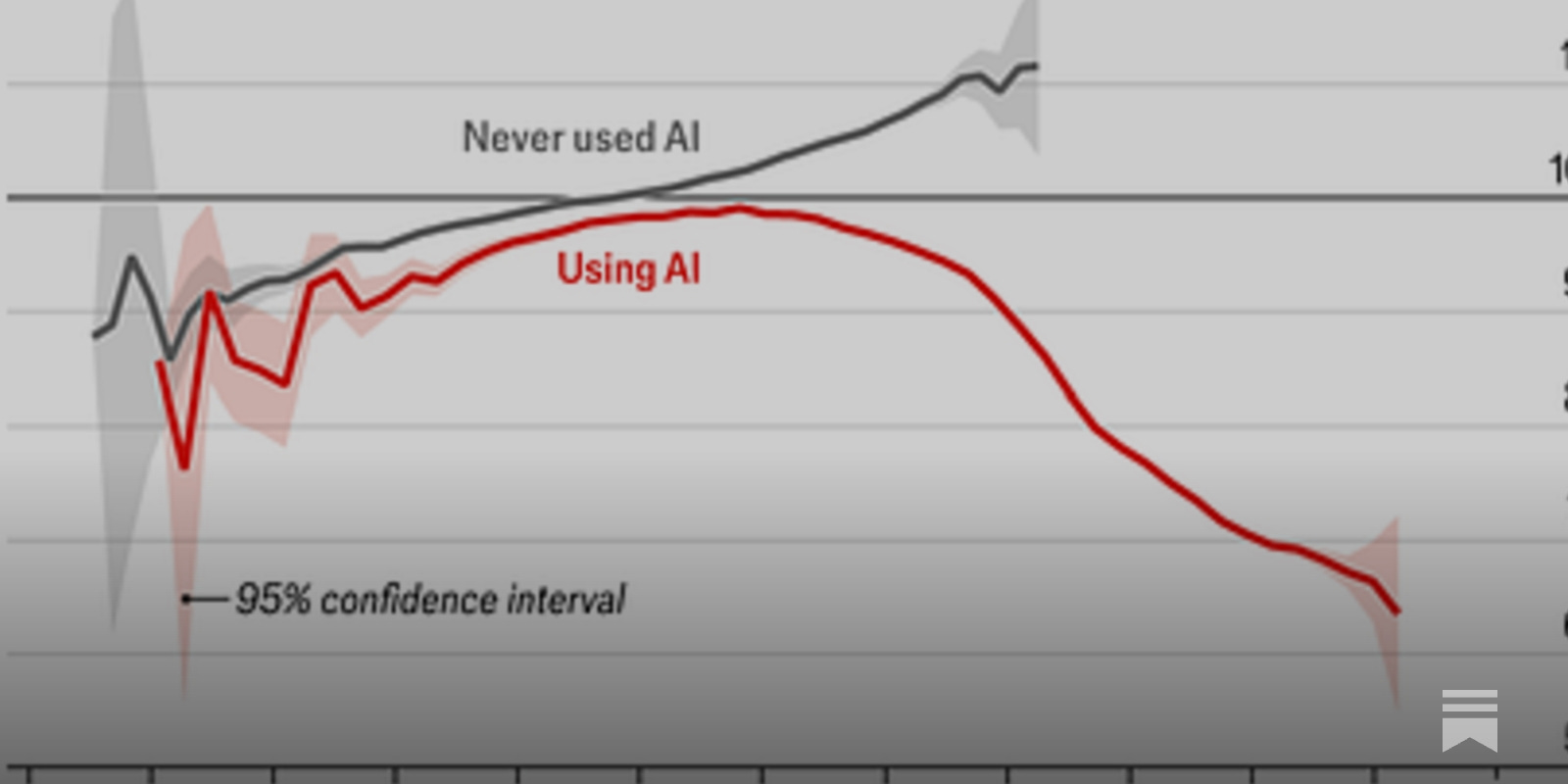
The 50 Percent Problem
Empirical evidence of the educational harm of generative AI
The New Software Lifecycle
I co-wrote a Google whitepaper about how AI is changing the software lifecycle. I'm not going to summarize the whole thing. Instead, here are the handful of ...

The fall of the theorem economy
How AI could destroy mathematics and barely touch it
What AI coding costs you | Tom Wojcik
What's the effect of the prolonged AI usage among coders and is it tracked correctly, if it all?
Women Who Use AI Seen As Incompetent; Men Who Use AI Seen As Pragmatic
A 2026 study found that when women and men use AI tools to create identical resumes, evaluators view the women as less competent, while crediting the men with initiative.

I work, I think? - Annotated
How AI may quietly dismantle the feedback loop that turns inexperienced people into competent ones, and why my work matters to me.
More Than a Tool
What We Learned from a Year of Conversations About AI

Harness Engineering for Self-Improvement
The concept of recursive self-improvement (RSI) dates back to I. J. Good (1965), where he defined an “ultraintelligent machine” as a system that can surpass humans in all intellectual activities and design better machines to improve itself. Yudkowsky (2008) used the phrase “recursive self-improvement” for a specific feedback loop: an AI uses its current intelligence to improve the cognitive machinery that produces its intelligence. This feedback loop in modern AI may indicate the model rewriting its own weights directly, or more broadly the model improves the training pipeline and the deployment system, which in turn enables a better successor model with improved performance across economically valuable tasks. The speed of research development in AI has been shown to drastically accelerated in frontier labs (Anthropic; OpenAI).
AI Doesn’t Reduce Work—It Intensifies It
One of the promises of AI is that it can reduce workloads so employees can focus more on higher-value and more engaging tasks. But according to new research, AI tools don’t reduce work, they consistently intensify it: In the study, employees worked at a faster pace, took on a broader scope of tasks, and extended work into more hours of the day, often without being asked to do so. That may sound like a win, but it’s not quite so simple. These changes can be unsustainable, leading to workload creep, cognitive fatigue, burnout, and weakened decision-making. The productivity surge enjoyed at the beginning can give way to lower quality work, turnover, and other problems. To correct for this, companies need to adopt an “AI practice,” or a set of norms and standards around AI use that can include intentional pauses, sequencing work, and adding more human grounding.
