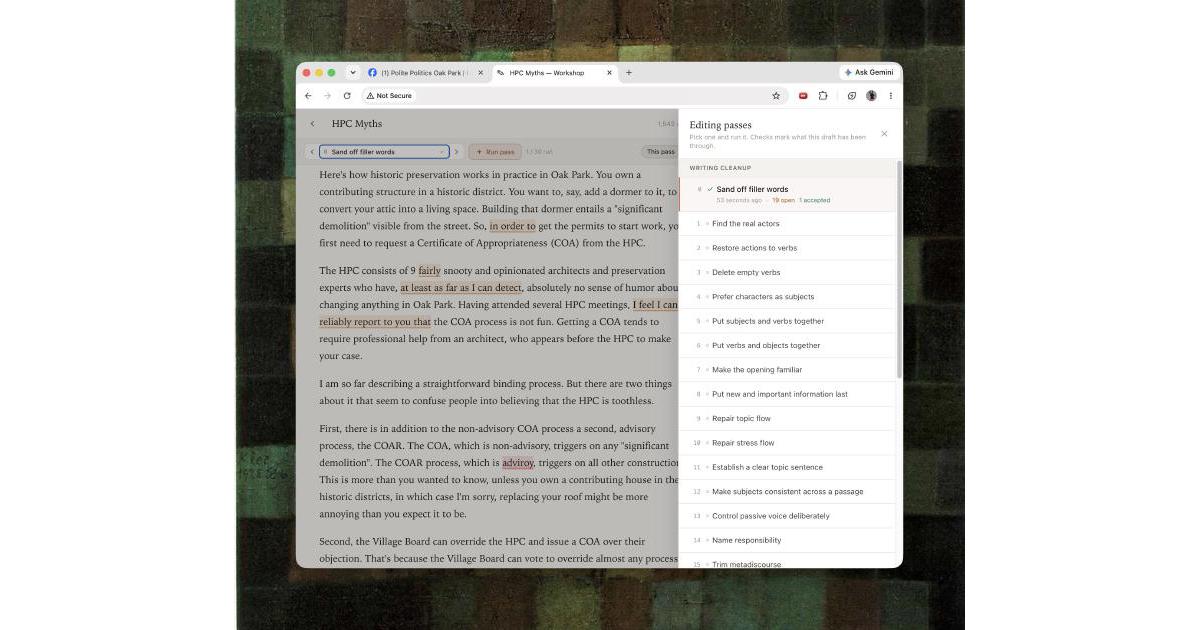
Stating the obvious is surprisingly useful. Most of your knowledge lives below the threshold of conscious awareness, so it’s possible for a piece of writing to remind you of what you already know. It’s common to know you don’t like something without being quite sure why, and reading an obvious statement (such as “accuracy matters, even when you agree with the broad strokes”) can help clarify why you find certain things distasteful.
The revolt of the reader | The Observation Deck
Reading is important to me. While I’m not a quick reader nor an especially voracious one, I have found that long-form reading has had a profound influence on me over my life. And because reading is important to me, writing is too: writing not only allows us to convey our ideas, but the very act forces us to test and distill them — at once making our ideas more robust while providing the vehicle by which to share them.
LLM cliché highlighter
Paste text below — or load it from a URL — and it highlights sentences that match known LLM clichés, including the tells catalogued in Wikipedia’s Signs of AI writing guide. Chain patterns like “no X, no Y” get a badge counting their items; tap or hover a highlight to see which cliché it hit.
Mark Zuckerberg's AI manifesto is exactly why people don't like AI | TechCrunch
On Monday, Mark Zuckerberg published a 6,500-word manifesto about personal AI, largely about the possibilities for the "personal superintelligence" systems Meta AI is building.

The Laws of Simplicity / John Maeda
The simplest way to achieve simplicity is through thoughtful reduction.
Explorable Explanations
An active reader asks questions, considers alternatives, questions assumptions, and even questions the trustworthiness of the author. An active reader tries to generalize specific examples, and devise specific examples for generalities. An active reader doesn't passively sponge up information, but uses the author's argument as a springboard for critical thought and deep understanding.
I'm becoming AI-blind - Rafal Cymerys
Recently I've been catching myself having these little moments at work, when I'm trying to read a document someone has sent me and my brain somehow refuses to analyze it. It feels like I'm reading it, but I'm unable to focus on its content. I sat down to analyze these situations and realized they all have a common denominator: the documents all show a strong trace to AI. My brain learned to quickly spot signs of AI-generated content, at least the low effort one, and it now ignores it and moves on without thinking much about it.
The peril of laziness lost | The Observation Deck
In his classic Programming Perl — affectionately known to a generation of technologists as "the Camel Book" — Larry Wall famously wrote of the three virtues of a programmer as laziness, impatience, and hubris: If we’re going to talk about good software design, we have to talk about Laziness, Impatience, and Hubris, the basis of good software design. We’ve all fallen into the trap of using cut-and-paste when we should have defined a higher-level abstraction, if only just a loop or subroutine. To be sure, some folks have gone to the opposite extreme of defining ever-growing mounds of higher level abstractions when they should have used cut-and-paste. Generally, though, most of us need to think about using more abstraction rather than less.
"I just find AI to be creatively soulless": Casey Hudson on the controversial tech and Star Wars: Fate Of The Old Republic
"I’m just really unimpressed with it."

Correcting climate ‘misperceptions’ may not boost climate action - Carbon Brief
Most people "underestimate" general support for climate change and "overestimate" actual, real-world climate action.
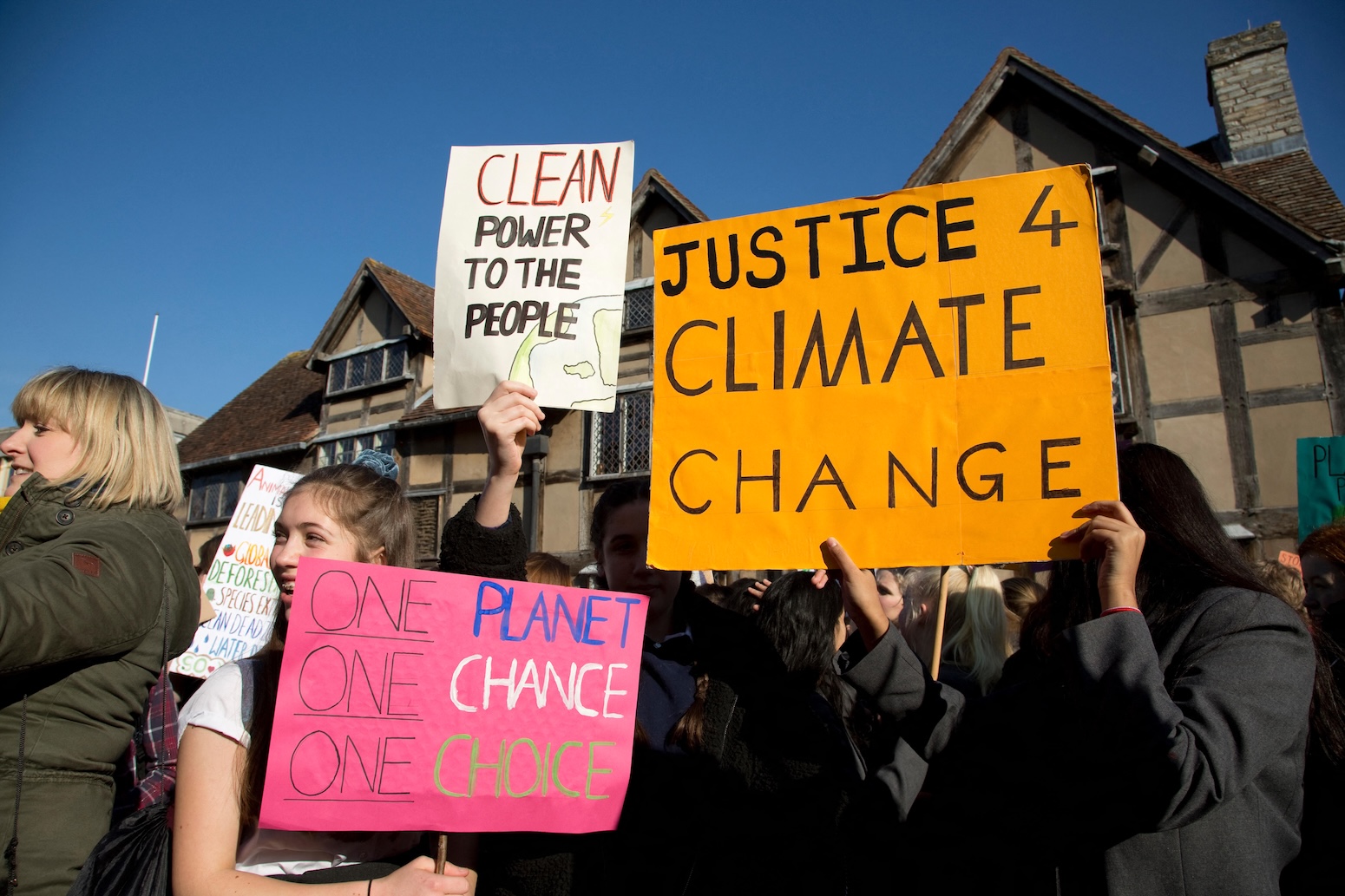
People are not friction
The Gell-Mann Amnesia Effect of AI is a pretty well documented phenomenon: The Gell-Mann amnesia effect is a cognitive bias describing the tendency of individuals to critically assess media reports in a domain they are knowledgeable about, yet continue to trust reporting in other areas despite recognizing similar potential inaccuracies.
Typing without having to type
25+ years into my career as a programmer I think I may finally be coming around to preferring type hints or even strong typing. I resisted those in the past …
Things we shouldn't say in polite company - Sherif's blog
you know, the stuff that makes sense when you work on ATProto but makes zero sense for everyone else

The Friction I Don't Want to Lose
I love learning. And while the friction of solving new problems is increasingly traded for speed, the experience gained by overcoming that friction is as important as ever.
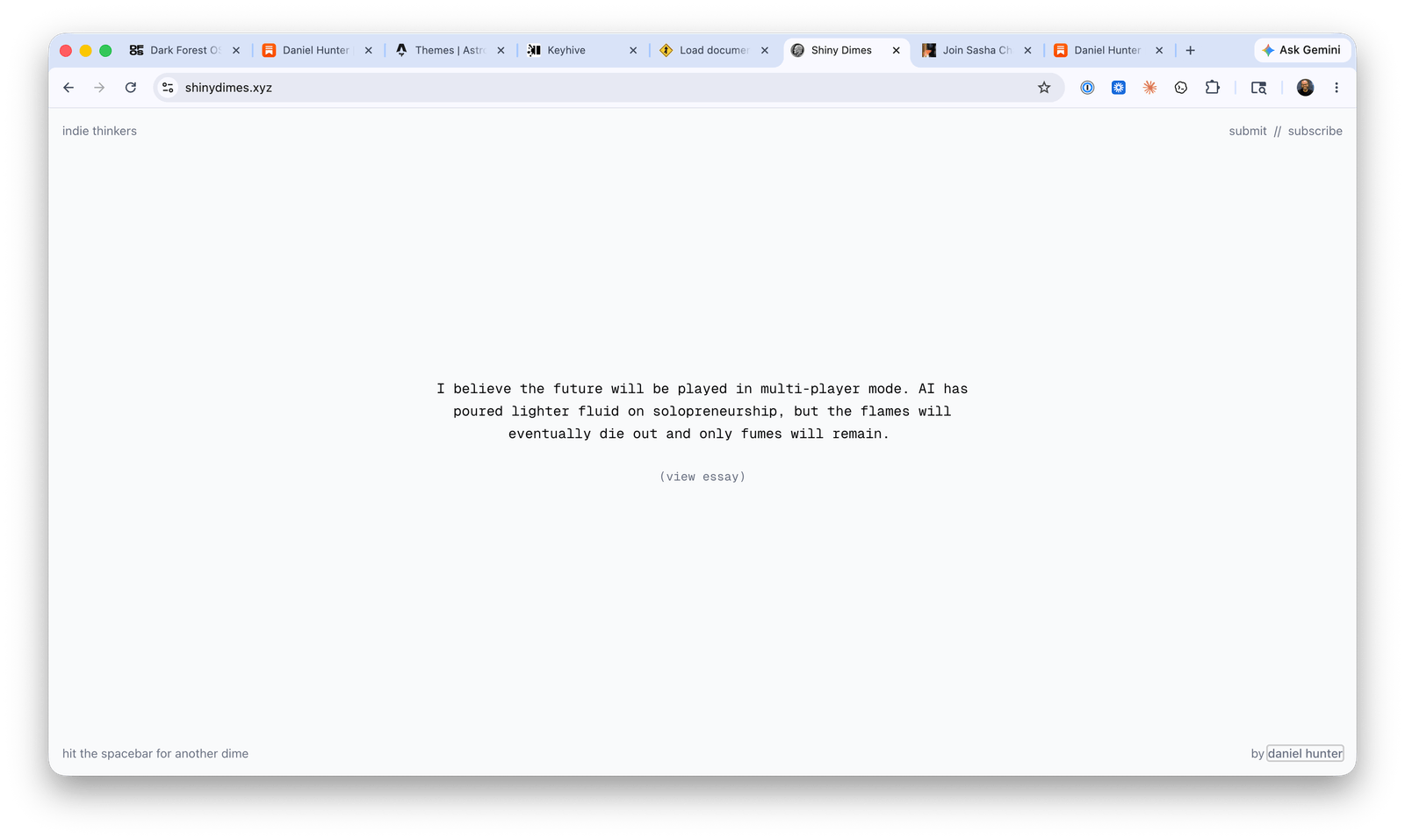
Indie Thinkers
A curated collection of quotes from the brightest minds on the internet.
How To Write With An LLM
Two rules keep an LLM from pasteurizing your writing: never take a word it suggests, and never let it encourage you. Then hand it all the tedious work.