For this Solidarity Syllabus, we are learning alongside Indigenous organizers, leaders, and communities whose work offers important solidarity lessons and invitations for how we might understand land, water, sovereignty, and resistance to data centers. Indigenous Peoples Day is observed
Abundant intelligences: placing AI within Indigenous knowledge frameworks
The current trajectory of artificial intelligence development suffers from fundamental epistemological shortcomings, resulting in the systematic operationalization of bias against non-white, non-male, and non-Western peoples. We argue that these failings are, in part, the result of certain Western rationalist epistemologies that exclude many ways of knowing about the world, and therefore they cannot provide a sufficient foundation on which to adequately, robustly, and humanely conceptualize intelligence. We present a new research agenda, Abundant Intelligences, an Indigenous-led, Indigenous-majority international, interdisciplinary research program that imagines anew how to conceptualize and design artificial intelligence (AI) based on Indigenous knowledge (IK) systems. Abundant Intelligences draws on the rich plurality of Indigenous knowledge systems, bringing together diverse sets of thought, culture, and protocol together. We show IK systems provide one way to rebuild AI’s epistemological foundations and transform these tools’ current role in reinforcing colonial practices of exclusion, extraction, manipulation, and eradication into engines of abundance that enable us to care better for ourselves, our communities, and our world. Our proposition is to fully engage with AI to explore how different conceptions of intelligence could be embodied in these technologies. In this paper, we present the tenets of the research program in detail, account for our methodological approach, describe the impact and limitations, and conclude on a discussion of the implications of the program.
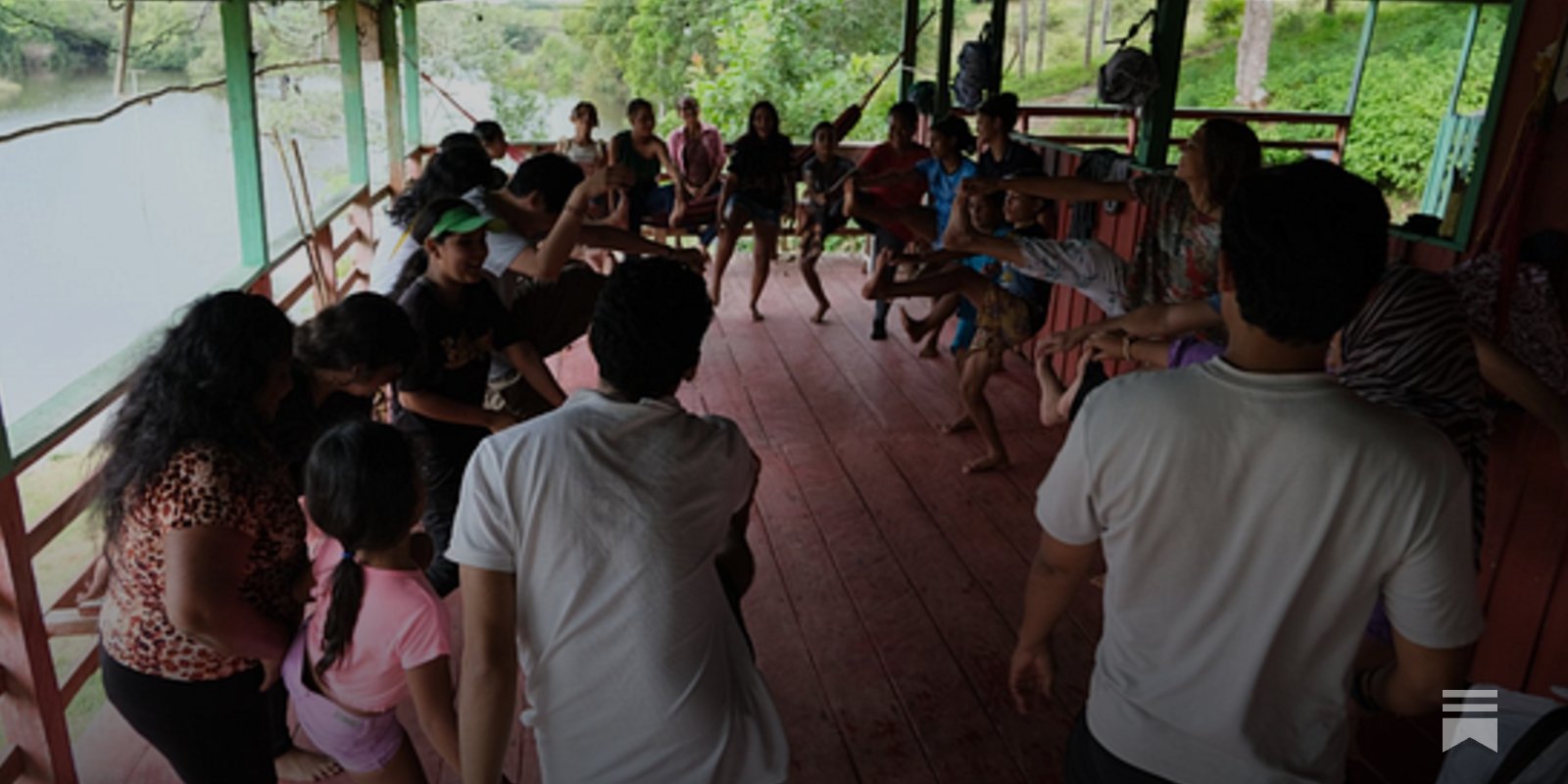
What a community taught an AI about itself: Conservation Technology with Arte & Escola na Floresta
By Nurfatin Hamzah, Diego Rivera, David Dao & Arte & Escola na Floresta
npmx: converging communities
The story of the many people and communities that converged to build npmx together
Symbolic Manipulation: an Anthropological Perspective
The aim of this article is to elucidate the anthropological conditions of possibility for computing. I will first show how symbolic manipulation is constitutive of hominization. Secondly, I will ex…

Quadro
Qualitative Data Analysis (QDA) for social scientists. An open alternative to MAXQDA and atlas.ti, using Markdown to store data and research codes.
Education's Broken. Schools Out. | Systematic-X × Shared Mind
A unified movement for systemic change — integrating diplomatic architecture, open frameworks, and sovereign data models. Systematic-X × Shared Mind.
Center for a Stateless Society
All content on this site is available for republishing under a Creative Commons Public Domain Dedication.

Clan 2025 Wrap-Up: From Infrastructure to a New Computing Paradigm
A look back at what we built in 2025 and where Clan is heading next


Related work | Data Counterfactuals
Adjacent research areas and starting papers, curated in Semble and synced into the site.
Why Online Democracies Fail - Eclectic Corvine Muses
A compendium to my upcoming proposal for community infrastructure within the AT Protocol
Climate Change: Global Crisis To Local Action By Kevin Anderson
Can AT Protocol Fix Monolithic Platforms?

The politics of decentralization and the libertarian allure of Mastodon – Structural Integrity
I am currently reading the fabulous “Hayek’s Bastards” by Quinn Slobodian. It made me think about decentralisation in Mastodon (yes, the federated social network). And it made me think about the lack of a coherent progressive vision for the digital age. I will explain what that book has to do with both. But let’s go back to the political meaning of “decentralisation” in digital discourse first.