
On artificial intelligence, data centers, technological politics, and who gets to build the future.
A Real Political Economy of Technology - The Ideas Letter
Two technological futures are competing for political and material priority: generative AI and the green transition. Benanav argues that while AI is marketed as a world-reordering breakthrough, its productivity gains…
The Future of Software Engineering Isn’t What You Think
Over the past two decades, I’ve watched software eat the world, then hardware catch up, then Generative AI reshape both at the same time…
The Singularity Is Not What It Seems
Whatever the AI future is, we’re in it right now.
The Singularity Is Not What It Seems
Whatever the AI future is, we’re in it right now.
Something Big Is Happening
A personal note for non-tech friends and family on what AI is starting to change.

</> htmx ~ Yes, and...
In this essay, Carson Gross discusses his advice to young people interested in computer science worried about the future given the advancements in AI.
The Future of AI Should Serve People, Not Platforms - The Liquid Frontier
Tech Influence Watch
Tracking cryptocurrency and artificial intelligence industry influence on 2026 elections in the United States.
AI as Normal Technology
The normal technology frame is about the relationship between technology and society. It rejects technological determinism, especially the notion of AI itself as an agent in determining its future. It is guided by lessons from past technological revolutions, such as the slow and uncertain nature of technology adoption and diffusion. It also emphasizes continuity between the past and the future trajectory of AI in terms of societal impact and the role of institutions in shaping this trajectory.

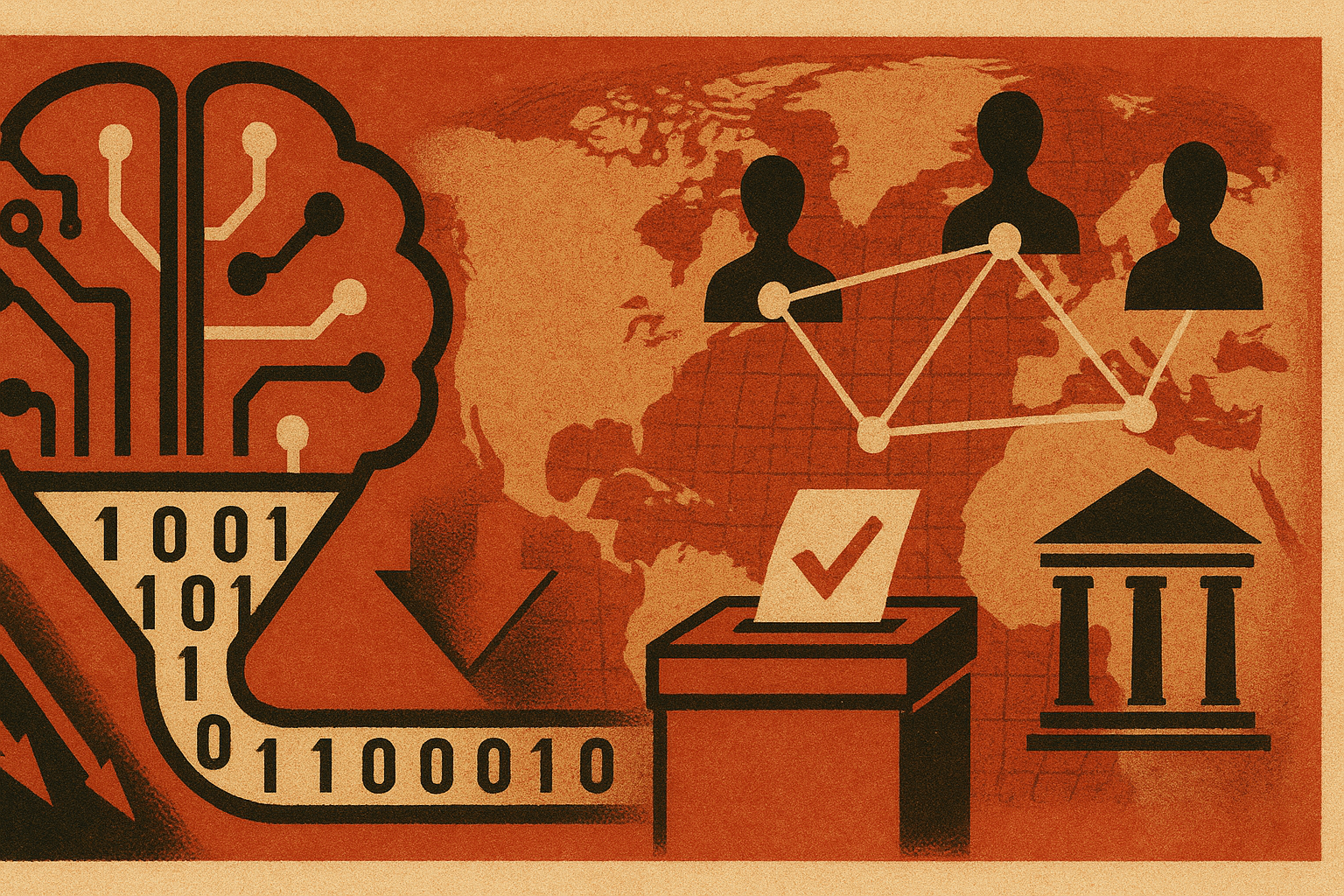
Field Theory: AI as Social Science Question, Object & Tool
Uses of advanced artificial intelligence are changing how societies organize labor, govern, produce knowledge, and make meaning. In light of these developments, this essay argues that AI models, tools, and systems pose three interrelated imperatives for social science: they demand renewed attention to social theories of how technology, human experience, and social order are entangled; they require study as objects of inquiry in their own right; and they offer capabilities that may transform—or upend—the practice of social investigation itself. From Weber’s analysis of rationalization to Du Bois’s study of technology and inequality to contemporary scholarship on algorithmic governance, the essay examines what social science distinctively offers: the capacity to historicize the apparently unprecedented, to trace connections across scales, and to center those most affected by technological change. It identifies how algorithmic systems are remaking the distribution of opportunity and risk as a central task of social inquiry and asks what futures social science might help bring into being.
Data Center Opponents Have Blocked Or Delayed Projects Worth Nearly $130 Billion In 2026 - Slashdot
An anonymous reader quotes a report from NBC News: The first quarter of 2026 produced the most blocked and delayed data center projects on record, according to a new study shared with NBC News. The study -- conducted by Data Center Watch, a project of the AI intelligence firm 10a Labs that tracks lo...

The future of social media is human
We cannot continue participating in social media platforms which do nothing to stop us being tricked by GenAI and the powerful people/governments that control them.

Why Is Everyone In Tech So Sad?
A lot of people seem to be realizing that knowledge work is mostly pointless. AI might give us the pleasure of finding out what happens if an entire class of workers loses faith in their careers.

I think the data center backlash is mostly about data centers
It’s probably not your ideological thing, or mine. It’s about object-level claims about how data centers impact the communities where they’re built, many of which are wrong.